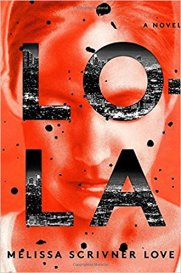
LOLA – Melissa Scrivner Love

LOLA


This week I finished LOLA which came out in March of this year and was written by debut author Melissa Scrivner Love. Over the course of a week and a half we go through an experience with Lola that has the potential to solidify her in a world she leads from the shadows. With a deadline and the threat of death from multiple drug lords, Lola is tested as she emerges as the true leader of LA gang, the Crenshaw Six.

When the book opens, we meet Lola, our narrator and the girlfriend of a man named Garcia who is assumed to be the leader of a gang which controls blocks in the neighborhood of Crenshaw. We are at a back yard BBQ when a messenger from the cartel arrives and wants to speak to Garcia, giving him a mission to interrupt a drug deal between a cartel customer and a rival supplier. Throughout this meeting Lola hovers on the fringe, notting everything the man says and also how he acts and her inner dialogue immediately sheds color on the woman whose psyche we are going to be in for the next couple hundred pages. Short sentences, to the point and very observant.  Whether or not someone’s English has an accent, if they are sweating and nervous, the way the air feels and tastes in the LA heat. It is clear that she is a very reliable narrator…and one who knows a vast amount more than what people expect her to. Within the first few pages, it is clear that Lola is the one running things and no one yet realizes this outside of her five soldiers.

The mission set to the Crenshaw Six, the drug deal from which they are to recoup a name plus both the cash and the loot, goes terribly wrong. And from here we have a chain of events that propel Lola into having to navigate between the cartel and this new drug supplier (who turns out to be rich and white) selling heroin to upper class users. First daunting task set to Lola: find out who this new man is, infiltrate his organization, and find out where his stash is held. Her deadline: one week. Next task: after having infiltrated said organization, Lola must prove her loyalty to the white man for him to trust her. He tells her to kill the man who was the cartel client. The one from the deal. She is again given one week. Throughout all of this, Lola is pretty collected. We see the actions of a calculating leader who’s people trust her and the plans that she comes up with to get them through these situations. It is wonderfully eerie to read passages outlined with her practical business like manner and then to flip the page and have her trying to  do good and create a safe space for a little girl.

In addition to the little girl, Lola also cares for her mother who is a recovering junkie. These two responsibilities illustrate the domestic side of Lola’s life. The balance that is consciously kept between gang leader Lola and dutiful daughter and woman Lola. She narrates about how she uses conceptions of her, often misconceptions, to her advantage. And people constantly underestimate her. I really enjoyed how she trolled these waters looking for her in to the game with the men. Lola’s confidence and level headedness is what I enjoyed most about her and this work, I think. There are a couple of other females that aren’t as flushed out as they could’ve been whose deeper perspectives could’ve been interesting.


The deadline and climax of both missions happens so near the end I thought it was going to be a cliffhanger. That being said, wether she makes it or not, there is room in this world to flush out more stories. I think Love could develop quite a few tales and am interested to see what she does next.

Another 13 Reasons Why Post

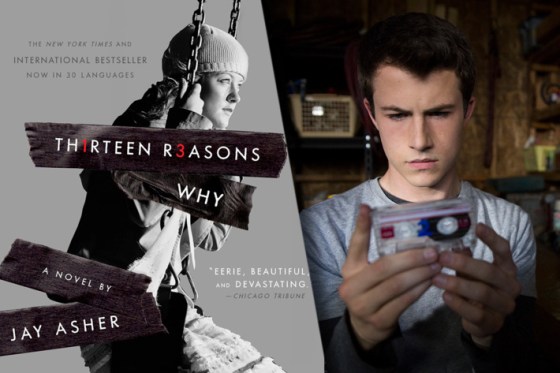
30-13-reasons-why.w710.h473

Spoilers abound below. You’ve been warned.

Two years ago I came across Thirteen Reasons Why whilst in a deep dive of the YAL shelves of my neighborhood library. In fact, it was the topic of my fourth blog post ever! Over the past few weeks there have been blog posts and think pieces a plenty about the new Netflix adaptation which coincides nicely with the book’s 10th anniversary. For years, this book has been a controversial work. It is a tale that sticks with you; a heavy realization that everything you do has an impact on those around you. In 2012 the book made the ALA’s list in their annual Top Ten Most Banned Books list for reasons stating: drugs/alcohol/smoking, sexually explicit, suicide, unsuited for age group. “These are not topics suitable for young readers” they say. Bullshit, lovelies. Those are topics our young ones are exposed to at earlier and earlier ages. The heart of this tale holds messages which are incredibly important for this generation to learn: compassion, empathy, responsibility, awareness. This is a super important work in both mediums, each of which portray Hannah Baker’s story in different ways.

For fans of the book, I think it is incredibly useful to go into watching the show with a conscious forethought, recognizing that these are separate creations in two different mediums. You have a 288 page book versus a 13 hour TV drama. Those aren’t really equal or comparable so thinking of them as such from the beginning is not going to do you any good. However, this is a good thing!

The book gives you Clay and Hannah and Tony. That’s pretty much it. There is some dialogue between others and you see people around as Clay visits all the spots on the map but that is it. Why no other characters? There’s no time. Clay binge listens to these tapes in one night. Primary difference right off the bat. There is a heightened tension as he speeds through these awful recollections and you learn along with him all of the truly unfortunate events that befell this girl. You realize slowly, along with Clay, what was passing through Hannah’s mind. He becomes consumed with them going from one tape to another just as you assume he would be when presented with this situation. Digesting it all while constantly being ready for the next tape to be yours. We are presented with Hannah’s tapes and Clay’s immediate reaction to them and during them. Alternatively, in the show, our experience is stretched out for at least two weeks. In this time, we are able to see a much much broader picture. What these tapes have sparked from his classmates, how Hannah’s parents are coping, and even providing time for a case to be built which (surprise!) Clay’s mom is lawyering for! There is a whole world that is created in this visual depiction. It creates a 3D image, a broader depiction showing the ripples of Hannah’s death. We are given more time for Clay to take in what he’s hearing and actually show a bit of resistance and perturbedness (that’s not a word) at what all of his fellow classmates have done. Which brings us to the next point: he takes it to his peers. Clay wants to hold them accountable for their actions but they say that some of these tellings are out of proportion or didn’t even happen or are versions of their own truths.  In some cases they are denied out right or maybe not remembered at first. In the book we are feeling directly from Hannah how she experienced these events and how they impacted her whereas in the show we are informed by others as well. I think this is why it is okay for these two to differ so much because it perfectly illustrates how different perspectives are valuable.

However, and this is a big however, not all of this fleshed out world is great. What follows are thoughts purely on the TV show. So many great things about this show from the astounding amount of diversity (in race and relationships) to a realness brought with the very human reaction you see from Hannah’s parents to the more full narrative we see from all the other characters. But there isn’t really a base for them from the source material outside of what we hear on the tapes. So these characters were developed largely by show creator Brian Yorkey and it’s not that he does a bad job, its just that many of them felt too extreme. From Justin’s wanting to literally put together a plan to kill Clay to Courtney’s blind eye to rape there are things that some of these characters say that have you going, “umm what?!” Not all of the time but definitely a notable amount. To go into a side rant about these “umm what” moments, let’s take Tony for example. ROCK CLIMBING?!?! Ummmm Whaaat?! There were so many prolonged encounters that involved Tony just popping up places and being Jiminy Cricket (or as Clay puts it, Unhelpful Yoda). Clay could’ve easily listened to these tapes two per episode and we could’ve cut things wayyyy down.

In addition to the extension of the characters there is an extension (as already mentioned) to the story. In reading, our experience stops when the tapes do. In viewing, we see Hannah’s end. We were told 10 years ago that she “swallowed a bunch of pills” however today’s method is different and much more detailed. Today we see Hannah slit her wrists; we see her parents find her after she has bled out in the tub. It is a heart wrenching scene. It is a striking step beyond the tapes. Even further still we hear Hannah narrate these tapes with so much emotion in her voice. Katherine Langford does an amazing job at making all the feelings feel. She’s telling the story as she knows it, how she has felt it. This adds so much to the story.

With all of the differences of the show and even the non differences, Jay Asher is fully on board with how the show depicts his story. At the top of this piece I listed all of the reasons the ALA cited as to why the book was placed on the Banned List, one of which was that it was inappropriate for it’s intended demographic. This show and this book depict a reality that parents and others might not want to deal with. But bullying and suicide rates are a very real thing.  As Asher said in an interview recently, “that raw and honest approach was my first big decision I had to make when writing the book, and the writers of the series felt the same way. These things happen, and to give respect to the people they do happen to, it felt wrong to hold back. It needs to be uncomfortable to read or watch. If it’s not, and we pull away, it felt like the story would only contribute to that problem of not truthfully tackling these things. We’re already good at avoiding uncomfortable subjects, and that needs to change.”

Read this book. Watch this show. Be conscious of how you treat others.

The Peculiar Children series by Ransom Riggs


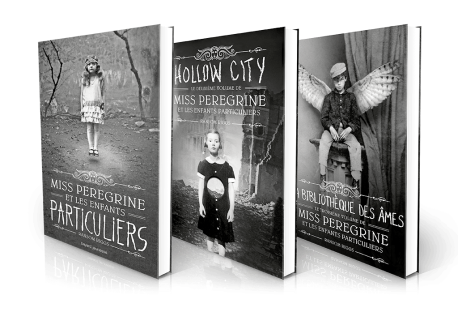
Miss-Peregrine.png

The first, second, and third novels of Miss Peregrine’s Peculiar Children are very darkly whimsical. Not in a Tim Burton way (I promise lovelies, this is the only time I will mention him) but in a sepia toned, phonograph, crackling edges kind of way; a way that progresses at juuust the right pace. Ransom Riggs brings us into a tale that you have to read to believe.

We begin with the self titled Miss Peregrine’s Home for Peculiar Children and Jacob Portman’s adventure from being a normal to realizing his a peculiar. As Jacob is our narrator we learn things about this new world, its history and its secrets, at the same pace he does. Which is why we are equal parts unsure of his grandfather’s sanity and the possible truth to the far out stories of his past when he dies a tragic death by a creature only Jacob sees. It is this traumatic event that slowly begins the chain of events that will open Jacob’s (and our) mind to untold possibilities and bring us to the time loop(s).  We learn that Jacob’s gramps was a peculiar and so is Jake…they specifically can see these beasts that are ultimately Grandpa Portman’s downfall. Hollowgasts. They haunt peculiardom, eating the souls of any peculiar they can reach and are under the control of wights – the organized baddies. Anyway, peculiars. What are they, you ask? Who are they? Well, they are magnificent humans with the ability to do things like float, or have mouths on the back of their head, or create fire with their hands. I know your next thought: hmmm that sounds a lot like mutants. The thing is, these are all children…on the outside. The aforementioned timeloops are spaces on top of, or maybe behind, reality. They are little pockets that freeze a day and loop it forever; their inhabitants’s souls age however their bodies do not. This is where peculiars have taken to; unable to comfortably live in the open as wights and hollowgasts have hunted them for a century through the centuries. Not only are we introduced to this world in Riggs’s first title, we are also given brief glimpses of a much deeper narrative than just a boy grieving over his grandfather (that sounded dismissive but it is not meant to be) and finding his way back to the grandfather’s childhood home. There is the understanding that something serious is going on in these people’s worlds and we have arrived just in time!!!! (#savior) While the tone of this book is serious it has some moments of light. They are all still children: naive and living in a sunlit snapshot of time and when Jacob joins them he too has a lighter sense of self. As the book comes to a close we are promised that the understanding of and our perception of this time and place are about to be expanded even more. With a cliffhanger that leaves you thinking “Oh no!” there is no choice but to immediately pick up book number two.

Unfortunately it took me a whole year between buying the book and beginning to read it so there was a little remembering that I had to do which is okay because it picks up exactly where book one ended. Hollow City is the tale of Jacob and all of his new friends, Emma, Bronwyn, Enoch (et. al), on a rescue mission which has so many close calls you can’t help but speed through the book at the same breakneck pace. There is so much action and quick paced scenes that your eyes might not be able to keep up with your mind! We go from the sunny island of Cairnholm on which they have all lived for 60 years deeper into the loop to the same day but in London. The adventure of getting there and the people they meet gives us more insight into history and more is steadily revealed about this big bad. The fact that this is taking place during WWII is significant as the wights are able to pose as Nazis and no one thinks differently or realizes it. This allows them to be organized and systematically hunt down the entrances to these loops. They can’t go in, you see, so they employ traitors and trickery to get the peculiars and their guardians the ymbrynes to come out of the loop and get snatched right up. For what, you might ask? Well…that’s a mystery too. A dark and terrifying mystery as no one is ever seen from again and capturing an ymbryne is no easy feat. Over the course of Hollow City we are guided deeper and deeper into this loop and even into a couple of other ones too. The layers of the world that Riggs has created is dizzying at times. However, the addition of layers adds to the tone which has lost its sunshine and has gained an air of anxiety and fear; uncertainty about everything.

Just when you think we are about to have a happily ever after moment to end this rescue mission that has been chalk full of foiled plans and dastardly encounters the plot curves and leaves you gasping, “Well, fuck!”

This sentence is appropriate as it allows me to continue talking about this tone shift. I noticed a difference in Jacob’s words as the journey darkened and he had to grow up a bit and make some really tough decisions. It is in book three, Library of Souls, in which I first notice Jacob swearing. His shift is actually so perceptible in this one that he begins to think of himself as new Jacob and old Jacob. By this point, Jacob and Emma (who is our strong leading lady), have been through so much that they are exhausted and unable to trust anyone. A very old loop and a very shady ferryman usher J and E to Devil’s Acre where all of the outlaws of peculiardom have floated over the centuries. It is here that a steadily increasing amount of our friends are being held captive, abducted over the course of book two. Here we learn the twisted plan of the wights; this is the evil dungeon, the lair. Here we have the culmination of Jacob’s journey with Emma to save his friends. We also have, the final show down of the good vs. evil that has been plaguing these people. A carefully sleuthed plan, a final battle, and a resolution that covers all loose ends and loops. The dirge of Devil’s Acre is so disgusting and makes you squirm and grimace. It is in this horrible place that Jacob truly grasps his gifts and harnesses his ability. However, there are still a couple of chapters after the titanic tussle because life goes on after a battle and lives must be rebuilt. Can they be?

I tried to make these descriptions as vague as possible while staying interesting. I hope I did that. These books have really good twists and are very thoughtful in the telling of history (paradoxically) and an unravelling of what is behind a story. My favorite, I think, is book three as it has a character named Sharon whom I really enjoyed, shows what a community looks like in this horrid place, and reveals that there are so so many sides to a story. The evolution of Jacob Portman is really great to witness. I highly recommend this whole series and also the companion book. Tales of the Peculiar is a tome mentioned several times throughout the series and the printing of the books is comparable to that of Beetle the Bard’s tales. Something that I didn’t touch on at all yet is the fact that these books all include old early photographs of really odd and striking scenes with people who could very well be peculiar. They are all real and have been collected from various estates. This adds to that whimsicalness I mentioned at the top in which everything is just a bit spooky.

In closing, read these tales. Believe in the peculiar and in yourself.

Scythe by Neal Shusterman

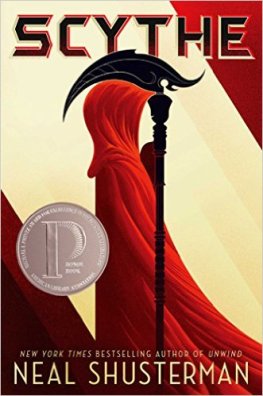
Scythe


In a world populated by humans who have conquered mortality, population control must come in some form. Right?

Hello lovelies. I just finished reading Scythe by Neal Shusterman and man alive was it good. A little predictable at times but overall a pretty good read. Humanity exists, ever growing and never dying, in an age where, once you reach your height of outward age, you “turn the corner”. Refreshing yourself body and keeping all of your mental faculties the same. Thus, someone you meet who is 98 might look like they are 25. Over and over again. The age before is known as the Age of Mortality where things like antibiotics were necessary and falling off a building wasn’t sport it was suicide. The characters in the book are far enough removed from this age to find the concept of a headache beyond imagining.

Citra Teranova and Rowan Damisch are our primary threads throughout the course of the novel. However, there is input from Honorable Scythes that separate the chapters, taking the form of journal entries (more on this in a bit). When we open, Honorable Scythe Faraday has separate interactions with both of our hero(in)es. Due to these meetings, both subsequently become apprentices to the scythe. At this point you might be asking what exactly does that mean? Why do I keep repeating that word? Well, scythes are the only people allowed to kill in this reality. Because of the ever growing, never dying population, control must be extolled in some manner, right? Scythes are legally sanctioned to kill and they have quotas to meet (just like all of us in our real jobs! Scythes are just like you and me!) (Except they’re really really not.). Citra and Rowan say good-bye to their families and begin their training in the arts of killing.

One of the things that I like about this tale is that even though these people are not able to die (they call it “splatting” after which they are taken to revival centers which do exactly what’s in their title), they still view life as precious. Taking it permanently gives them reservation. They are not impervious to their consciences. The same cannot be said of all characters. Those peeps are juicy and crazy in equal amounts. Anyway, Rowan and Citra are training under Faraday when some mischief happens and they are sent to be mentored elsewhere. What I haven’t told you is that not all of Scyethdom is happy with the fact that the scythe has taken on more than one apprentice. In fact, it is something that has never been done before. As such, it is determined that they will not both be accepted into the fraternity. One will have to glean the other. These humans have become so detached from societal killings that they are no longer referred to as murder but as being gleaned.

All of this happens pretty quickly in the novel and it is mystery and intrigue and life lessons from then on. The pair are made to part and train with different scythes. What is interesting here is that we see the training style of not just one scythe but three (potentially more…read and find out). These three scythes are the ones who make the journal entries between chapters, mentioned above. This give us a chance to see not just Citra and Rowan’s views of this vocation, new and inexperienced, but also the older generation who have been doing this for many years and have a very different perspective.

What transpires from there in the story is too good to spoil. Just know that these characters, in particular Citra, are very relatable. Readers get to experience so many different thought processes about what it means to be legally authorized to kill. When you think about what they are doing and the fact that they are in their mid-teens on top of that, it really gives you pause. Not only are they teens but they are teens amongst elders centuries old. Society has gotten to the point where the Thunderhead (having graduated from a cloud) is the foremost authority on societal control. There are no more cops because the Thunderhead prevents crime. There is no more government because it was proven they were all too corrupt to lead and the AI could do it better. Countries are now regions, continents grouped in accordance with geography. The world that Shusterman creates has an explanation for all of the ways the world has evolved.

At first I was worried that it wasn’t going to be good and be really predictable. But there are a couple of twists that throw you off course and make you recalibrate how you view this world. For example, the scythes to which Citra and Rowan are transferred both operate very differently not only from Scythe Faraday but also from each other. The moral dilemmas that they face independently turn out to be really fascinating to read through. It is very obvious to me why this book was on so many Best of 2016 lists last year. Pick it up and give it a read. Would you be able to kill for the greater good?

Veep

Veep.jpg

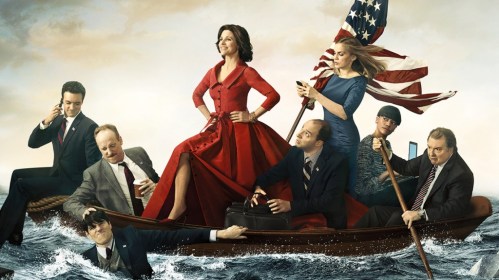
In sticking with last week’s theme, I would like to once again talk about a light hearted politically based piece of entertainment: HBO’s Veep. With all of the really heavy articles and interviews and tv segments, all of the blogs and podcasts and tweets, we need a bit of a reprieve. To cure this political hangover I highly recommend watching a couple of episodes in a row and laughing ’til your face hurts. In a less toxic environment than what currently makes up our reality, Vice President Selina Meyer (Julia Louis-Dryfus) and her staff show us what it is like to be the second in command. All the ups and downs of the position play out in stunning comedy as the team navigates “safe” ice cream choices and tries to keep on top of pregnancy rumors. Those two things do happen in different seasons but the gamut of how-could-this-go-wrong situations that continuously present themselves to this team are phenomenal.

There are plenty of jokes about the job of Veep…it’s a runner up position, they don’t get to do anything, they’re just waiting around to become number one…but it is really interesting to get insight into the job. Sure, there are shows like West Wing and House of Cards that put a president in the core of their cast. Not Veep. In fact, it is a running joke through the show that we don’t actually ever see the Prez or indeed learn his name (at least not yet and I’m in season three of five). Here we get to see the nonstop duty that this position is and also how a woman(!) is handling it. Meyer’s team of Amy, Dan, Gary, Mike, and Sue make the office run as smoothly as they possibly can. And while this isn’t always achieved, it shows the human side of these people. Sometimes, the phone call that you’ve been waiting for happens right after you’ve put your phone in a phone bowl at a wedding. Sometimes, you walk through a solid glass door and end up looking like you’ve just attended an Edward Scissorhands meet and greet.

I like this aspect of it.

Just as with last week’s recommendation, Veep also focuses on the human side of politics. We get to see an even keel of victories and failures and this coming from an office that is very frequently overlooked.

Each of the core characters that make up the Veep staff add to the comic genius that plays out every time something goes wrong. Holy moly stuff goes wrong a lot. For example, from the get go we learn that the big issue that Meyer plans on tackling while in office is Clean Jobs which is a stance against oil for clean energy jobs and technology. First big thing that goes wrong is that POTUS (as he is very frequently referred to) wants someone from oil to be in on this initiative. Things like this continue to happen over the course of the season and the series as accomplishments are marred by hiccups all the time. It makes for great satire on what has become a really depressing subject.

To close, I was listening to an interview a while back with Tony Hale and he was talking about how much they film in proportion to how much actually makes it to the screen.While the show has some really amazing writers, the cast itself is pretty crazy in their takes. With comic genius going for several straight minutes, I have cried laughing several times. So if you need a reprieve from the depressing headlines, cure your woes with some Veep. 

vice-presidents


Presidential – The Washington Post

presidential-podcast-2100_gw.jpg


Hello there, y’all! Happy President’s Day or happy two-days-early-birthday to President George Washington! On this happy day while Congress has been given the week “off” I encourage you to take a look at the presidency in a different light. The Washington Post, beacon of truth that it has been through the decades, has a new(ish) podcast out which is really rather enjoyable! I’ve never talked about a podcast on this here blog but, much like with audiobooks, if you’re ingesting words, it counts. Like books and movies, they are a way to escape reality for a moment.

Presidential goes episode by episode through each president’s tenure in office while looking at various aspects of the make-up of these men. What discerning character trait did John Adams have that allowed him to follow after Washington stepped away from office? Who is overlooked and why? The introduction of the “campaign”. These episodes are chalk full of little tidbits that you didn’t know about the Founding Fathers, the presidents during the Era of Good Feelings, and up through the present. Our host Lillian Cunningham is a reporter at TWP and her guests are people like the keepers of the keys at the Library of Congress, Pulitzer Prize winning historians, and Bob Woodward. There is a running question throughout the series where Lillian asks the historian on what it would be like to go on a blind date with the episode’s gentleman. Pieces like this really humanize these people some of whom lived over two hundred years ago.

I am currently on Andrew Johnson, president number 17 and I cannot get enough of these stories that are retold and relayed by these historians. Letters, diaries, and papers are all provided as sources for the information you learn in these episodes. For instance, AJ here was piss drunk at Lincoln’s inauguration and gave a really embarrassing speech…weeks later he was sworn in after Lincoln was assassinated. John Quincy Adams was the first son of a former president to hold the office and was also the only man to hold elected office after leaving the presidency. He went back to Congress and worked hard to fight slavery. In fact (this is one of my favorite recountings so far) there was a motion to make the word “slavery” illegal on the floor as it was becoming too much of a hot button issue in 1836. JQA went and got himself in trouble on purpose by saying the word. Now, as per the rules, he had a chance to defend himself of this action and he took advantage of this, his time to speak, and ran with it for TWO WEEKS talking about the injustices of slavery. This in and of itself is amazing and then as the story comes to an end and the episode is winding down we learn something else: who was a first term Representative at that same time but Abraham Lincoln. Bits like this make that whole thing so intricate and fascinating.

It really is amazing how far we’ve come in this country considering our government was put together by ideas proposed by men who didn’t really know what they were doing. George Washington espoused the belief that he was not fit to run the country and was firmly and vociferously  of the mind that he had no  idea what he was doing. We have been led by these men who have differed vastly in their ideals, these men who supported and encouraged the guidance of others, and whose legacies set examples for history. Our country has had its ups and downs (and there have certainly been a lot of both) and it is incredibly important to know where we’ve come from. How did we get from one to 44? How did we get to where we are now? This is monumentally important…to put it in presidential terms.

So whether you just listen to Obama and Kennedy or if you listen to them all in order, Presidential should definitely be on your radar.

…and so should this picture…

abraham-lincoln-sexy-photos-17.jpg


Late to the table: Arrested Development

arrested_development_cast_promo_photo

Upon scrolling through Netflix’s recommended section, I was repeatedly receiving Arrested Development as a suggestion. I had always heard great things about the original series…it was popular while I was in high school but I never got around to watching it. There is no question, now that I have viewed the series in its entirety that I don’t agree with the small masses that make up the cult following of the show. This entry though is specifically about season four. The “Netflix season” if you will. This season is also something that I had heard about …however nothing really good. At first, I must admit, I was in the same camp. The sets were slightly awkward as the show had been off the air for seven years. The dialogue was slightly off as if the writers and the actors took a bit to adjust back into their character’s grooves despite Mitchell Hurwitz (most recently he produced Lady Dynamite which you NEED TO SEE) returning to help co-write a majority of the episodes.

After tearing through the first three seasons in two weeks, I was hesitant after three or four episodes of season four. However, I couldn’t not finish it after all the time I had already invested. So, I soldiered onward and found that I ended it with a new found appreciation.

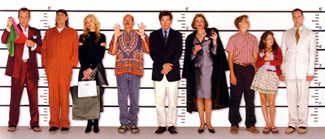
The Netflix season is structured differently than that of the original run. While there is still the premise of a show being shot about the family (complete with Ron Howard’s narration and the characters being aware of the cameras) there is one central storyline that unfolds and we see each character’s perspective; their side of the events. This creates a very interesting theme set around how each of their actions has impacts, sometimes unknown, on other people’s part in the story. It showed the interworkings of this family whom we have come to hold dear for reasons unexplainable. They are, after all, lying, cheating, connivers. What makes this way of storytelling even more interesting is that there are so many players involved and because of that so many avenues to explore. Including George Sr.’s twin there are 10 members of the Bluth family.

Picking up the storyline where it was left, we dive into the whole family being held in a police station after the events of season three’s finale. Lucille had tried to steal the Queen Mary, George Sr. had just been cleared of treason charges, Michael and George Michael had returned from their once again failed attempt to leave the family to their troubles, and many other pieces of the puzzle. Without explaining all of them: know that they were all there at this station. We bounce back and forth between the events here in the station and what comes after them with the understanding that it has been five years (not seven) in Bluth reality.

The through line slowly unfolds like like a bloom in the spring and each episode is labeled/assigned to a specific character. In doing this, you know that most of the episode is going to be dedicated to that character and the small degrees of separation between each person’s tale. It really becomes fascinating how something you do, it might be something small and insignificant to you, might effect someone else in a big way. It also serves to illustrate the seemingly isolated lives these characters live in that their actions so immediately impact each other. This way of unfolding highlights a couple of other points as well: those who don’t seem to have too much overlay (ex. Buster and George Michael) are brought together in the culminating scene of the tale (the night of Cinco de Quatro), and, while it is always insisted that “family is first” by the Bluths, each is in their own little world. While this is a fact we already knew from the original run, this sort of individual attention of their lives seems to showcase it even more.

Outside of the interesting approach to storytelling, the reoccuring guests that appear over the course of the season really help give it a new feel despite old events occasionally being brought back up. There are familiar faces: Henry Winkler reprises his role as the Bluth family lawyer and is as incompetent ever, Gene Parmesan played by Martin Mull (the scenes where Lucille is surprised by his appearances make the whole show for me), and Kitty Sanchez the stage five clinger played to perfection by Judy Greer, and Liza Minnelli as the most unlucky neighbor Lucille 2. Then there are newcomers that bring even more charm and crazy to the table: Terry Crews as Herbert Love running for a seat in the House and Isla Fisher as Rebel Alley (an illegitimate daughter of Ron Howard). z1y2yyw

All of these elements: the story and how it unfolds, the characters new and old, and the awkwardness of the show in general made for what I found to be an enjoyable conclusion to our window into the lives of the Bluths. Again, all that being said, I totally understand where all the hate came from in reviews. I was really happy that I saw it through and didn’t give up.

What I take away from this experience is that even though Netflix Netflixed the season (made it shinier and a bit off), it worked. Now if only the same could be said for season two of Kimmy Schmidt.

  1. lcwqnsq

All aboard the live action train


I grew up with an extensive VHS Disney collection; it was my first library. As an adult, I am able to recognize all the racism and innuendos but it’s hard not to still wish upon a star or live by the problem free philosophy. Despite the terror of an old lady giving you poison apples and a mad lady putting you in a coma, there was the enchanting notion of being a princess and having a tiger for a pet. The dark storylines juxtaposed with the happy songs make for instant classics.

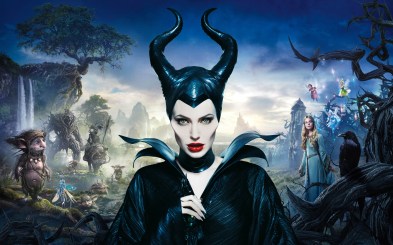
A couple years ago, Disney released Maleficent which, if you think about it, was the first in the trend. While not an exact retelling of the animated film, it gave us more context on the protagonist Aurora faces in Sleeping Beauty. More of an origins story, Maleficent starred Angelina Jolie and Elle Fanning and grossed $758 million worldwide.

Maleficent.jpg

When the live action announcement of Cinderella came, I was skeptical. Not everything needs a remake. However, I was pleasantly surprised after I came out of the theater. Not only did I only have minor critiques (see said critiques here) but I actually found it enjoyable. The movie did really well in both domestic and foreign markets garnering a total of $543 million dollars. Shortly after this success Disney announced their plans to bring another title to the live action big screen.

Cinderella.jpg

The Jungle Book seemed like such a huge undertaking that I was sure this time they wouldn’t be able to pull it off. Talking animals are usually pretty cringe worthy. But as the news of the cast steadily rolled in over the next year or so, I started to wonder if there was something to it. Surely all of these amazing actors wouldn’t attach themselves to the project if it were hokey. Man was I wrong. The Jungle Book was the best of the remakes yet and grossed just shy of a billion dollars worldwide!

Jungle Book.jpg

This added an insane amount of fuel to the fire that has become live action. After The Jungle Book’s massive success Disney announced plans for a whole slew of titles to be released over the next five years and a slew if definitely not an exaggeration.First, Beauty and the Beast will come to theaters. This is being hyped beyond belief with nothing but stills and a few seconds long teaser released so far, with Emma Watson playing Belle. Then, Cruella is getting her own film and so is Tinker Bell. Dumbo is getting a new take from the mind of Tim Burton (I really don’t understand how this is going to happen but maybe this will be better than his Alice movies). And just this past weekend it was announced that Guy Ritchie will be at the helm of the Aladdin film. This is another stumper in that Genie is so heavily associated with Robbin Williams and the recreation this character is hard to imagine. Also this weekend it was announced that the script for The Lion King now has a confirmed writer. We can only hope that titles like Aladdin and Mulan won’t be whitewashed and will reflect their characters and cultures appropriately.

I really enjoy that my doubt has been proven wrong thus far but these are pretty lofty goals they are setting.

disney_characters_by_ficklestix

The Girl in the Spider’s Web-David Lagercrantz

spiders-web


Hello there book lovers. Today we will be diving into The Girl in the Spider’s Web which is book four in the Millennium series. Before diving into the review and analysis, however, I would like to discuss the amazing journey that has transpired behind the scenes over the course of this series’ existence.

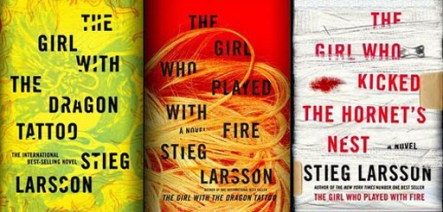
Stieg Larsson created the world in which the magazine Millennium exists. It is run by  Mikael Blomkvist and a savvy team of reporters in Sweden. Blomkvist, over the course of the first book, meets Lisbeth Salander who is a hacker and an amazing one at that. Larsson stated initially that he had enough material for the series to span 10 novels though his untimely death in 2004 seemingly put a halt to this idea. After his death, The Girl with the Dragon Tattoo was published in 2005 and was incredibly well received. The following two  years, in 2006 and 2007,  The Girl Who Played with Fire and The Girl Who Kicked the Hornet’s Nest were published respectively. The ’07 publication of Hornet’s Nest was the last of the complete manuscripts Larsson left behind.

It was at this time that Larsson’s publishing house Norstedts Förlag was at a cross roads. Leave the Millennium series as is or continue the work that Larsson began by passing the torch onto another writer. However, it was not as simple as that and it is here where the literary soap opera gets juicy. You see, Larsson’s longtime partner Eva Gabrielsson was in possession of all of Larsson’s outlines and notes and partial manuscripts. The two had never married due to safety issues stemming from Larsson’s activism and journalism.  The will Larsson left behind had not been witnessed or documented properly and because of this, his estate fell into the hands of the deceased’s brother and father. They were on board with the continuation of Larsson’s series however Gabrielsson staunchly opposed the idea. A very public dispute ensued. In the end, the Larsson’s gave permission to Norstedts to proceed with a fourth installation of Mikael Blomkvist and Lisbeth Salander’s escapades and at the very end of 2013 it was announced that David Lagercrantz would pen the title. In August 2015 The Girl in the Spider’s Web was published worldwide followed by a release the following month in the United States.

That being said, let us now dive into the title in question:

This was the first time that I listened to an audiobook. I know, I know, get with the times. I am a huge podcast fan and love talk radio, but for some reason I had never listened to a book on tape file. Man I loved it!

The Girl in the Spider’s Web was written by David Lagercrantz and was recorded by Simon Vance. I was apprehensive about this title because I have been such a fan of the series and to hear that another author would be taking over is enough to make anyone skeptical. I think Lagercrantz did a really good job though! There are a lot of negative reviews on the title and so that only added to my apprehension but I was pleasantly surprised to find that I was of a different mind.

Firstly, Lagercrantz did something that I noticed fairly quickly in that he made Mickael Blomkvist much more believable as a real person. How did he do this, you might ask. Well, for starters, he did not have every woman Blomkvist encounters throw herself immediately at our main character. This was so refreshing. Previously, Blomkvist had been such a ladies man that by the second and third book it was almost farcical. Every. Woman. Like, what? I know he is charismatic and that he is a reporter so he has a certain je ne said quo but cooooome ooooon. So that was a definite improvement.

This was a super important shift that I found very refreshing and humanizing.

But it wasn’t only this detail that made for an obvious departure of Larsson’s writing. The story itself unfolded in an interesting way. Before I dive into that, however, let us get a brief overview of The Girl in the Spider’s Web. 

There has again been a lapse in time from where the previous title left off, as has been the pattern for the series. We open with Millennium magazine not doing too well and rumors run wild that Mikael Blomkvist is now a washed up journalist who is feebly riding on the waves of his past success. Timing is everything though and a scandal soon begins to unfold. Scientist Frans Bolder is murdered in front of his autistic son and it is later determined that one of his computers is missing along with the A.I. technology that he had been working on. At the same time, the NSA in America is hacked. Something no one thought possible. The hacker players in Spider’s Web are very interesting and it is here that we learn that Lisbeth Salander just cannot escape her past and the family that she so deeply despises. You see, it is revealed early on that Lisbeth’s twin sister is in on the plot. This I loved and will get into more detail on in a second. Blomkvist gets involved because the night that Bolder was killed he had called the journalist saying that he had information that needed to be shared and that he was nervous about who wanted this knowledge and what lengths they might go to to get it. Thus begins the unraveling of what his technology did, who wanted it (both criminal and government), and how Lisbeth Salander fits into the equation.

There is a writing technique that Lagercrantz employs frequently and with great affect. He goes through a scene/time frame from one character’s point of view and then he alternates this view and retells the same moment from a different perspective. For example, Bolder’s death scene. We are outside the house with the police officers who have been assigned as protective detail for Bolder. They encounter someone outside and are speaking with him when Blomkvist arrives. The next passage is seen from inside the house as the murder is taking place. The killer runs out of the house and slams into the newly arrived Blomkvist as he makes his way up to the house. This happens again and again throughout the book and it is very well done. These time frame parallels enable us to have a fuller understanding of a particular scene and point in time. This is also a great tool because it allows a tense moment to play out from different vantage points and then it is easy to cut away from the tension and switch to another which creates cliffhangers in interesting spots. Very exciting.

As we dive into the hacker aspect of Spider’s Web we get further insight to Lisbeth’s past; something that I always enjoy and which was a particularly important through line of Hornet’s Nest. In book three we gain a deeper understanding of Lisbeth’s father and the terrible things he did to her and her mother that formed the Lisbeth we all know. Closed off, man-hating, curious, incredibly smart, and somewhat on the spectrum (not that her dad caused her to be on the spectrum but how his behavior impacted her). So then in Spider’s Web we meet and get more info about her sister Camilla who had briefly been mentioned in titles past. Camilla is described as a polar opposite of Lisbeth. She glows with beauty, has charm for days, and is able to persuade anyone to pretty much do anything. She is their father’s heir to his criminal empire and she is a cold and nasty piece of work. Seeing the contrast of the sisters becomes a big part of the third act as we find out more and more what Camilla is capable of. At the same time, we see a more tinder side of Lisbeth than has been expressed so far.

After his murder, Lisbeth takes Bolder’s son August into hiding as he was a witness to the crime. Despite the fact that he doesn’t speak, he is a savant in numbers and drawing. He saw the face of his father’s killer. While on the road with the boy, Lisbeth begins trying to open him up. Lagercrantz does this in a very real way. Lisbeth does not speak down to August, does not try to pander to a child. She speaks to him like a fellow human and it is very refreshing and eventually something comes of it in that he draws his father’s murderer. In true Lisbeth fashion, she just wants what is best for the boy and his mother and there are parts of the story that transpire between the three of them that are solely known by these three characters. It is special and I really enjoyed seeing how that part played out.

Going back to Lisbeth’s sister, we see how deep seeded their hatred for each other is and are taken back to their childhood. It is here, in the past, that Lisbeth’s hacker name Wasp is given explanation. The Marvel universe is brought into play and we learn how important the Janet van Dyne character and the Avengers are to Lisbeth. As Camilla becomes more nemesis than sister, she begins to call herself Thanos. This pull from pop culture was the only thing that stuck out as odd to me and while it is interesting to hear about the psychology behind this, it took me out of the story a bit to have something so American mentioned. I am not sure if that was always the origin of the Wasp handle; it makes a lot of sense when the backstory is given but I wonder if that was Lagercrantz’s doing or taken from notes of Larsson’s.

Overall, The Girl in the Spider’s Web was a really great listen and Simon Vance does a great job with all of the Swedish that occurs throughout. I am really interested to see if he continues on with the series or if the publishing house will do each title by a separate author. The sales for book four have been pretty good and the title stayed on bestsellers lists for 16 weeks where it sold over 200,000 copies in it’s first week! Lisbeth Salander is such a compelling and stimulating heroine who stands up for the rights of women, what is right and just, and doesn’t take any shit from anyone. I hope that these numbers will parlay into a book five and that we won’t have to wait eight more years for it!

millenium_trilogy_mar3