Gilmore Girls Comeback

gilmore-girls-big


This week’s post is dedicated to a show that my mother, sister, and I have been fans of for years. We would sit and watch it live every week back when that was still a thing. Before binge watching and DVRing and Netflix and chill we would watch the entire 22 episode season (yes, 22 whole hour long  42 minutes long episodes).

Gilmore Girls began October 5, 2000 and ran for 154 episodes on what was originally the WB and is now the CW. The show chronicles the lives of the mother daughter duo Lorelai (Lauren Graham) and Rory (Alexis Bledel) Gilmore who live in the quaint town of Stars Hollow, CT. The phrase “it takes a village” is very apt over the course of the seven years of the show up to the very last episode and we are introduced to townspeople in season one who are prevalent throughout the series. Show runner Amy Sherman-Palladino does an amazing job of making Stars Hollow a real community, not just a TV town. There are town meetings and community issues and small town romances, I could keep listing but I won’t. The show itself centers on the Gilmore girls, however all of the supporting characters really contribute in making the show as quirky as it is.

gilmore-girls-slice-600x200

Over the years we experience first love with Rory, her acceptance to Yale, and watch as she grows from the quiet junior at a private high school at the show’s open to the determined and ambitious Yale graduate at its close. Lorelai goes from managing an inn to opening and running one of her own, with the help of business partner Sooki St. James (Melissa Mcarthy).

It is a show about growing up and being true to yourself no matter what. The senior Gilmores are upper crust Mayflower descendants. From the Pilot we learn that Lorelai left this life after becoming pregnant with Rory at 16 to be independent and raise her child how she wanted, out from under the thumb of her mother. A central theme of the show is family. Whether you like it or not, your family is your family and while Lorelai and Rory are strong and independent women, they still need their family from time to time. And it isn’t just blood that follows this theme. Sooki and Lorelai are the best of friends and Rory’s friend Lane is her rock in times of need. By this extension community also runs deep.

Recently, I rewatched the series for the umpteenth time. Gilmore Girls is one of those shows that is just so comforting and is so relatable to a smattering of demographics. There is a closeness that Lorelai and Rory have that I don’t think I’ve seen in any other show. They are best friends and it is was always so wonderful to see that on TV instead of arguing and acting out.

When I found out that there was going to be a revival on Netflix, I was over the moon with excitement. Everytime there is an update on Facebook, I tag my mom and sis. When it is mentioned on IMDB I immediately stop what I am doing to watch or read whatever has been released. This is something that, no matter how many miles separate us, we will be able to watch together and get excited about. While there is not always a good product from a revival (I didn’t even try watching Fuller House), I know and have faith that this one will be the exception. You see the series did not end how Sherman-Palladino had intended.

It came out that the Sherman-Palladino team had been treated less than was desirable by the network for several years. There were contracts for the show, for the actors, but not for the writer or her husband and directing partner Dan. The duo tried for contract negations and were met with silence. So while the show carried on for it’s seventh and final season, the creators were not there to see it closed. And while the show ultimately ended in a nice neat way, it was not the ending that Sherman-Palladino had had in mind all those years.

This is why the Netflix news was so exciting to hear! All of the original cast is returning, which was no small feat as many of them have gone on from the show to achieve really great success (most notably Melissa Mcarthy). And to top things off, Amy and Dan are coming back! There will be four episodes that are each an hour and a half long and they will represent one season of the year, hence the title of the miniseries Gilmore Girls: A Year in the Life. 

The four new episodes debut on November 25 (the day after Thanksgiving) and I cannot wait to Skype with my mom and sister and hear that theme song once more because where the Gilmore girls lead, I will follow.
gilmore-girls-revival-amy-sherman-palladino
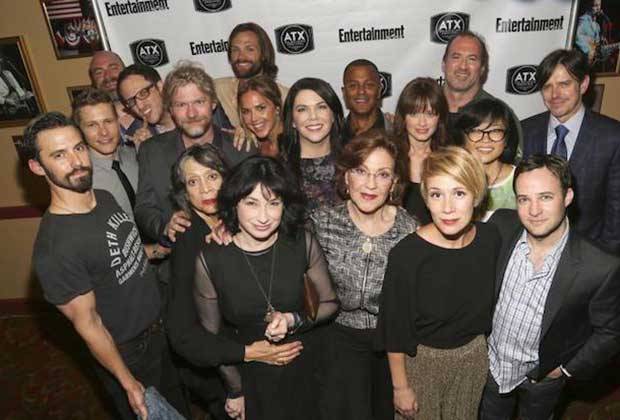
Full cast photo at the ATX Television festival in Austin, TX where the cast was reunited and the revival was first hinted at.

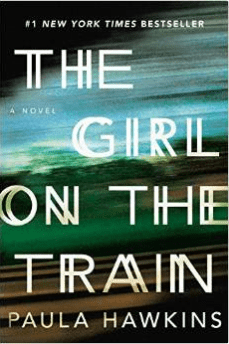
The Girl on the Train- Paula Hawkins

I was very proud of myself for going as long as I did without reading The Girl on the Train while simultaneously avoiding any spoilers of the twist and the reveal. After Gone Girl‘s twisty turny ride and the onslaught of similar twisty turny plots came out, I resisted the trend. It is something that really bothers me, market flooding. I get that imitation is the best form of flattery however if an author does something truly spectacular in a genre that does not mean that every title in the six months following needs to follow the same pattern (read my pseudonym article to see how Stephen King solved this problem). That being said, I resisted the raves that came out following the release of The Girl on the Train (hence forth seen as GotT). However, with the movie coming out soon, I had to adhere to my policy of book reading before movie viewing even though this does from the trailer to seem to be more of a “based on” than “adapted from”. This is more of an overview of my thoughts on the novel as I wish not to spoil this book as it was not spoiled for me. So, here it is:

The_Girl_On_The_Train_(US_cover_2015)


The tale of the GotT is told to us through the perspective of three unreliable narrators. We have Rachel (who is the title character) who commutes to London every morning on the same train and it is on this train that Rachel observes Megan and her husband Scott (Rachel doesn’t know their real names at the start). The observations seem harmless, she sees them from the train everyday and creates a mental profile of their lives; seeing them as characters more than people. It is made abundantly clear to us from the second page onward that Rachel is an alcoholic. Like full on day drinking, all the time drinking, alcoholic. Hence, her unreliability.

Our second narrator is Megan. There aren’t so much chapters, the way the book is laid out, but with each perception shift, the woman whose view it is in  is up in the chapter heading space and there are notations of dates and times of day. Somewhat diary/snapshot like however the timeframes are restrained to morning and evening. Why am I detailing this? Well, it is from this that we see that these view points are nonlinear. This is important later on as events unfold and you gather details out of order and piece them together. It makes the puzzle engaging and you quickly realize that every piece of the story matters. We learn slowly that Megan is not happy with her life. She feels agitated and stuck; like there is something else that is just beyond her reach that would complete things for her. A former gallery owner, she is restless and while she seems to think she is good at hiding this from everyone…that is not always the case.

Lastly, we gain pieces of our story from Anna who is married to Tom. Their courtship and family beginnings are unfolded at a nice pace and we slowly learn that these three women are separated by a small number of degrees and that makes their web even tighter than you might at first realize. Anna has snooty opinions of other women and so her views of our two fellow narrators is a bit colored for her own personal reasons. She is no more reliable that the alcoholic or the pretender. So, it all trickles down to the fact that everyone has secrets and none of us are as completely fine as we might present.

These three women’s lives unfold over the course of the novel and it is not just their degrees of separation that shrink, so too does the fact that you really do not know who to trust. Who is giving the whole story or at least the story closest to the truth? Everyone has motive. Everyone has opportunity. When someone goes missing, there is no way to know who is trying to keep the biggest secret of them all.

That being said, the twist at the end was very good and pretty pyscho. However, if you pay really close attention you are able to figure it out pretty far ahead of the reveal. I wasn’t 100% sure I knew…but I was rewarded with being right which is always so satisfying, don’t you think?

Now, the last thing that I would like to follow up with is the that of the treatment that each  these ladies extend to their fellow females. None of the women in this book are nice to each other. While some of it is for understandable reasons (like Rachel being piss drunk and walking out of a house with a baby that isn’t hers) most of it is a bit exaggerated. The women are mean and sneaky and snide. Even the female detective is just downright rude and untrustworthy. It is apparent from the get go that none of them are besties but at times I feel like it was a bit unnecessarily hateful.

I flew through this book in a matter of days; couldn’t put it down. It is very fast-paced and has a really quick flow because of how it is broken down. GotT would be the perfect book to put in your pool/beach bag and tear through as the warm sun shines down on you. I highly recommend it!

pseu·do·nym /ˈso͞odnim/

pseudonym


In the 2001 movie Monkeybone, cartoonist Stu Miley (Brendan Fraser) switches the hand with which he draws his pieces. The result is that his creations go from dark twisted nightmares to this goofy monkey and his human pal (think Garfield as a monkey). This concept got me thinking about pseudonyms and the persona that is developed by and within an author’s works. In today’s publishing world many authors, both well established and those just starting out, create pen names under which they publish. The reasons for this vary from author to author: just starting out and trying to establish a name with spunk, switching genres and therefore perspectives, or trying to get away from an already established name. There are many great authors to think about who do this and I have a couple favorites.

Lemony Snicket is a mysterious, enchanting and hypnotizing storyteller (and no, he is not standing here dictating this sentence to me). He has published the accounts of the Baudelaire children and their escape from the dastardly Count Olaf. They have suffered a very hapless timeline, quite tragic really; but man are they brave children. The siblings are put through the ringer whilst trying to get to the bottom of their parents murders (which were covered up by a fire). According to his website Snicket is “insatiably inquisitive” and can only be contacted via HarperCollins Children’s Books. Snicket very rarely appears at book events, although it has happened on select few occasions. More often than not, Snicket’s handler is in attendance to answer questions to the best of his abilities and remind people how aloof his charge is. This man is one Daniel Handler. Mr. Handler leads a “relatively uneventful life” and is also the author of three books that are not for children. This past fall Daniel Handler spoke at the gala fundraiser for the 20th annual Texas Book Festival and at the fest itself. He is very interesting to listen to…quite captivating. He loves his fans and, after one of his panels, went out the front with the crowd instead of out the back. Taking picture after picture, joking the whole time. These two individuals seem to be vastly different in both character and in social settings. Now, I’m going to divulge something to you: they are one in the same. <<pause to allow gasps>>  While switching seamlessly from Snicker to Handler and back, Daniel composes symphonies, writes a column in which he discusses Nobel Laureate’s books, and writes books for non children folk.

In 1977, Richard Bachman published Rage, his first book. Over the course of the next few years, he published four more books all of which did moderately well on sales. It was after his title Thinner was published that it was revealed that Richard Bachman did not exist. All that time horror master Stephen King had been writing under the pseudonym. He reportedly was interested in seeing how his work would do if nobody knew it was his. Was he at his level of success because of his name or because of his words? (See his essay “The Importance of Being Bachman” here.) At the time of his reveal King was working on Misery which he had planned on releasing under Bachman’s moniker (I think Misery is my favorite of his works. It’s so creepy and plausible and they’re out there in the snow. Eep!) In this case, the writing style and genre were the same; that’s how he was found out. In addition to wanting to see how his work would fare on it’s own, King was feeling restricted by his publishing house who were only releasing one title of his a year so as not to over saturate the market with his “brand.” Seeing the loophole in this, he convinced them to put out titles under the name Richard Bachman.

Not unlink his father, Joe King publishes under the name Joe Hill so that his work stands away from his father’s shadow. Hill has produced some really amazing works like Horns and The Fireman even after it came out who he was. In 2007 he issued a statement confirming his parentage but not before having obtained respect in the literary community, being awarded a Ray Bradbury fellowship and also receiving for his short story collection 20th Century Ghosts the Bram Stoker Award.

Lastly, I would like to bring up Joanne Rowling. We all the know the story of Harry Potter being rejected by 12 houses (publishing not Hogwarts) but many aren’t as aware of the fact J.K. is just as much a pen name as Robert Galbraith. While they were smart enough to pick up her manuscript the publishers silly thought that young boys would be not as interested in reading a book by a woman (which doesn’t make any sense, as young boys throughout history have been told fantastic tales by their mothers and grandmothers and you would think that would inspire something or just all together not even matter, but whatever) and as such asked her to shorten it to initials and her surname. Thus, J(oanne) K( Kathleen) Rowling was penned. Joanna as her full first name and Kathleen from her grandmother’s name as she had no middle name). The success of the Harry Potter series has brought such fame to Rowling and her name that when she put out her first non Potter title after the series ended, Casual Vacancy, everyone waited on baited breathe. However, Casual Vacancy was not by any means a success. I actually stopped reading about 80 pages in because I didn’t understand any of the small town British government lingo and honestly, it was boring (although the HBO adaption is actually good for a watch). So, several years later when new crime writer Robert Galbraith burst onto the scene and awed critics and readers alike, the world was none the wiser to the fact that Jo had but out a new book. The Cuckoo’s Calling is a really solid read. I highly recommend these books, peeps. The news that Rowling and Galbraith were one in the same came shortly before the release of the second book in the Cormoran Strike series. Discovered by a reporter and confirmed by Little Brown, the news was followed by a reprint of the books which had quickly  sold out. There are now three books out by Galbraith and here is to hoping that another is announce soon. The complete departure from fantasy and the hard right turn at gruesome mysteries is very well done and really exciting.

In addition to the authors mentioned here, there are many well known writers who publish under more than just their given name. From C.S. Lewis to Agatha Christie to Dr. Seuss, the list is probably much more expansive than you might initially think.

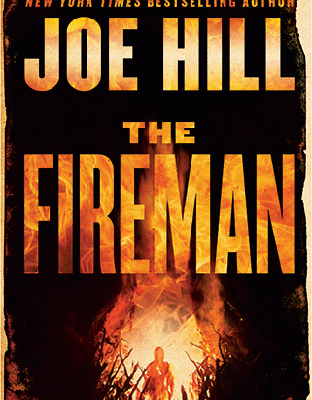
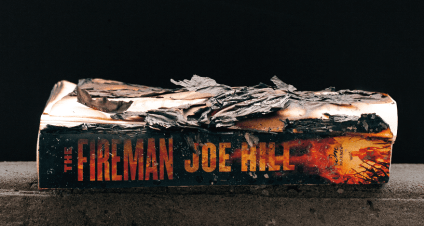
The Fireman by Joe Hill

Well y’all. I did it. I finished the behemoth tome that is Joe Hill’s latest, The Fireman.

What. A. Journey.

<<Spoilers ahead. You’ve been warned.>>

Tapping out at 747 pages, The Fireman follows Harper Grayson née Willowes as an airborne spore destabilizes the world. We sit with Harper and Jakob in their New Hampshire living room in the first chapter and watch as the Space Needle in Seattle burns on the news, watch people jumping out of windows to escape the all encompassing fire that makes up these pages. The sickness is Draco Incendia Trychophyton and it creeps into you without causing any harm at first. You breathe in the infected air and slowly, lines begin inking themselves in intricate patterns; one here, one there. At first. Then it covers your whole body and your insides reflect your outsides; the Dragonscale begins impacting your very make-up.

If you paid any attention in Latin, or have any Harry Potter knowledge you recognize the first word in the disease’s name. Draco, dragon. It’s pretty easy to infer Incendia after that. When the spore begins feeling (feeling?) that the host is threatened (anxiety, sickness, fear) it begins to save itself. The host, the human, the body combusts and burns from the inside. Our lovely Harper is a school nurse who, after schools shut down and institutions begin crumbling (which happens pretty quickly as this book spans a little over nine months…) begins volunteering at the hospital where the sick and infected are asked to stay/are corralled and kept. It is in this setting that we first meet three of the four people with whom Harper will primarily share this journey. First is the Fireman.

Our title character is charming and aggravating (as most are) and British (think Rufus Sewell). And as the world is breaking down and falling apart this fireman is bringing in an injured, deaf boy Nick to the hospital (the whole time I pictured Ben from Stepmom). Neither of them seem to show any visible signs of the ‘scale, are not complaining about the usual symptoms. After much debate, they are waved through to the small portion of the hospital still seeing non-‘scaled individuals. We don’t see them again for a bit but fret not fellow swooners, the Brit comes back. Next, we meet Ms. Renee Gilmonton who is the just the absolute sweetest lady. She reads to her fellow infected hospitalmates, primarily the children; keeping them calm and relaxed (Renee reminds me of Oprah, not glam Oprah, but the Oprah of that famous camping trip with Gale).

Anyways, now that you’ve got some visuals, let us move right along.

We quickly discover with Harper as our guide that she is not only pregnant but she is also infected and boy howdy let me tell you, Jakob is not happy about this combo. So not happy, in fact that he actually blames her for having a Florence Nightingale type syndrome in which she can’t leave people be. Yeah, because that’s a bad thing. Jakob is a grade-A-Scott-Disick-type-douche; something that is apparent from the first time we see how his name is spelled. After he leaves Harper alone for in their house for days (weeks?) he comes back and suggests they kill themselves. Yup. She has it, so he infers that he has it. There is no conversation of should we or shouldn’t we, no concern for the fact that there is also their unborn child to consider, nada. Let’s just do the damn thing is pretty much his attitude. The reader is able to very quickly realize that not only is Jakob an ass but he is also legit crazy. His decision on the matter has been made up and as Harper tries to get away from this nutcase, with whom she has very quickly fallen out of love, she runs UPSTAIRS to escape him. Because that always works so well in the movies, right? I won’t say anymore on the manner of her escape because it is super tense and I would like you to feel that anxiety along with Harper as you read for yourself the measures she takes to get away from him.

And obviously she escapes because there are still 700 pages left in the novel.

JoeHill-1600x856.png

After our heroine ditches the psycho we arrive at Camp Wyndham which is where the second act begins. Where better to hide a growing group of infected than an abandoned summer camp? It really is a great setting. Here we meet Ally, Nick’s older sister. Ally, Nick, and their family began bringing in infected to the safe haven of Wyndham pretty early into the epidemic and this is where Harper finds community, safety, and a chance to breathe…and sing. This is a community that is no great risk of burning up for they have found refuge in harmony.

Throughout history, fear has always inspired hatred and that is incredibly prevalent in the world of The Fireman. Society very quickly devolves into an “us and them” type divide and the small bits of news we hear on the mostly static filled radio demonstrate this. Cremation Crews are formed and murder goes from frowned upon to commonplace. Throughout the whole book, Hill keeps his characters very black and white making bad guys and good guys very easily discernible (with an exception towards the end of the second act). The divide between good and evil and right and wrong is prevalent throughout. This is something that goes beyond the characters and extends to morals and beliefs. What is right to a “bad guy” is not what is right to a “good guy” but who is to say which is which? If you were not infected and viewed those who were as a threat to your well being and that of your family’s, then you would protect yourself in whatever way possible, right? If you are infected but not dangerous you would want to live and not be put down/out of your misery because you wouldn’t be miserable. Perspective is very important in this tale despite the fact that ours as readers never shifts.

Sprinkled through the middle of the book are mentions of an island that has remained under the care of the CDC despite the collapse of all other official acronymed orgs. Martha Quinn’s island (yes, that Martha Quinn) promises safety and developments and doctors. Sounds too good to be true; a point made by several in the Wyndham community. However as time goes on and disastrous events occur, it is clear to our little band within the camp that they need to get to this island one way or another. Harper is particularly keen to get there as it is unknown what the ‘scale will have done to the baby. And so, as the second act closes with a bell tolling, the final act opens with our heroes on a somewhat forced and hasty journey to the mysterious island. Miles and miles are crossed and mishap after tragedy follow our travelers.

Up until now there have been some pretty good plot twists, real solidly developed characters, and fairly good pacing despite the book’s page count. There are amazing pop culture references throughout (his description of how J.K. Rowling meets her end is gut wrenching). However, towards the end, the last 100/150 pages or so, things begin to get pretty predictable. While this is an obvious bummer, you’ve got to give Hill props for keeping things exciting and juke filled for as many pages as he does. The Fireman offers readers adventure and romance, heartache and danger, terror and hope. There are factions of mankind that turn into despicable monsters and there are those who are able to keep their compasses pointed North in hopes that not all is ruined.

Hope burns fiercely in Joe Hill‘s The Fireman. 


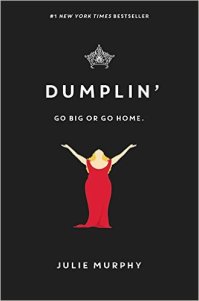
Dumplin’ by Julie Murphy

Murphy cover

I have had Dumplin’ by Julie Murphy on my shelves since last summer when I was given a proof copy at work. It has been sitting there unread ever since and every time my eye would pass over it I would think to myself, “that one is next.” But then it kept not being next. Last week I made it a point to put everything else on pause and read it since Murphy is giving a talk that I wanted to attend. I am so glad I was finally able to dive into these pages because once I did I could not put them down.

Willowdean Dickson lives in a small Texas town that is so accurately cultivated, I kept expecting to encounter someone from my own high school within the pages. Be it football or beauty queens, most small towns have a focus like nothing else on hype. In Dumplin’ the latter is the be all end all of not only the town but of Willowdean’s life. You see, her mother is in charge of the Miss Teen Blue Bonnet pageant (a title which she herself won back in the day) and as such, Will’s life is overrun year after year by glitter and sewing machines as their house becomes ground zero for pageant planning.  Until now, Willowdean has not thought too much about the pageant except for maybe that her mother cares a little more for the glitz and glam than she does about her daughter. But that hasn’t really bothered her too much as she’s left to go about her life without the pressure of worrying about wether she fits in an evening dress or can define what her “talent” is. Until now, that is…because now, Willowdean is tired of being the fat best firend and the dumpy sidekick. She’s tired of the school bully picking on not just her but other members of the lower social tier. In a decision that she makes concrete by telling her best friend Ellen (so now she can’t back out) Willowdean is going to enter the Miss Teen Blue Bonnet pageant. Not because she wants to prance around on stage being the center of attention. Not because she thinks she has a shot at winning. Not even to have something to put on her college transcript. It is a decision she makes for herself; a decision that takes the power away from everyone who has discounted her her entire life.

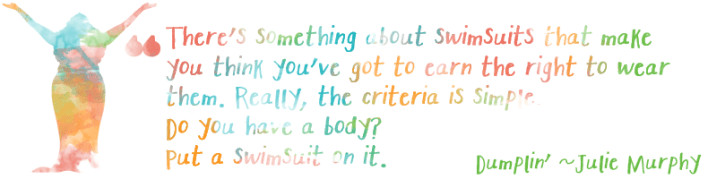
What I loved about Willowdean was that she didn’t wallow in self pity or cop out of things because of she was ashamed of herself. In fact, one of the first places we go with Willowdean and Ellen is a swimming pool and she dons her swimsuit without any apology and gets in that cool cool water.

dumplinbanner1

Dumplin’ was such an easy read because Willowdean is so charming. I was able to relate to her on a level I was surprised by as I too have been on the receiving end of teasing about things I can’t help about myself. Willowdean is strong and stubborn and so encouraging to others.

When a group of fellow misfits (a girl who wears corrective shoes, a girl who is mercilessly teased because of her teeth, and the only lesbian in their high school) join Willowdean in her pageant mission she is shocked that she has become a source of inspiration. She is completely unaware of the impact she has on those around her. These girls develop a bond that is deeper than simply being pageant buddies. They band together and support each other when there is no one else to tell their secrets to, no one else to confide their worries in. This is an aspect of the story which I absolutely loved. Yes, the main plot point driving the story is a beauty pageant, but it is about so much more than that!

Throughout the story we experience several firsts with Willowdean that do a great job in taking the reader back to those nerve-wracking days of self doubt known as high school. We are with Will when she receives her first kiss and when she is asked on her first date. We are with her to experience her shock that those two events occur with two separate boys and the self-conscious fear she feels when one of them kisses her and slides his hand down her back (“Beautiful,” he says. “Fat,” I think.). We are there when she fights with her best friend and when she attends her first drag show (something that none of the girls hope their parents find out about). She is an incredibly well rounded (zero pun intended) character and the empathy I was able to feel towards her warmed my heart. I really enjoyed getting to know Willowdean Dixon who like her idol Dolly Parton decides “live big or go home” are words to live by.

Definitely recommend this book to fans of Rainbow Rowell. I hope Julie Murphy continues to write because I cannot wait to meet her next knock out lead.

Midnight Special

The movie opens even as the production logos are still occurring with a voiceover of an Amber Alert being broadcast on TV.

Fort Worth, TX

8 year old male

white

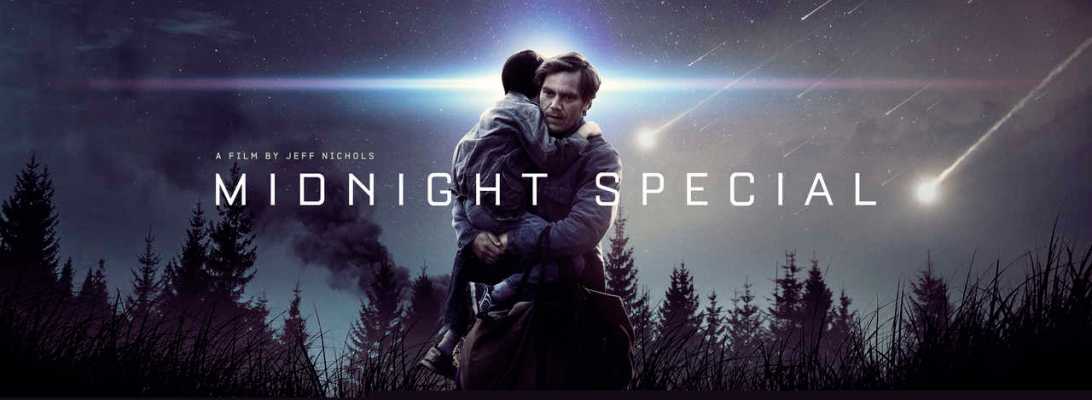
Pan to: said white 8 year old sitting on the floor of a hotel room, under a sheet, reading Superman comics (intentionally done as these two films opened at the same time or funny little coincidence?). He seems perfectly at ease with his surroundings; not panicking or frantic as one would imagine a kidnapped child to act. When Alton (Jaeden Lieberher who got his start alongside Bill Murray in St. Vincent) is asked if he’s ready to go, he proceeds to the car with the men we assume are his captors. As they drive off into the night, the music hauntingly swells and it is apparent that we aren’t even close to knowing the full extent of what’s going on.

I went into Midnight Special without being too sure what I was about to see. Despite having watched the trailer and reading the synopsis a handful of times I was still unable to put in my own words what the movie was really going to be about. When this happens I’m even more excited for a film regardless of whether it turns out to be worth it or not.

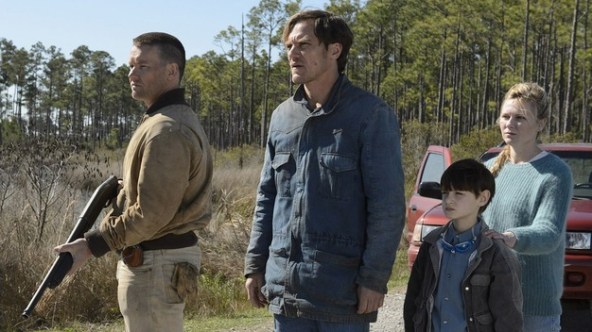
As the film begins to unfold we are introduced to two additional threads of the narrative. First, there is a church which exists on The Ranch (think YZF/ The Fundamentalist and include all the terrible hair styles). These folks, led by Calvin Meyer (Sam Shepard), believe that Alton is their link to God who has been communicating to them a day of reckoning. Then, there are the federal agents who have been monitoring The Ranch and are very interested in the “predictions” Alton has told the good sheeple which are taken as the Word and turned into sermons. Two agents are our main liaisons to the government’s involvement in the story: FBI agent Miller (Paul Sparks) and Homeland Security agent Sevier (Adam Driver). These men are trying to understand not only the church’s involvement but also the unexplained phenomenon that seem to follow in the wake of Alton, his father (Michael Shannon), and their Texas Ranger turned personal bodyguard Lucas (Joel Egerton).

The race to reach a specific location at a specific time is what moves the plot along and eventually leads to the different threads being sewn into one quilt. Most of the action takes place at night since Alton’s otherness causes sunlight to freak him out. As a result the visual tone of the film is very dark and blue with the score adding tension in all the right places. Being that I had no idea what kind of ride this was going to be, I really enjoyed the journey and the plot points (for being sci-fi) didn’t seem too far fetched. The revelation of who/what Alton is was very interesting and the reveal at the end was, again, interesting. I have a great deal of trouble with the ending of many sci-fi films; they always seem to let me down a bit. I enjoyed this journey however which is as much about a family sticking together (the above mentioned fellowship is joined by Kirsten Dunst as Alton’s mother) as it is about the kid’s powers. The point of mom and dad being there and helping you through anything hits home when Alton tells his dad that he “doesn’t have to worry anymore.” To which dad replies, “I like to worry about you. It’s part of the deal.”

Midnight Special in copyThe movie is slow to unravel, giving you just enough information after one point is explained to hook you again with another head scratcher. The entire cast did a really good job, in particular Michael Shanon (who I feel could play a really good Christopher Walken should the world ever need a bio pic on the old man….or maybe just his younger brother in some gritty drama) and Jaeden Lieberher who’s calm and composure add to the eeriness of his character. I’d suggest you go in without any thought of thinking you know what’s going to happen and just let the story take you on this ride. Overall I’d say Midnight Special was a pretty good flick, a solid B.
I still, however, don’t really get how the title works into movie outside of the end credit song being “Midnight Special” by Creedence Clearwater Revival but oh well…

Frequent Flyer Miles

In my latest day dreaming, I’ve contemplated how many times over the years I have visited Oz without L. Frank Baum, how many times I have been directed to the second star from the left without the guidance of J.M. Barrie, the many instances I’ve fallen down a rabbit hole without the assistance of Lewis Carroll. It’s so interesting how, as authors and readers, we become so fascinated with some of these worlds. My literary passport has a much greater number of stamps than my actual passport.

Of late, I have found Oz to be my most frequented destination. There is something sinister under all that cheer. The land of magic and talking Animals, of diverse peoples and races. I don’t think we would ever be able to find out all that Oz is capable of, even if we had until the next twister popped up.

In 1995, Gregory Maguire took us back to Oz with Wicked and showed readers that the land had existed and functioned well before Dorothy’s unannounced drop-in. There was political turmoil, there was class discrimination, there were bullys and outcasts. Readers followed Elphaba and her tumultuous life. We meet several of the characters with whom we are already familiar as well as many with whom we are not. The ever expanding world continues to unfold before us as we journey to school with Elfie and experience first hand how being green and smart are two giant and immediate strikes against her and she is discounted as a freak. From this point in the story, politics enter and so does reacquainted love and through the ever-changing-scape of Elphaba’s life, we are able to experience Oz in a very full manner, encountering the lands of Gilikin and Munchkinland and of course the Emerald City itself.

Throughout the four novel saga, we traverse Oz and become intimately familiar with the innards of the land. There is a civil war happening (that’s not a spoiler, tension has been growing since Wicked) and much as transpired across the board for our characters. Characters who become generational as we travel from view points of Elphaba to her son to her granddaughter. There are hardships placed on these characters and NOTHING is handed to them. They have morals and goals and yes, things don’t always work out for them (i.e. death) but they continue to grow and resolve.

While the Wicked series is geared towards a decidedly more adult audience, the Dorothy Must Die series by YA author Danielle Paige is a little lighter in tone but does not back down on the subject matter. In this series we examine the fundamental differences of what is Wicked and what is Evil. Set in the modern day, DMD follows Amy and the quest upon which she is set by the Order of the Wicked (who are the lesser of the two evils).

Dorothy has come back to Oz after [re]discovering how truly terrible Kansas is/was and the power (because some dumbass thought it wise to teach her magic) has gone to her head and she has become such a maniacal dictator that Hitler would be embarrassed by his own efforts. The mastermind of all of this Evil is of course Glinda (you knew all along she was bad at her core, admit it.) Amy must free Oz from this tyrannical rule and like most quests it is much harder than our heroine first anticipates.

This series has three books that are full length novels (the third set to be published this March) as well as seven novelas, detailing parts of the plot and history that Amy is not privy to in the main series. This approach to broadening the world is fascinating to me as it is creating a new cannon for which this history and these characters exist. Separate still from the history created by Maguire in his series. Yet somehow, they all can kind of coexist in my mind as one overarching history…past, parallel presents and future.

The amount of times Oz is revisited just in these two series I have mentioned tops out at  13 and that is not even including all of the books written by Baum himself which total 14! This world has entranced me for years in the complexity of its people and the wonder of its Oz-iness. Oz is one place I will never tire of visiting, no matter what color the road or my shoes or that horse is.

What are some worlds that you could visit or see yourself becoming a permanent citizen of? Reply in the comments section below!

Stranger Than Fiction

I don’t know if it is because I would much rather get lost in a world that is not our own or if I’ve not found the right story but non-fiction has never interested me. Now, change that genre description to historical fiction and you’ve found yourself a fan. The history of historical fiction stretches back centuries and the most famous example is that of the epic poem The Iliad which tells of the Trojan War. Perhaps you’ve heard of it…One aspect of the genre that I find to be really interesting is the scope of reality that exists within these stories.

On one hand, you have fantastical tales like Abraham Lincoln Vampire Hunter written by Seth Grahame-Smith in which our beloved president undertakes the role of savior of the human race. This novel incorporates real figures from history while putting a bit of a spin on the past. Or, maybe it is a true account and we were none the wiser for over a hundred years. Either way, Grahame-Smith told a tale that wound together the biography of Lincoln (his youth and his accomplishments in politics) and the fictional shadow world of vampires (creatures that have fascinated and terrified us for countless years). The book itself is quite silly and very fun and the reader gets the sense that it is not to be taken too seriously. It is a story that is very obviously not true but the fact that it is set in a land that we are so familiar with is part of what draws us in. These are people with whom we are familiar and the great thing about the tale is that it is sprinkled with just enough “what if” to truly capture the imagination.

On the other hand, you have scary and morbid tales like Devil in the White City by Erik Larson which is the chilling tale of America’s first documented serial killer. The events transpired over the course of the years leading up to and even during the World’s Fair in Chicago, IL in the late 1890’s. What makes this tale so eerie is the maniacal man at the heart of the story, Dr. H.H. Holmes. However, this is not the sole thread of the book’s plot. We also follow the crafting of the Fair from its inception to its grand opening through the eyes of the lead architect Mr. Daniel H. Burnham. This novel is interesting because it combines actual correspondence found through letters and telegrams with bits of exaggerated reality making it almost impossible to tell what is fact and what was Larson’s design. While these two men are as different as night and day, they are both real figures in recent history. Both live on in infamy for very different reasons, even more so now that they have been committed to the page.

The amount of text dedicated to historical fiction could fill your whole library. Where in history do you want to go? Victorian England? Ancient Egypt? Chances are, there’s a story waiting for you. What are some of your favorite pieces from the historical fiction genre? Leave your titles in the comments section below!


(Post script: a series that I highly recommend is the All Souls trilogy by Deborah Harkness. The first one doesn’t have tooo much history in it but the second one is chalk full of it! Harkness herself is an historian and to view history, and this story, through her eyes was really interesting…despite the fact that I have several issues with the confidence and independence displayed by the heroine. Oh, and this one has vampires too.)


Books that stay with us

We all have those certain books in the library Rolodex of our mind that, no matter how long it has been, stay with us. They are present when we pick up a new volume, present when we discuss even remotely related subjects. The power of written words is amazing, and so are these books.

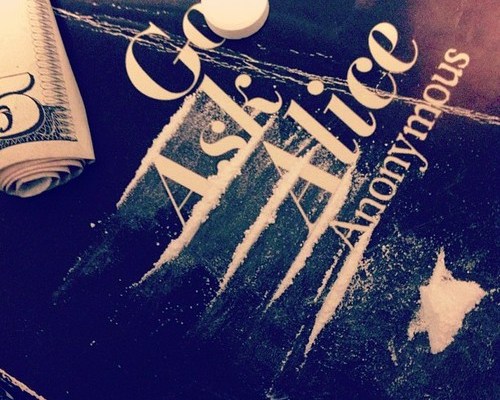
When I was in high school, all incoming freshmen were required to take a reading class (essentially, English with nothing but reading assignments). One of the books we read was Go Ask Alice by Anonymous. First published in 1971, this book has been challenged repeatedly and has been in the top ten of the ALA’s Banned Books list for years.Looking back on it now, I am grateful that our teacher included such a staunchly challenged book as part of our curriculum. Go Ask Alice is a diary entry type read in which our 15 year old unnamed narrator encounters drugs and sex and some truly terrifying situations. Reading this book as a young impressionable youth (and being the same age as Anonymous), I remember wondering, are parties really like this? Can people really be this mean and scary? What an eye opening read. It continues to astound me that…several…years later, Go Ask Alice is still so prevalent in my mind. Whether it swayed me from going to parties or scared me to be straight edge is not the ultimate point. What is the point? That a small 200 page book has taken up permanent residence on the shelf in my mind and that is a powerful thing.

Another tome that has stuck with me over time is House of Leaves by Mark Z. Danielewski. I use the word “tome” for this 2000 publication because it is indeed “a book that is especially large” (Merriam-Webster). For those who haven’t had the pleasure, House of Leaves is an incredibly layered, hard to read piece that took me, no joke, an entire year to read. This time frame is contributed to only minutely by the size of the text, but is primarily due to the fact that it is so difficult to read! House of Leaves is written in a very unconventional and layered way, dealing with multiple narrators and alternating between storylines. Then there is the content itself. A door appears inside the Navidson house and on the other side of this door is, well, nothing. Except nothing is vast and and deep and possibly housing a monster. This story of the Navidson family is being chronicled and pieced together by an elderly man who dies in the first pages of the book, Zampano, whose work is discovered and continued by the drugged up tattoo assistant Johnny. See why it’s a hard read? But it’s not just how the narrative is composed that made this book stick in my mind. When Navidson and his team go into this abyss it sucks at their souls and I could feel mine being weighed upon just as heavily. When Johnny is compiling the story and starts to wonder if he is going crazy, you yourself wonder if that shadow that just passed your window was that of a tree outside or something much more sinister. House of Leaves is written in multiple languages, is occasionally written backwards and upside down and has more footnotes than it has pages. I felt different upon finishing this book. Mentally and physically.

These two works are just a toe dip in the pond of literature that stays with us long after we close its covers. What are some pieces that have stayed with you over the years? Name the first book that pops into your mind in the comments!