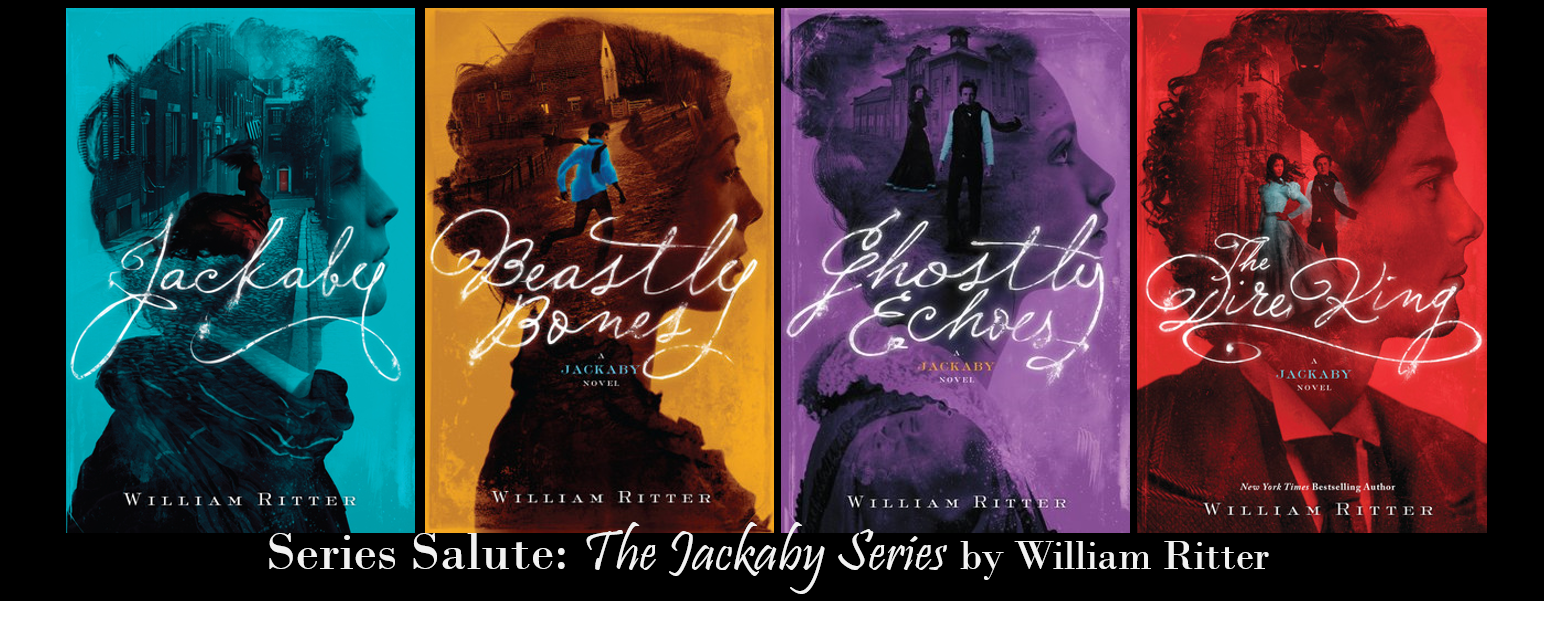
The Jackaby novels by William Ritter

** Tiny bits of spoilers lie beneath this sentence. **

There are times, lovelies, when a series seems harmless, there are times when a title sits on your shelves for months maybe even years and you give no second thought to it. There are times when you finally pick up one of those books and it is just as boring and uninteresting as you had thought. As avid readers, we get used to the spines on our shelves and whether we have read them or not, they are our trophies, our scores and finds, our prizes. Then there are other times, where you finally crack one of those spines and it sucks you in like spell has been cast. You are able to think of nothing but the characters and their adventures and when you do not have it open in front of you the book is still on your mind and in your head calling out to be reopened and dived into once more. The Jackaby novels are very very much the latter of those scenarios. I don’t think there are enough positive words in the English language for me to gush enough about how much I loved this four part series. But, for your benefit, I will try.

Abigail Rook (mentioned in the previous post regarding female leads) is our narrator over the course of these tales. As the series opens she is fresh off the boat from a failed paleontology dig and is in look of a fresh start – immediately establishing her as an adventerous woman. One of the first people she meets in New Fiddleham is Jackaby himself although it is not until a few chapters later that we are properly introduced to him. By the time he officially hires Ms. Rook to be his assistant we have already visited a crime scene with him and seen that Abigail is not as prim and proper as many other ladies of the time. She is incredibly observant and determined and as readers we get the sense very quickly that she is going to be a good and reliable narrator. R.F. Jackaby is a paranormal investigator and the world’s current Seer. It is his duty to use his Sight to keep the peace between [mostly] oblivious humans and the magical beings who secretly populate our world and exist among us. He has been at it for about 20 years and has made quite a name and life for himself in New Fidddleham. His offices and housing (as well as Abigail’s once she is hired) are in the house of a deceased woman named Jenny Cavanaugh. Jenny still presides in the house as the resident ghost and her emotional journey is really amazing. (More on that point in a bit.) These are our three main characters and their relationships to each other and with the magical community at large become central to the story…or is the story central to them?

One of the things that I think Ritter does so well in this work is that the overarching plot from start to finish is so cohesive. It is bananas! Something so simple and well structured makes the storytelling so amazing. As readers we first get hints of this larger thread that connects everything in book two. We are able to see that the events in book one weren’t the beginning and that strings have been being pulled puppet style for years. This type of tight knit, no lose ends story telling is refreshing in it’s simplicity (as I’ve already mentioned and will probably mention again). There are red herrings and twists and turns and if you really pay attention it is easily figured out but that is not the point. The point is that Ritter takes this tale as old as time of good and evil of us versus them and gives it a positive female perspective and makes it engaging for young readers. So far, all of these books (with the exception of 4 because it is brand new) have topped Year’s End lists and have been super positively received.

While there are many supernatural points in these stories, there are also parallels for very real issues. Many of our other worldly characters have glamours on themselves so that they appear human to the untrained eye. One character who does not have to do this is Charlie Cane/Barker as he is able to transform at will from a human to a (not naming his creature as it is a spoiler). While this ability allows him to lead a fairly undetected life, events in book one make it necessary for him to reveal his true self during which time townspeople see him and demonize him. The hatred and fear exhibited towards Charlie is only a prelude to the racial prejudice that many of the townspeople have once they find out there are many more fantastical beings among them. In a scene in book four, all of the jail cells are full of creatures who have done nothing wrong except not being human. There is no way to not draw a parallel to the segregation of our races here in America and the fear that many have of people and things who are different and unknown. What Jackaby shows us is that there is nothing inherently wrong with you for being different, we are all just who we are.

Another character who helps us see that it is okay to be who you are is Miss Lydia Lee. While Ritter never goes into explicit detail regarding labels, we are let known that Lydia Lee is a man who likes to dress as a woman. When we first meet her, she is being attacked physically and verbally by men who do not understand her; who are uncomfortable with her decision to live her life the way she has decided. What I thought was particularly amazing about this is that these stories take place in the early 1890s and I don’t feel like, when you go that far back in a setting, you see anyone represented who isn’t white and straight or black and a slave. The fact that Ritter takes the time to make it clear that Lydia is who she wants to be whether anyone else likes or understands it is really wonderful.

Lastly, as mentioned above, Jenny is another example of a larger metaphor. Jenny was murdered and her death plays largely in to the grand scheme of things once it becomes clear that so many “huh that was weird” occurrences start becoming connected. While Jackaby has tried many times over the years to help Jenny solve her murder and move on to the afterlife, a big issue in preventing this closure is that Jenny seems unable to leave the house. She is able to exist within the walls and is able to touch things/items that belonged to her in life but that is the extent of her physical capabilities. Once Abigail comes along, she and Jenny really get to work trying to help Jenny get out of this cycle of disappearing any time she tries to leave the house or dropping objects that aren’t or weren’t hers. This behavior seemed to me to be a metaphor for depression and a bit of agoraphobia. With the help and patience of Abigail she is able to overcome this. However, it is not an easy task and is by no means minimized or dismissed. Her peers are encouraging and inclusive even when Jenny is down on herself. This is super important and really compelling.

While these themes and metaphors are very important, something that is even more central is the building that Ritter does throughout both in terms of the world and it’s characters. We start with knowing as little about the world as Abigail does and through her eyes and Jackaby’s tutelage we gain perspective and become woke to the intricacies and magic surrounding us in every day life. We start off naive and unaware and become entranced and enlightened. There are histories alluded to and stories that exist in this world however it never feels like we are being preached to or talked at. Due to his insight Jackaby provides us with information on the world that Abigail might not have come by on her own. We are, at times, taken out of new Fiddleham and the into other communities (both of this world and the next) that are connected to the story, we are taken back in time in memories of characters. These flashbacks (and I hesitate to call them that as they are not cheesy exposition but well done exposition) provide an expansion not only of the world but of how each of these people fit in to it. Motivation is shown, not just action. By mid way through book one I was already longing to be  Abigail and Jenny’s best friend and to be part of Jackaby’s team. These are fully realized people with hopes and dreams and I that is not an easy thing to do nor is it always achieved by writers (especially so quickly).

I think the last time I got this sucked in to a series and devoured it as quickly was two Christmases ago when my partner introduced me to Susan Collin’s The Underland Chronicles. These four books (Jackaby, Beastly Bones, Ghostly Echoes, and The Dire King) are impeccably written and really smart. As Jackaby says, “I have never found a book that did not have at least a little magic in it…They can’t help it.” If you are on the prowl for your next obsession, look no further!
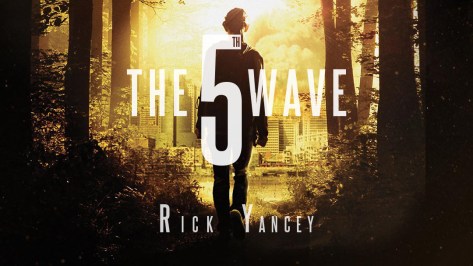
 

The 5th Wave – Rick Yancey

the5thwavebook


Well wasn’t May just a kick in the pants, lovelies?! Life was hectic in general but to top things off I was bookless for almost the whole month. I think I started like four or five different books. These are books that I will eventually read (…she tells herself) but I needed something with a hook. I needed a tale that captured me from go. You know, that feeling that you get when you open a book and 10 seconds later you’re 60 pages in? That book that calls to you when you’re not reading it…The 5th Wave did that to me. Rick Yancey does an amazing job weaving the overtaking of our planet. This book is horrifically terrifying. For example, are you currently not really a fan of birds? Do you think that angry children are actually super dangerous tiny humans? If you have fears like these, this book might be too much for you. But you should read it anyways because it is. That. Good.

Cassie Sullivan is our primary storyteller through whom we learn about the beginning of the end of the world. There have been four waves so far. First, all of the electricity went out. Second, massive earthquakes and tidal waves cause flooding of every coastline in the world. By this time three billion are dead. Next is a plague transmitted by birds that wipes out 97% percent of the population. As we walk through this world with Cassie, alone and terrified, we learn with her about what comes next in the invasion. It is, at this point still hard to imagine the magnitude of this end of days situation. As Yancey says in the book, a “single death is a tragedy; a million is a statistic.” The scope of this book narrows in and then zooms out again. So, many times, are you reading and just going through the pages and then you stop and reread a sentence and realize how truly horrible some of the things going on in this book are!

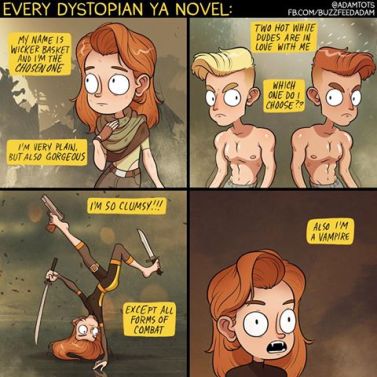
There are other strands of narration as well which add to the awareness of the horror. We get in the mind of an alien sniper, who wades through the aftermath killing any human he comes across; additionally you also have Cassie’s brother, someone she went to high school with, and a person who saves her. One element that creates and holds tension throughout is that They look like us (Obvi.) so even though you might know someone, how do you know you know them? You know what I mean? The whole book is like that!! Yes, if you really think hard you can figure it out as you go. But, if you’re just reading this to get excited about suspense that isn’t your standard Every-Distopian-YA-Novel a la:

YA Comic

then this is for you! I really was invested in each of these perspectives and what’s more, they didn’t spend their whole section/part being worried about “the girl” and not doing their own shit, as it is, ya know, the end of the world and what not. Themes of keeping promises and love being the primary driving force are present, yes. However, I thought they were done in great ways. There were times when I went, “oh come on!” when it was getting a little too formulaic but those issues straightened themselves out fairly quickly.

While we do get to see these other perspectives, I really appreciated getting to know Cassie’s voice. When we are first introduced to her she is on her own after her brother has been taken by uniformed men and her parents die during two different waves. She is trying to survive in a world in which, as far as she knows, she is the only one left alive. She is strong and focused after not having seen another person in weeks…or is it months? This uncertainty of time is something that Yancey plays around with very beautifully. Characters often think of time in relation to their actions and the happenings around them, seconds into eons when a bullet is speeding towards you, hours into years when you’re left alone in the dark. When you’re solo in the world, things can get screwy. The noticings about time are interesting in the end when you realize the grand scale of these aliens coming from who knows where and how far away…how long has this been in the works? And we as humans can only think in the smallest increments of time.

In addition to the time talk, there is often weighty, lofty things that only get said in books and movies that are somehow just on this side of okay. For example,

“Cassie Sullivan didn’t run…He could see the familiar look of fear in her eyes, a look he had seen a hundred times, the look we give back to death when death looks at us. “

Is quickly followed by,

“His heart, the war.

Her face, the battlefield.”

But it is all okay! I’m fine with goofy lines if the story is strong and the people have good solid reasons to be on these “missions” that they are invariably always on.

The gravitas of what these kids go through – because they are all kids – is disturbing. Imagine all of the adults in the world dying and the kids being taken in by some sort of military unit and being trained to hunt. They don’t know if they are being told the truth (and neither do you), nor are they old enough to really question things. Over the course of the fourth wave, you again realize what is going on and have to occasionally re-read paragraphs. Whether they are made to do these things by humans or Others, going through dead bodies and “processing” thousands for cremation is not something that should be on an eight year old’s to do list. Neither, for that matter, should weapons training and emergency medical/tactical care be subjects that should be taught to six year olds. You realize that these children, who are now parentless, are being guided by people who are not at all concerned for their well being or what is best for them. They are being trained brainwashed to kill. These horrors of the day keep tolling up and these kids are so glad to no longer be on their own in the middle of an alien invasion that they believe everything they are told!

Over the course of the entire book, you think for a section that you have something figured out and then the next chapter can go two ways: you could be wrong or you could be right which is sometimes even more scary. I haven’t read any of Yancey’s other works so I don’t know if he is just always good at suspense but man alive I am glad I fell into this book. There two books which round out the trilogy and I am anxious to start the second. I do know that there is a film that was made on the book in 2016 and I have heard nothing but terrible things about it so I haven’t as much as even seen the trailer. I wanted nothing to taint my experience of the book. This is an action that I am grateful for. There is also a lesson in that: don’t just watch dystopian thrillers. Read them. For an adventure that takes you to the end of the world and frequently punches you in the gut, pick up The 5th Wave.

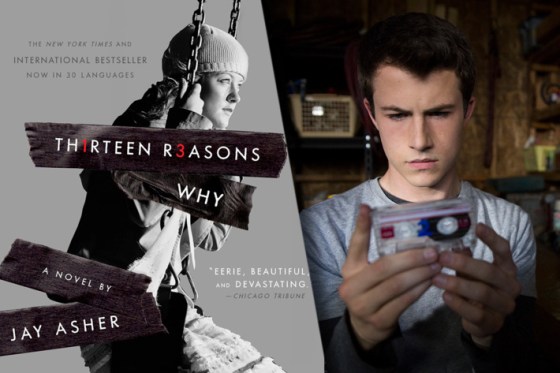
Another 13 Reasons Why Post

30-13-reasons-why.w710.h473

Spoilers abound below. You’ve been warned.

Two years ago I came across Thirteen Reasons Why whilst in a deep dive of the YAL shelves of my neighborhood library. In fact, it was the topic of my fourth blog post ever! Over the past few weeks there have been blog posts and think pieces a plenty about the new Netflix adaptation which coincides nicely with the book’s 10th anniversary. For years, this book has been a controversial work. It is a tale that sticks with you; a heavy realization that everything you do has an impact on those around you. In 2012 the book made the ALA’s list in their annual Top Ten Most Banned Books list for reasons stating: drugs/alcohol/smoking, sexually explicit, suicide, unsuited for age group. “These are not topics suitable for young readers” they say. Bullshit, lovelies. Those are topics our young ones are exposed to at earlier and earlier ages. The heart of this tale holds messages which are incredibly important for this generation to learn: compassion, empathy, responsibility, awareness. This is a super important work in both mediums, each of which portray Hannah Baker’s story in different ways.

For fans of the book, I think it is incredibly useful to go into watching the show with a conscious forethought, recognizing that these are separate creations in two different mediums. You have a 288 page book versus a 13 hour TV drama. Those aren’t really equal or comparable so thinking of them as such from the beginning is not going to do you any good. However, this is a good thing!

The book gives you Clay and Hannah and Tony. That’s pretty much it. There is some dialogue between others and you see people around as Clay visits all the spots on the map but that is it. Why no other characters? There’s no time. Clay binge listens to these tapes in one night. Primary difference right off the bat. There is a heightened tension as he speeds through these awful recollections and you learn along with him all of the truly unfortunate events that befell this girl. You realize slowly, along with Clay, what was passing through Hannah’s mind. He becomes consumed with them going from one tape to another just as you assume he would be when presented with this situation. Digesting it all while constantly being ready for the next tape to be yours. We are presented with Hannah’s tapes and Clay’s immediate reaction to them and during them. Alternatively, in the show, our experience is stretched out for at least two weeks. In this time, we are able to see a much much broader picture. What these tapes have sparked from his classmates, how Hannah’s parents are coping, and even providing time for a case to be built which (surprise!) Clay’s mom is lawyering for! There is a whole world that is created in this visual depiction. It creates a 3D image, a broader depiction showing the ripples of Hannah’s death. We are given more time for Clay to take in what he’s hearing and actually show a bit of resistance and perturbedness (that’s not a word) at what all of his fellow classmates have done. Which brings us to the next point: he takes it to his peers. Clay wants to hold them accountable for their actions but they say that some of these tellings are out of proportion or didn’t even happen or are versions of their own truths.  In some cases they are denied out right or maybe not remembered at first. In the book we are feeling directly from Hannah how she experienced these events and how they impacted her whereas in the show we are informed by others as well. I think this is why it is okay for these two to differ so much because it perfectly illustrates how different perspectives are valuable.

However, and this is a big however, not all of this fleshed out world is great. What follows are thoughts purely on the TV show. So many great things about this show from the astounding amount of diversity (in race and relationships) to a realness brought with the very human reaction you see from Hannah’s parents to the more full narrative we see from all the other characters. But there isn’t really a base for them from the source material outside of what we hear on the tapes. So these characters were developed largely by show creator Brian Yorkey and it’s not that he does a bad job, its just that many of them felt too extreme. From Justin’s wanting to literally put together a plan to kill Clay to Courtney’s blind eye to rape there are things that some of these characters say that have you going, “umm what?!” Not all of the time but definitely a notable amount. To go into a side rant about these “umm what” moments, let’s take Tony for example. ROCK CLIMBING?!?! Ummmm Whaaat?! There were so many prolonged encounters that involved Tony just popping up places and being Jiminy Cricket (or as Clay puts it, Unhelpful Yoda). Clay could’ve easily listened to these tapes two per episode and we could’ve cut things wayyyy down.

In addition to the extension of the characters there is an extension (as already mentioned) to the story. In reading, our experience stops when the tapes do. In viewing, we see Hannah’s end. We were told 10 years ago that she “swallowed a bunch of pills” however today’s method is different and much more detailed. Today we see Hannah slit her wrists; we see her parents find her after she has bled out in the tub. It is a heart wrenching scene. It is a striking step beyond the tapes. Even further still we hear Hannah narrate these tapes with so much emotion in her voice. Katherine Langford does an amazing job at making all the feelings feel. She’s telling the story as she knows it, how she has felt it. This adds so much to the story.

With all of the differences of the show and even the non differences, Jay Asher is fully on board with how the show depicts his story. At the top of this piece I listed all of the reasons the ALA cited as to why the book was placed on the Banned List, one of which was that it was inappropriate for it’s intended demographic. This show and this book depict a reality that parents and others might not want to deal with. But bullying and suicide rates are a very real thing.  As Asher said in an interview recently, “that raw and honest approach was my first big decision I had to make when writing the book, and the writers of the series felt the same way. These things happen, and to give respect to the people they do happen to, it felt wrong to hold back. It needs to be uncomfortable to read or watch. If it’s not, and we pull away, it felt like the story would only contribute to that problem of not truthfully tackling these things. We’re already good at avoiding uncomfortable subjects, and that needs to change.”

Read this book. Watch this show. Be conscious of how you treat others.

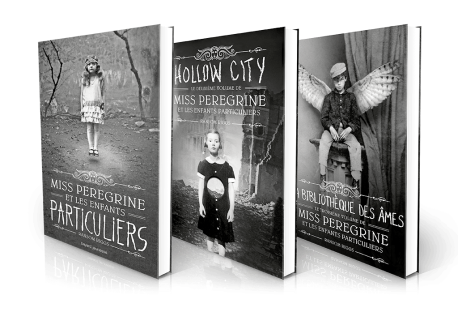
The Peculiar Children series by Ransom Riggs


Miss-Peregrine.png

The first, second, and third novels of Miss Peregrine’s Peculiar Children are very darkly whimsical. Not in a Tim Burton way (I promise lovelies, this is the only time I will mention him) but in a sepia toned, phonograph, crackling edges kind of way; a way that progresses at juuust the right pace. Ransom Riggs brings us into a tale that you have to read to believe.

We begin with the self titled Miss Peregrine’s Home for Peculiar Children and Jacob Portman’s adventure from being a normal to realizing his a peculiar. As Jacob is our narrator we learn things about this new world, its history and its secrets, at the same pace he does. Which is why we are equal parts unsure of his grandfather’s sanity and the possible truth to the far out stories of his past when he dies a tragic death by a creature only Jacob sees. It is this traumatic event that slowly begins the chain of events that will open Jacob’s (and our) mind to untold possibilities and bring us to the time loop(s).  We learn that Jacob’s gramps was a peculiar and so is Jake…they specifically can see these beasts that are ultimately Grandpa Portman’s downfall. Hollowgasts. They haunt peculiardom, eating the souls of any peculiar they can reach and are under the control of wights – the organized baddies. Anyway, peculiars. What are they, you ask? Who are they? Well, they are magnificent humans with the ability to do things like float, or have mouths on the back of their head, or create fire with their hands. I know your next thought: hmmm that sounds a lot like mutants. The thing is, these are all children…on the outside. The aforementioned timeloops are spaces on top of, or maybe behind, reality. They are little pockets that freeze a day and loop it forever; their inhabitants’s souls age however their bodies do not. This is where peculiars have taken to; unable to comfortably live in the open as wights and hollowgasts have hunted them for a century through the centuries. Not only are we introduced to this world in Riggs’s first title, we are also given brief glimpses of a much deeper narrative than just a boy grieving over his grandfather (that sounded dismissive but it is not meant to be) and finding his way back to the grandfather’s childhood home. There is the understanding that something serious is going on in these people’s worlds and we have arrived just in time!!!! (#savior) While the tone of this book is serious it has some moments of light. They are all still children: naive and living in a sunlit snapshot of time and when Jacob joins them he too has a lighter sense of self. As the book comes to a close we are promised that the understanding of and our perception of this time and place are about to be expanded even more. With a cliffhanger that leaves you thinking “Oh no!” there is no choice but to immediately pick up book number two.

Unfortunately it took me a whole year between buying the book and beginning to read it so there was a little remembering that I had to do which is okay because it picks up exactly where book one ended. Hollow City is the tale of Jacob and all of his new friends, Emma, Bronwyn, Enoch (et. al), on a rescue mission which has so many close calls you can’t help but speed through the book at the same breakneck pace. There is so much action and quick paced scenes that your eyes might not be able to keep up with your mind! We go from the sunny island of Cairnholm on which they have all lived for 60 years deeper into the loop to the same day but in London. The adventure of getting there and the people they meet gives us more insight into history and more is steadily revealed about this big bad. The fact that this is taking place during WWII is significant as the wights are able to pose as Nazis and no one thinks differently or realizes it. This allows them to be organized and systematically hunt down the entrances to these loops. They can’t go in, you see, so they employ traitors and trickery to get the peculiars and their guardians the ymbrynes to come out of the loop and get snatched right up. For what, you might ask? Well…that’s a mystery too. A dark and terrifying mystery as no one is ever seen from again and capturing an ymbryne is no easy feat. Over the course of Hollow City we are guided deeper and deeper into this loop and even into a couple of other ones too. The layers of the world that Riggs has created is dizzying at times. However, the addition of layers adds to the tone which has lost its sunshine and has gained an air of anxiety and fear; uncertainty about everything.

Just when you think we are about to have a happily ever after moment to end this rescue mission that has been chalk full of foiled plans and dastardly encounters the plot curves and leaves you gasping, “Well, fuck!”

This sentence is appropriate as it allows me to continue talking about this tone shift. I noticed a difference in Jacob’s words as the journey darkened and he had to grow up a bit and make some really tough decisions. It is in book three, Library of Souls, in which I first notice Jacob swearing. His shift is actually so perceptible in this one that he begins to think of himself as new Jacob and old Jacob. By this point, Jacob and Emma (who is our strong leading lady), have been through so much that they are exhausted and unable to trust anyone. A very old loop and a very shady ferryman usher J and E to Devil’s Acre where all of the outlaws of peculiardom have floated over the centuries. It is here that a steadily increasing amount of our friends are being held captive, abducted over the course of book two. Here we learn the twisted plan of the wights; this is the evil dungeon, the lair. Here we have the culmination of Jacob’s journey with Emma to save his friends. We also have, the final show down of the good vs. evil that has been plaguing these people. A carefully sleuthed plan, a final battle, and a resolution that covers all loose ends and loops. The dirge of Devil’s Acre is so disgusting and makes you squirm and grimace. It is in this horrible place that Jacob truly grasps his gifts and harnesses his ability. However, there are still a couple of chapters after the titanic tussle because life goes on after a battle and lives must be rebuilt. Can they be?

I tried to make these descriptions as vague as possible while staying interesting. I hope I did that. These books have really good twists and are very thoughtful in the telling of history (paradoxically) and an unravelling of what is behind a story. My favorite, I think, is book three as it has a character named Sharon whom I really enjoyed, shows what a community looks like in this horrid place, and reveals that there are so so many sides to a story. The evolution of Jacob Portman is really great to witness. I highly recommend this whole series and also the companion book. Tales of the Peculiar is a tome mentioned several times throughout the series and the printing of the books is comparable to that of Beetle the Bard’s tales. Something that I didn’t touch on at all yet is the fact that these books all include old early photographs of really odd and striking scenes with people who could very well be peculiar. They are all real and have been collected from various estates. This adds to that whimsicalness I mentioned at the top in which everything is just a bit spooky.

In closing, read these tales. Believe in the peculiar and in yourself.

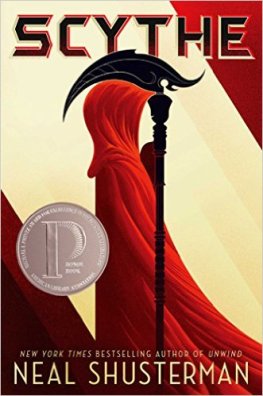
Scythe by Neal Shusterman

Scythe


In a world populated by humans who have conquered mortality, population control must come in some form. Right?

Hello lovelies. I just finished reading Scythe by Neal Shusterman and man alive was it good. A little predictable at times but overall a pretty good read. Humanity exists, ever growing and never dying, in an age where, once you reach your height of outward age, you “turn the corner”. Refreshing yourself body and keeping all of your mental faculties the same. Thus, someone you meet who is 98 might look like they are 25. Over and over again. The age before is known as the Age of Mortality where things like antibiotics were necessary and falling off a building wasn’t sport it was suicide. The characters in the book are far enough removed from this age to find the concept of a headache beyond imagining.

Citra Teranova and Rowan Damisch are our primary threads throughout the course of the novel. However, there is input from Honorable Scythes that separate the chapters, taking the form of journal entries (more on this in a bit). When we open, Honorable Scythe Faraday has separate interactions with both of our hero(in)es. Due to these meetings, both subsequently become apprentices to the scythe. At this point you might be asking what exactly does that mean? Why do I keep repeating that word? Well, scythes are the only people allowed to kill in this reality. Because of the ever growing, never dying population, control must be extolled in some manner, right? Scythes are legally sanctioned to kill and they have quotas to meet (just like all of us in our real jobs! Scythes are just like you and me!) (Except they’re really really not.). Citra and Rowan say good-bye to their families and begin their training in the arts of killing.

One of the things that I like about this tale is that even though these people are not able to die (they call it “splatting” after which they are taken to revival centers which do exactly what’s in their title), they still view life as precious. Taking it permanently gives them reservation. They are not impervious to their consciences. The same cannot be said of all characters. Those peeps are juicy and crazy in equal amounts. Anyway, Rowan and Citra are training under Faraday when some mischief happens and they are sent to be mentored elsewhere. What I haven’t told you is that not all of Scyethdom is happy with the fact that the scythe has taken on more than one apprentice. In fact, it is something that has never been done before. As such, it is determined that they will not both be accepted into the fraternity. One will have to glean the other. These humans have become so detached from societal killings that they are no longer referred to as murder but as being gleaned.

All of this happens pretty quickly in the novel and it is mystery and intrigue and life lessons from then on. The pair are made to part and train with different scythes. What is interesting here is that we see the training style of not just one scythe but three (potentially more…read and find out). These three scythes are the ones who make the journal entries between chapters, mentioned above. This give us a chance to see not just Citra and Rowan’s views of this vocation, new and inexperienced, but also the older generation who have been doing this for many years and have a very different perspective.

What transpires from there in the story is too good to spoil. Just know that these characters, in particular Citra, are very relatable. Readers get to experience so many different thought processes about what it means to be legally authorized to kill. When you think about what they are doing and the fact that they are in their mid-teens on top of that, it really gives you pause. Not only are they teens but they are teens amongst elders centuries old. Society has gotten to the point where the Thunderhead (having graduated from a cloud) is the foremost authority on societal control. There are no more cops because the Thunderhead prevents crime. There is no more government because it was proven they were all too corrupt to lead and the AI could do it better. Countries are now regions, continents grouped in accordance with geography. The world that Shusterman creates has an explanation for all of the ways the world has evolved.

At first I was worried that it wasn’t going to be good and be really predictable. But there are a couple of twists that throw you off course and make you recalibrate how you view this world. For example, the scythes to which Citra and Rowan are transferred both operate very differently not only from Scythe Faraday but also from each other. The moral dilemmas that they face independently turn out to be really fascinating to read through. It is very obvious to me why this book was on so many Best of 2016 lists last year. Pick it up and give it a read. Would you be able to kill for the greater good?

Banned Books Week 2k16

banned.jpg

Sunday September 25- October 1 is 2016’s Banned Book Week. Since the 80’s the designated week is a time for teachers and parents to encourage their children to read books that push barriers, broach hard topics, and create engaging conversations. Every year the American Library Association keeps tracks of all of the titles that have been challenged or banned in both school and community libraries.

When I was a freshman in undergrad, I did one of my year end projects on the ALA and banned books. It was so interesting and also somewhat mind blowing to research some of the reasons that certain titles are banned. “Sexually explicit” content and “language” are the two most cited reasons that a title is challenged and the majority of the time it is a parent that submits the challenge. While these two reasons are understandable for a parent to say, “hold off on reading this title” to their child it does not give them the right to make that decision for an entire school or town. Censorship on literature is just one more way the sheltering parents of today are blinding their kids to the world around them. This topic makes me so mad! Encouraging children to read is one of the most important things in a child’s young life; it is an incredibly fundamental part of embarking on their education. However, when a person steps in and denies any title to someone, that is just unfair.

The top 10 most frequently banned books of 2015 were

  1. Looking for Alaska, by John Green
    Reasons: Offensive language, sexually explicit, and unsuited for age group.
  2. Fifty Shades of Grey, by E. L. James
    Reasons: Sexually explicit, unsuited to age group, and other (“poorly written,” “concerns that a group of teenagers will want to try it”).
  3. I Am Jazz, by Jessica Herthel and Jazz Jennings
    Reasons: Inaccurate, homosexuality, sex education, religious viewpoint, and unsuited for age group.
  4. Beyond Magenta: Transgender Teens Speak Out, by Susan Kuklin
    Reasons: Anti-family, offensive language, homosexuality, sex education, political viewpoint, religious viewpoint, unsuited for age group, and other (“wants to remove from collection to ward off complaints”).
  5. The Curious Incident of the Dog in the Night-Time, by Mark Haddon
    Reasons: Offensive language, religious viewpoint, unsuited for age group, and other (“profanity and atheism”).
  6. The Holy BibleThe Holy Bible
    Reasons: Religious viewpoint.
  7. Fun Home, by Alison Bechdel
    Reasons: Violence and other (“graphic images”).
  8. Habibi, by Craig Thompson
    Reasons: Nudity, sexually explicit, and unsuited for age group.
  9. Nasreen’s Secret School: A True Story from Afghanistan, by Jeanette Winter
    Reasons: Religious viewpoint, unsuited to age group, and violence.
  10. Two Boys KissingTwo Boys Kissing, by David Levithan
    Reasons: Homosexuality and other (“condones public displays of affection”).

As you can see, these objections are not confined to newly published titles . I Am Jazz is a kids book about a child who dealt with transgender issues and was published in 2014. It is based on real events in the author’s life yet one of the reasons for it’s being banned is that it is inaccurate. EXCUSE ME?!?! REAL EVENTS!!! While the “reasons” for banning a book vary, there is a common theme that is easily detectable. If someone doesn’t agree with something or might be afraid of something due to close mindedness, then it is challenged. Some of my favorite books and titles that have really stuck with me are on these lists. From 13 Reasons Why to A Wrinkle in Time, there is no genre or style that is safe!

According to the ALA, “a challenge is an attempt to remove or restrict materials, based upon the objections of a person or group.  A banning is the removal of those materials.” While it is difficult to push through a ban, that doesn’t stop the attempt nor does it lessen the amount of challenges submitted each year.

Organizations such as the ALA and the Banned Books Week campaign are incredibly important in drawing attention to the titles that receive the most scrutiny and hate. There are amazing lists on the ALA’s website which show the top 100 banned books, break lists down by years, and keeps track of all the ludicrous ideas behind why a title should be taken off of a shelf. The Banned Books Week website has a breakdown of events that take place in each state that promote literacy and encourage reading.

I highly encourage you to cruise around both websites and get involved with your local libraries and bookstores particularly this week as they make an extra effort to get knowledge (and a good read) into the hands of anyone who wants it.  There are usually really great displays that libraries and bookstores will create to show off popular banned titles. This always makes me so happy to see because it is putting all of these “dangerous” works into one space and defying the challenges put forth by those who would see them disappeared forever.

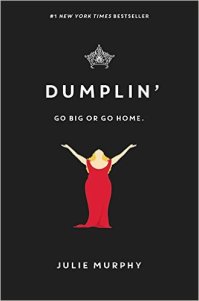
Dumplin’ by Julie Murphy

Murphy cover

I have had Dumplin’ by Julie Murphy on my shelves since last summer when I was given a proof copy at work. It has been sitting there unread ever since and every time my eye would pass over it I would think to myself, “that one is next.” But then it kept not being next. Last week I made it a point to put everything else on pause and read it since Murphy is giving a talk that I wanted to attend. I am so glad I was finally able to dive into these pages because once I did I could not put them down.

Willowdean Dickson lives in a small Texas town that is so accurately cultivated, I kept expecting to encounter someone from my own high school within the pages. Be it football or beauty queens, most small towns have a focus like nothing else on hype. In Dumplin’ the latter is the be all end all of not only the town but of Willowdean’s life. You see, her mother is in charge of the Miss Teen Blue Bonnet pageant (a title which she herself won back in the day) and as such, Will’s life is overrun year after year by glitter and sewing machines as their house becomes ground zero for pageant planning.  Until now, Willowdean has not thought too much about the pageant except for maybe that her mother cares a little more for the glitz and glam than she does about her daughter. But that hasn’t really bothered her too much as she’s left to go about her life without the pressure of worrying about wether she fits in an evening dress or can define what her “talent” is. Until now, that is…because now, Willowdean is tired of being the fat best firend and the dumpy sidekick. She’s tired of the school bully picking on not just her but other members of the lower social tier. In a decision that she makes concrete by telling her best friend Ellen (so now she can’t back out) Willowdean is going to enter the Miss Teen Blue Bonnet pageant. Not because she wants to prance around on stage being the center of attention. Not because she thinks she has a shot at winning. Not even to have something to put on her college transcript. It is a decision she makes for herself; a decision that takes the power away from everyone who has discounted her her entire life.

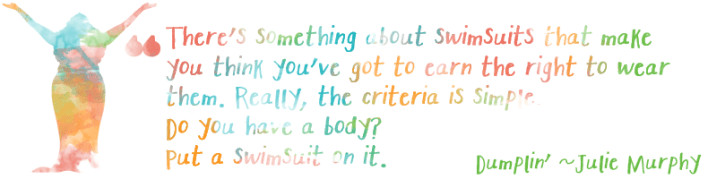
What I loved about Willowdean was that she didn’t wallow in self pity or cop out of things because of she was ashamed of herself. In fact, one of the first places we go with Willowdean and Ellen is a swimming pool and she dons her swimsuit without any apology and gets in that cool cool water.

dumplinbanner1

Dumplin’ was such an easy read because Willowdean is so charming. I was able to relate to her on a level I was surprised by as I too have been on the receiving end of teasing about things I can’t help about myself. Willowdean is strong and stubborn and so encouraging to others.

When a group of fellow misfits (a girl who wears corrective shoes, a girl who is mercilessly teased because of her teeth, and the only lesbian in their high school) join Willowdean in her pageant mission she is shocked that she has become a source of inspiration. She is completely unaware of the impact she has on those around her. These girls develop a bond that is deeper than simply being pageant buddies. They band together and support each other when there is no one else to tell their secrets to, no one else to confide their worries in. This is an aspect of the story which I absolutely loved. Yes, the main plot point driving the story is a beauty pageant, but it is about so much more than that!

Throughout the story we experience several firsts with Willowdean that do a great job in taking the reader back to those nerve-wracking days of self doubt known as high school. We are with Will when she receives her first kiss and when she is asked on her first date. We are with her to experience her shock that those two events occur with two separate boys and the self-conscious fear she feels when one of them kisses her and slides his hand down her back (“Beautiful,” he says. “Fat,” I think.). We are there when she fights with her best friend and when she attends her first drag show (something that none of the girls hope their parents find out about). She is an incredibly well rounded (zero pun intended) character and the empathy I was able to feel towards her warmed my heart. I really enjoyed getting to know Willowdean Dixon who like her idol Dolly Parton decides “live big or go home” are words to live by.

Definitely recommend this book to fans of Rainbow Rowell. I hope Julie Murphy continues to write because I cannot wait to meet her next knock out lead.

Menagerie- Rachel Vincent

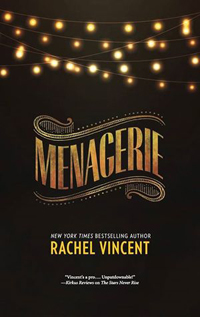
Former English teacher and YA goddess Rachel Vincent is back with a new story and man is it compelling. Menagerie takes place in a world in which cryptids are out in the open and known to humans. They do not however coexist. Seen as less than human, shifters, succubi,minotaurs and others have less than no rights and are either captured and exploited or captured and hunted on game reservations. They are treated as animals. The vein of capture and exploitation is the one which we explore alongside Delilah Marlow who has grown up her whole life believing she was human. On the night of her birthday, Marlow and friends visit the famous Metzger’s Menagerie and things go horribly, devastatingly wrong. What follows is an expose of sorts on the mistreatment of these “creatures” and the lives afforded to them as subhumans.

Vincent has a real knack for combining detail and emotion, causing the reader to become incredibly invested in Marlow’s plight. We root for her and mourn with her and applaud her bravery. The way Vincent writes is so compelling. Her characters have a true depth to them that will tug on even the hardest of heartstrings. Menagerie puts a spotlight on creature cruelty in a very upfront way as these creatures are capable of shifting into their human forms, putting a face to the cryptid and a soul to the character.

While the storyline occurs in the near present with all the trappings of reality (cell phones, the Internet and YouTube), the feel of the world is very old timey and the story progresses the menagerie itself becomes a character. Like traveling ciruses and freak shows of the past, Metzger’s is all glitz and glam on the outside with loud music churning through speakers and brightly lit bulbs strung from tent to tent. We as readers though, know the whole story. And man is it twisted.

Upon looking Menagerie up on Amazon, it has a parenthetical detailing The Menagerie Series Book 1 and that made me so excited to know that we will get to continue to journey alongside Delilah Marlow who is such a strong and independent female lead. Alas, as I am not an oracle, I will have to wait alongside my fellow mortals to see what the future holds for the Menagerie. 

Four out of five books to Mrs. Vincent. You can get a copy of Menagerie for yourself here.

The Ghost Network- Catie Disabato

Found footage, or rather found manuscript, is the style of Catie Disabato’s The Ghost Network. Disabato herself is our narrator, using footnotes to communicate with the reader as she pieces together the manuscript which was left to her after the world’s biggest pop star (like Taylor Swift big) vanishes without a trace. What follows is a mystery that unravels at a good pace and leaves no stone left unturned. The premise of the story is incredibly layered and well written and only gets muddy on a couple occasions.

While Molly Metropolis is a fictional pop star, the story is interspersed with references to real events and people like the MTV Awards and Britney Spears (Tay is not mentioned). Additionally, the New Situationists (the Illuminati like group at the heart of the novel) are also a real entity. The story is steeped with the sects history and infused with mystery when it is discovered that Molly herself was obsessed with the super secret organization. The question is, is her disappearance related to the group? Disabato races to track down the sources used in the manuscript to do interviews of her own and as she does so, we as readers are taken along for the ride.

The basis of the New Situationists beliefs is, essentially, that all art has already been created and the only way to make something new is to improve upon something that already exists. Molly’s goal, in keeping with the NS’s beliefs, is to become the world’s biggest pop star (ambitious little tyke) and in so doing she shape the current track of pop culture (think Lady Gaga with all her little Monsters).

As the mystery of what happens to Molly is unraveled we learn that maybe things aren’t as clear as they could be, providing us not with an unreliable narrator but with unreliable sources and witnesses who twist information to suite their needs. This element heightens the mystery as we as readers truly do not know whom to trust as true.

There are many twists and turns in this book and they make for a really good story with many facets. The use of footnotes to incorporate the narrators thoughts was well done. There were no gaping holes in the plot of the mystery however everything is not neatly tied in a bow at the close of the story which is what I was hoping would be the case…because who wants a neat bow?

I award four out of five books to The Ghost Network for a job well done on unraveling a mystery that could have been much more rambling.

The Ghost Network can be purchased on Amazon. http://www.amazon.com/Ghost-Network-Novel-Catie-Disabato/dp/1612194346/ref=sr_1_1?s=books&ie=UTF8&qid=1443558849&sr=1-1&keywords=the+ghost+network