The unnecessary sequel

The-Strangers-Prey-at-Night-for-Blog


Major, major spoilers below.

It is rare that you will find me with a whole day to lounge on the couch with nothing to do, rare indeed. But, when it does happen, I will gladly watch crap film after crap film for as long as I can stay awake. This was exactly how my one day off a week was spent this last week. Sometimes, you’ve really got to listen to your body and sit still, damnit! So, with that being said, one of the movies I watched was the newish sequel to The Strangers which is by far one of my favorite horror films of all time. I rank it up there with Cabin in the Woods and the original Jeepers Creepers. That being said, part two was TERRIBLE.

The Strangers came out in 2008 at the height of the midnight premier craze. I distinctly remember driving home to my brand new student apartment after watching the movie. None of my roommates had moved in yet so I had this giant apartment to myself. It was really creepy! Now, this apartment was in a gated community, not in the middle of nowhere, and not on the ground floor. All of these things added up to mean that I was probably Not going to be the Strangers next victim. What the movie had done so well was keep everyone in the incredibly small cast in the same small area for the whole movie. There was no escape. And in the end, knowing that there was no way to ever identify these killers. Was this a real crime? Could the killer still be out there committing these atrocities?

The open-ended ending was perfect. We see them drive away but we don’t know if they keep on killing, if this was their first, and on and on ad infinitum. Their identities were never revealed and they remain at large which makes the conclusion perfect. It leaves you wondering but not necessarily wanting more.

What is most eerie about the stranger’s taunting of Liv Tyler and Scott Speedman in the original is that they are slow and in control. This is evident even in the way the scenes are shot, never too wide, there is always a bit of a cramped feeling – like there is no escape. Even when they are outside and running between the main house and the barn there are not too many wide shots. Additionally, they never feel unattainably unkillable, just like they have a better handle on things. They were planning mayhem after all and Tyler and Speedman’s characters were just looking to get some sleep after an emotionally taxing day. There were three of them, so the fact that one would knock on the door and another would be in the back is a totally plausible course for their actions. But they were timed realistically and never did anyone receive an incapacitating injury and then get up and further persist in their killing. Slow and deliberate.

Now, take all of that mastery of action (both in the writing and the way it was shot) and throw all of it out the window.

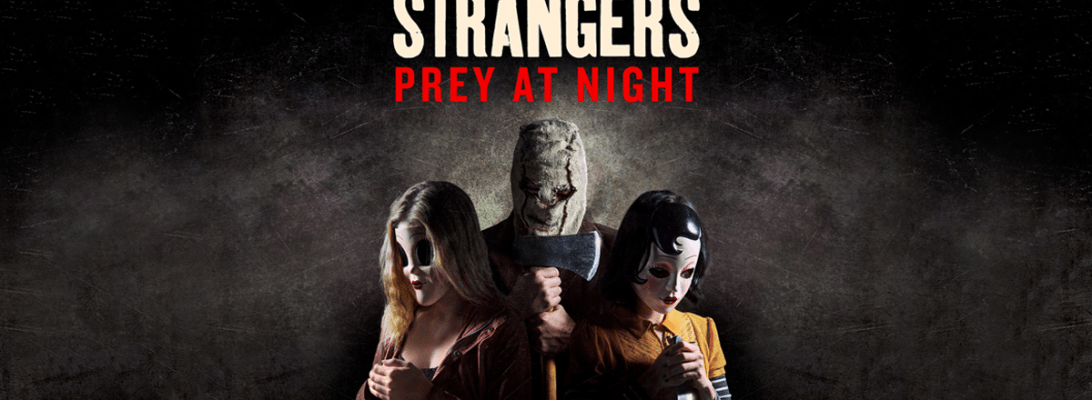
In the latest iteration The Strangers: Prey at Night we are taken to another remote location, this time with a family instead of a couple. Christina Hendrix and Martin Henderson play mom and dad respectively and Bailee Maddison and Lewis Pullman are the children. All of them have a pretty good chemistry and the dialogue seems natural, especially between Hendrix and Henderson. But that is where my praise ends.

The scripts were written by Bryan Bertino in both cases so I’m not sure where things start going wrong.

In Prey at Night the scene is set at an abandoned for the offseason trailer park. We begin by seeing the strangers’ killings in this park, more of what seems to be their at random killing. It is only after we gain a bit more insight that we realize that while these killings were occurring, Hendrix’s character calls and leaves a voicemail for a now dead family member, alerting the strangers of their imminent arrival.

WE’RE HERE! READY TO BE KILLED!

So, one of the aspects of the original is that we know there is going to be death, we see it in the opening of the movie, but there is not an actual murder scene until the very end. This slow build is what makes classics like Halloween so great, the building energy and anxiety felt by the audience inspired by small almost gotcha moments and chilling music. With PaN we get murder right out the gate so now we know the family is driving to their deaths.

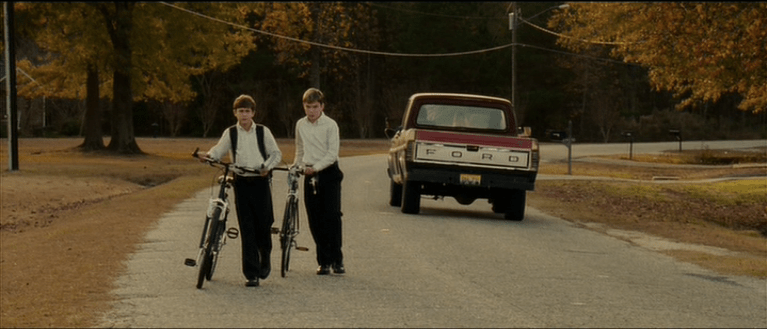
A knock on the door of the trailer they check into prompts a question we are all familiar with, “Is Tamara home?” Nope! Bye! The porch light is unscrewed so we have the same, in the shadows, effect as in the original. Of course, after this creepy encounter, we still have the EVERYONE IN THE FAMILY thinking it is a good idea to split up. NO! STOP!

So as everyone begins traipsing across this giant trailer park, the four family members come to realize there are three masked people after them (Man in Mask, Pin-Up Girl, and Dollface). Maybe splitting up wasn’t great after all. As they all run around, the camera is consistently at a wide angle showing one of the strangers in pursuit of one of the family. This takes away the intimate feeling of them being right there and able to “getcha” as was the feeling throughout the whole entire original.

There is one exception to this when Maddison’s character dives into a tunnel on a playground in which there is a scene framed to misdirect you: Man in Mask has headlights pointed into the tunnel and out of nowhere Pin-Up appears and provides a pretty good jumpscare.

However, this leads me to my very next point. Up until the end of this scene, the chase had been between just the two of them [Man and Maddison] and then Pin-Up just appears out of the other end of the tunnel. The reason this is so irritating is that you have seven characters running willy-nilly through this park: hiding, seeking, double-digit numbers of trailers to choose from, playground, woods, clubhouse all of these different places and yet everyone is always one corner away.

IT’S IMPLAUSIBLE AND IRRITATING!!!!

At least twice, if not more, there are chase scenes that just don’t make sense because there is a queer ability of the strangers to just be there. Up until the very end when there is a car crash and a fireball engulfs both vehicles. It’s not just One shotgun shot you need to kill them, it’s Two! There becomes an unnatural persistence that by the end is just like, reaally?!

In the original movie you knew the strangers were there, hiding just out of sight. In this movie they literally pop into sight so quickly you don’t have time to breathe. The films have the exact same run times yet the pace of each of them is totally opposite. You’ve got a slow and steady demise of the main characters, stuck in one house with no escape…and then you’ve got a round-em-up chase story that doesn’t really match with the M.O. of the first.

Bertino has said that he wondered what it had been like inside the house for the Tate’s while the Manson family was murdering them. What was the victim experience as opposed to a cop piecing it together, getting it straight from the encounter? Now, just those two sentences have your mind wandering, don’t they? That is what the original feels like. Clausterphobic. No escape. No nice ending…you know the ending from go. Death. So final that we see the strangers from behind as they take their masks off and you know for certain that the end is nigh. However, one final wrongness of Prey at Night is the taking off of the masks and the way that those scenes play out.

I really hope there is not another movie in this series.

I’m done ranting now.
 

StrangersTruck


.

Alternate Reality Podcasts

My love of podcasts boarders on obsessed. There’s endless amount of hours of interviews, news, comedy, and on and on to keep you entertained and informed on pretty much any subject you can think up. Podcasts, for those of you who do not know, are essentially talk radio on demand and this isn’t my first mention of them here (check out my article on Presidential). Every morning I walk my dog and listen to Rachael Maddow and First Up and when I am closing up shop at my job, I listen to any of the many shows produced by Crooked Media, more news. I also have go-to’s for interview and information shows in Star Talk Live and The Nerdist. These shows and many others  have become so integrated in my days that in the rare occasion that I’ve listened to all the new shows in my queue, I feel off. I learn from these shows and I’ve found comfort in the voices of the hosts. Sometimes I will have them on just running in the background, only half listening. Maybe I’m cooking or cleaning…never when I’m writing though, that would be difficult! Sometimes however there are ones that are not able to be half listened to but instead need to be carefully paid attention to.

Alternate reality podcasts suck me in like nothing else.

In October of 1938 Americans across the country broke into a panic as Orson Welles and a company of actors and musicians live read the science fiction radio drama The War of the Worlds. The broadcast reached millions of homes over the airwaves the night before Halloween proclaiming that aliens had touched down and there was an attack underway. For its first twenty minutes the CBS broadcast was uninterrupted and performed straight. There were no commercial breaks and the style of the play was that of news bulletins being reported live. In a day of no rewind, if you did not hear the introduction and disclaimer of the drama right before it started, you had no way of knowing whether or not this was real or a play. CBS was flooded with phone calls of people freaking out trying to figure out what was going on. Finally, the program broke for a commercial and the introduction was made again. The next day Orson Welles was torn apart by newspapers and was claimed to have purposefully caused a panic.

I love this story so much. There is admiration to be had for Welles in his and the other actors performances and the realistic nature of their broadcast. Bravo to them. There is a laugh to be had in retrospect at the population for having believed so frantically that there were aliens touched down in their country. There were riots and evacuations. That a radio broadcast inspired so much real fear in people far and wide is amazing to me! I’ve read accounts of 100+ people fleeing a midwest town and climbing into the mountains for refuge.

Now, imagine that happening in the present. Experiencing and listening to something so real, so convincing, that you’re not sure whether you should Google it or not to see if it really happened. While we can Google, there will be no panic. There will however be gushing, gushing about how flipping amazing alternate reality podcasts are. In this post I’ll mention three that I’ve listened to recently that had me walking around with earbuds in for hours straight. The Message, Lif-e.Af/ter, and Rabbits all average at ten episodes each, ranging from 45 minutes to an hour and a half.

the message

The Message is the first season in Panoply’s anthology of alternate realities and was the first one I listened to in this genre. I enjoyed it so much that I’ve actually listened to it all the way through several times. Nicky Tomlain is out narrator and the host of her own podcast entitled CryptoCast; very meta. We begin the broadcast as Nicky seeks clearance to shadow a team of cryptologists who work at the Cipher Center for Communication. The team allows her to do this and Nicky starts right at the same time that the team is given an assignment from the government to decode something referred to only as “the message” which was first intercepted in WWII and has yet to be cracked. We learn very quickly that there are mysterious circumstances shrouding this code and the people who have worked to break it over the years. As the team begins working on this task, Nicky takes us from person to person on the team to get a better look at what each of them bring to the table. For example, Mod is a hacker (although they ask Nicky not to use that term) and is able to go places in computer land where no one else is able to reach. Tamara is a cultural historian and goes through history, mythology, and culture to find references or patterns that could relate to whatever topic the team is looking in to. While there are several other characters, there is not a character list anywhere and Wikipedia only has three or four people mentioned. Which brings me to my next point on this podcast. Reality or fiction?

When you do a search on the characters, the ones that pop up have full bios (born, school, where grew up, etc.) as though they were real people. When you search Cipher Center for Communication a company called Cipher Communications Corp is produced in the results. Small things like this make you wonder, is this a real thing that is trying to be covered up or am I going crazy? The events that transpire over the course of the cast would most certainly have made news BUT the government is involved so how do we know it isn’t just something that is being covered up?! The production of the show is really good, complete with full voice cast and all the ambient background life noises one would hear if someone was walking around recording everything as Nicky does.

As we go along on this journey with Nicky and the team, trying to uncover what this message really means, we become front seat passengers to the behind the scenes workings of this [usually] top secret facility. This fly on the wall approach to storytelling gives us all access to the happenings around our narrator.

Life After

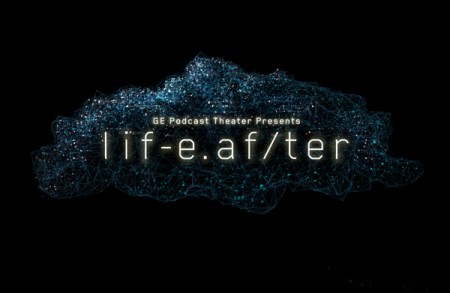
The same is true for Lif-e.Af/ter which is the second season in the anthology*. We are this time within the offices of the FBI and are privy to the story of one Ross Barnes. Eight months ago Ross’ wife Charlie was killed and he is still very heavily entrenched in his grief. In this world, there is a social media platform called Voice Tree that allows users to record minute long audio clips on the company motto that voice gives you more connection than other forms of media. To cope with his grief, or maybe to feed it, Ross listens endlessly to Charlie’s Voice Tree posts. He becomes obsessed to the point where it is effecting his performance at work and his relationships with his friends. One day as Ross is listening to his favorite curated posts, the whole profile disappears. He freaks out of course and shortly after he has a panic attack/meltdown, the profile reappears. Now, however, there is something new. The profile is speaking directly to him and not in one minute clips either. This raises the very Black Mirror question of are our digital selves different and separate from our physical selves (very similar to S4:E1)? Does a person have to have a body to exist? To begin with, Ross thinks he is going crazy. The Charlie voice doesn’t speak to anyone else so he has no way of proving definitively that he is not just making this up in his head; that he hasn’t broken with reality. As the story progresses, the voice of Charlie is interrupted occasionally by the voice of Sasha who is somehow behind all of this. With Sasha’s appearance comes a sinister twist to the tale and prompts the moral wrongness of exploiting someone’s grief.

While the first season of Panoply’s drama had a more War of the Worlds vibe, Lif-e.Af/ter takes a departure from that and feels much more Black Mirror-esque. The questioning of morals and the integration of not too far off future tech makes for another seemingly real story. The exploration of human emotion and what makes us us is very interesting in this season. We get to know Charlie only through the makeup of her digital self. This makes you wonder, how different from the physical human Charlie is this digital one? When Ross starts feeling uneasy about this point in particular, he asks digital Charlie about a trip that they had taken which Charlie hadn’t mentioned in any of her Voice Tree posts. Because the digital version has nothing to draw from, she/it is unable to answer the questions Ross asks. This leads him to realize the difference between the two. From this show, you begin to question, as you do when watching Black Mirror, what is ethical in regards to our future as humans and the evolution of technology in our lives.

rabbits

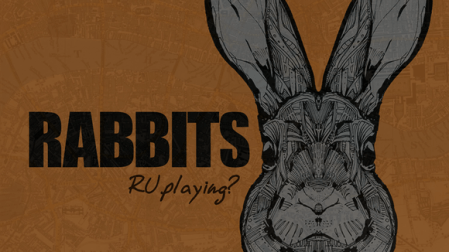
The last show I’ll dive in to is the one I have listened to most recently. Actually, I started this post within an hour of having finished listening. Rabbits is produced by the Public Radio Alliance which has quite a few of these immersive alternate reality shows. Again we are brought along by a narrator who is making a podcast while we are listening to a podcast. Carly Parker’s best friend Yumiko has gone missing under very bizarre circumstances. It is quickly determined that the police are brushing this off as a youth rebelling against her strict Asian parents and that they are not too overly concerned. Carly however is not convinced of this and it isn’t too long into her own investigation that weird clues begin to pop up. Within this world, Carly works for the Public Radio Alliance and her bosses suggest that she create this podcast for real time evidence of her findings and also to provide a trail of bread crumbs should anything happen to Carly along the way.

It turns out that Rabbits is a super secret real life game in which players from around the world solve riddles, puzzles, and collect clues in the hopes of becoming the champion of the current round. The modern iteration of the game is in it’s ninth round and is simply referred to as Nine. Evidence shows that One began sometime pre-WWII and that there were rounds played before them but that there is no way of proving it. Carly puts clues together and slowly realizes that Yumiko was playing Nine and that she was really deep in. Over the course of her investigation, Carly meets other players and goes on wild goose chases (or down rabbit holes, if you will) to connect one clue to another.

As with the other shows, there is a full voice cast in this one and background noises as well. The production of this one is so good that the other day I was walking and listening and I had to take out my earbuds to figure out if it had just started raining or if it was just something I was hearing within the show. While the pacing of the dialogue is sometimes uncomfortably slow and awkward, the premise is so good that you’re able to set that aside and still become engrossed. And just like the endings of the other two, Rabbits leaves you with a weird “what if” feeling that doesn’t leave you for a couple days. While The Message has feelings of War of the Worlds and Lif-e.Af/ter has thematic ties to Black MirrorRabbits takes that techy “what if” and also throws in The Ring and The Matrix to further blow your mind.

These weird after effect feelings are an aspect of the genre that I admire deeply. To have such an impact on the audience that they are questioning their reality ties directly back to the first drama from the War of the Worlds broadcast. There are definitely more than just these three shows in this genre but they are great points of entry for immersing yourself in a world of questions and uncertainties. I highly recommend losing yourself in these alternate realities.**


*When searching for The Message you have to search Lif-e.Af/ter as the title changes with the season. They are all listed together as one show but with different seasons.

**Not mentioned here is the podcast TANIS which I began listening to immediately after RabbitsIt is produced by the same team (Pacific Northwest Stories) and is Really good. Do yourself a favor and add this one to your “to listen” list as well!

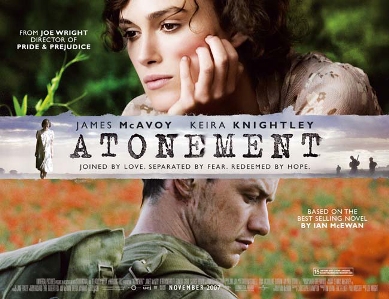
Atonement – 2007

There was nothing on Netflix starring Audrey Hepburn that I haven’t already seen so I googled, “classics to watch on Netflix, current” and a list was summoned from the depths of the interweb. There were some good horror movies on said list that I definitely intend to go back and watch however that was not where my head was at. Scrolling down, I found what I was looking for: Atonement. Released in 2007, the film was adapted from the novel of the same name, published six years earlier by Ian McEwan. It met everything in my mental checklist: not set in the present, an amazing cast, and not a straightforward-spoon-fed romance. Holy shit lovelies, what a movie. What a journey.

Atonement tells the tale of what happens when a little lie turns into a bigger lie and the impact that has on those in the line of fire. What we learn first hand is that what you say matters and that even if you think you are a reliable narrator, you might not be. That doubt that you feel eats at you through life, through war, through death. Atonement tells us that there is no statute of limitations on taking responsibility for your actions.

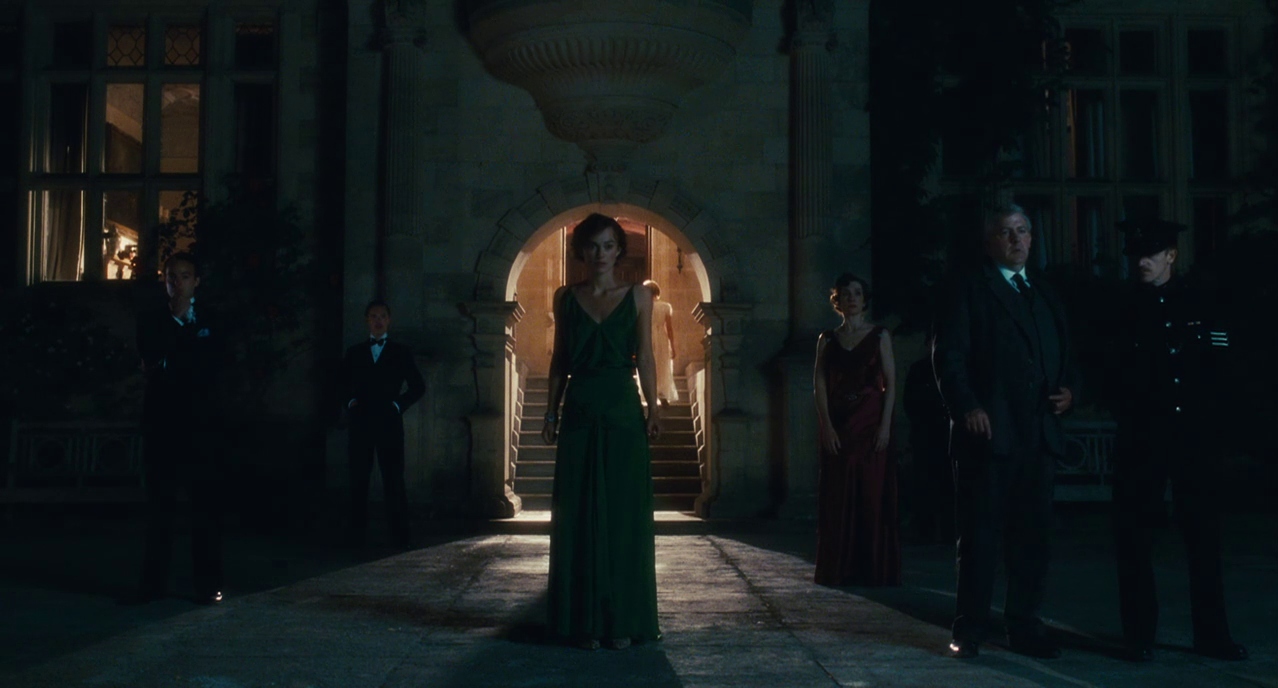
We enter the lives of the Tallis family in 1935. Briony (Saoirse Ronan) is a young child shown from the start to have an active imagination. The film opens with her finishing a play she has been working on to be performed upon her brother’s visit home; younger cousins staying with the family are her unwilling actors. Having grown bored, said cousins exit Briony’s room. This is where the intrigue begins. Gazing out the window, Briony witnesses an encounter down in the yard, however, not having heard anything that passes between the two people involved, she is only able to infer in her youthful and fanciful brain what it was that occurred. Cut to the same scene, rewound, and told from the perspective of Cecelia Tallis (Keria Knightly) and Robbie Turner (James McAvoy). It is not an argument but instead an awkward encounter between two people who are unable and afraid to admit to their feelings for each other. Passion of a different kind from a different perspective.

Later that day, we are with Robbie as he writes several drafts of a letter to Cecelia; he is attempting to organize his thoughts. Finally satisfied, he puts paper in envelope and off he goes to deliver it. Spying Briony on the road, he asks her to run ahead and hand it off for him. It is only after she is gone from view that he realizes his terrible mistake, the wrong piece of paper had been sealed within. Of course, Briony rips open the envelope and reads the words that Robbie never intended for anyone to see. From this she links the “argument” she witnessed earlier and jumps to a horrible conclusion. There is too much adultness going on for her little mind to handle and she begins to form a very wrong sense of what is going on. We are privy to the fact that Robbie lets Cecelia know of this mistake, we are privy to their professions of love for each other, we are privy to the truth that alludes Briony.

Dinner is a brief and uncomfortable affair interrupted by the realization that the two youngest cousins have run away. The party breaks up to cover the estate’s grounds looking for them. It is during this search that Briony bears witness to the third act of the day that she does not understand and which overwhelms her. A character is molested and Briony witnesses the attacker running off without, as far as we can tell, clearly seeing his face. Again, conclusions are jumped to and when interviewed by the police she points fingers in the only direction she can think to point them. Robbie is wrongly accused of rape. However, due to his low station and Briony’s telling of events, Robbie’s protestations are not believed and he is thrown in prison.

Several years have passed as the next scene opens and we are in the middle of WWII in the heart of Germany. Robbie was given a choice, continue serving in jail or go out and serve for the country. Imagine being forced to war based on the lies of someone who just didn’t understand. It is here that we are brought to see the severe consequences of Briony’s actions and how they are impacting everyone in her life. Her sister has stopped talking to her; their childhood friend is fighting in the war; and she has foregone a classical education, seemingly fearing and cautious of the misery brought upon her by her imagination.

There is of course more to the story than the events I have just outlined. However, in an effort to avoid spoilers, I won’t say any more on the direct plot points of the tale. Instead I would like to touch on the importance of truth and the viewer/reader’s ability to rely upon the narrator. The whole truth and nothing but the truth is a hard thing to muster. Whose truth is it? Yours might be different than mine, does that mean that one of us is wholly wrong? Is truth subjective or objective? How do you know if something you think is true, actually is true? These are all important questions and not all are easily answered. Briony spends the rest of her life trying to make up for (atone for) her grievous mistake. If we had spent the whole movie viewing events from just Briony’s perspective, we would have no reason to think of her as anything but a reliable narrator. Although due to the fact that we also see things from Cecelia’s and Robbie’s perspectives, we know that our primary narrator is not fully knowledgeable about things to which she states with confidence and selfassuredness. We go through the rest of the film seeing the butterfly effect of one lie. We, along with Cecelia, are unable to tell if anything Briony says is “just the truth, no rhymes. No embellishments. No adjectives.”

In addition to the beautiful unfolding of the plot of this movie, the sound design is breathtaking. The film won an Oscar for best original score and rightly so. There is more to it though than just the music which is a mixture of compelling classical tunes relying heavily upon the piano and one or two note themes and the ambient sounds of everyday life. The twitter of birds in a wide open field. The hum of a plane far overhead. Most importantly and keenly throughout the film, the tap tap of a typewriter. This specific sound sets the tone in many scenes, either speeding up or slowing down to highlight the pace of the moment. Never before have I felt more aware of character’s surrounding due so heavily to the sense of sound. Hearing what they hear in a moment of otherwise silence pulls you farther in to the scene with them.

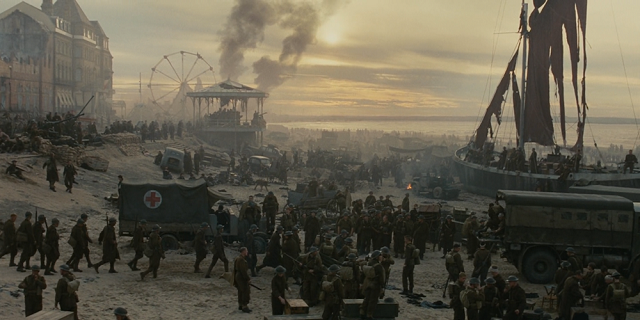
There is a scene on the beach of Normandy which is one long shot and the sounds that you hear as you follow Robbie and his fellows through the ravaged shore draw you so directly in: the shooting of horses that they can’t take with them, the cry of men and the silence of men, the songs being sung in loud chorus to comfort each other and get through to the next light of day. I realized by the end of the panning that I had been holding my breathe because I was feeling the same sense of hopelessness and dismay that had overcome those on screen. In addition to setting the emotional toll for the scenes, the music was also set nicely to match up with the changing of shots so that the pace your eyes kept was the same as the pace your ears kept.

The storytelling found within this movie is absolutely captivating. From the amazing cast to the heart-wrenching tale, Atonement is a movie that should surely be added to your must watch list. Be prepared to watch it though, not only is it heavy on the mind, it is also heavy on the run time clocking in at just over two hours. It is worth it my friends, oh is it worth it.