LOLA – Melissa Scrivner Love

LOLA


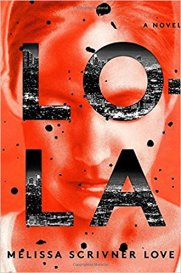
This week I finished LOLA which came out in March of this year and was written by debut author Melissa Scrivner Love. Over the course of a week and a half we go through an experience with Lola that has the potential to solidify her in a world she leads from the shadows. With a deadline and the threat of death from multiple drug lords, Lola is tested as she emerges as the true leader of LA gang, the Crenshaw Six.

When the book opens, we meet Lola, our narrator and the girlfriend of a man named Garcia who is assumed to be the leader of a gang which controls blocks in the neighborhood of Crenshaw. We are at a back yard BBQ when a messenger from the cartel arrives and wants to speak to Garcia, giving him a mission to interrupt a drug deal between a cartel customer and a rival supplier. Throughout this meeting Lola hovers on the fringe, notting everything the man says and also how he acts and her inner dialogue immediately sheds color on the woman whose psyche we are going to be in for the next couple hundred pages. Short sentences, to the point and very observant.  Whether or not someone’s English has an accent, if they are sweating and nervous, the way the air feels and tastes in the LA heat. It is clear that she is a very reliable narrator…and one who knows a vast amount more than what people expect her to. Within the first few pages, it is clear that Lola is the one running things and no one yet realizes this outside of her five soldiers.

The mission set to the Crenshaw Six, the drug deal from which they are to recoup a name plus both the cash and the loot, goes terribly wrong. And from here we have a chain of events that propel Lola into having to navigate between the cartel and this new drug supplier (who turns out to be rich and white) selling heroin to upper class users. First daunting task set to Lola: find out who this new man is, infiltrate his organization, and find out where his stash is held. Her deadline: one week. Next task: after having infiltrated said organization, Lola must prove her loyalty to the white man for him to trust her. He tells her to kill the man who was the cartel client. The one from the deal. She is again given one week. Throughout all of this, Lola is pretty collected. We see the actions of a calculating leader who’s people trust her and the plans that she comes up with to get them through these situations. It is wonderfully eerie to read passages outlined with her practical business like manner and then to flip the page and have her trying to  do good and create a safe space for a little girl.

In addition to the little girl, Lola also cares for her mother who is a recovering junkie. These two responsibilities illustrate the domestic side of Lola’s life. The balance that is consciously kept between gang leader Lola and dutiful daughter and woman Lola. She narrates about how she uses conceptions of her, often misconceptions, to her advantage. And people constantly underestimate her. I really enjoyed how she trolled these waters looking for her in to the game with the men. Lola’s confidence and level headedness is what I enjoyed most about her and this work, I think. There are a couple of other females that aren’t as flushed out as they could’ve been whose deeper perspectives could’ve been interesting.


The deadline and climax of both missions happens so near the end I thought it was going to be a cliffhanger. That being said, wether she makes it or not, there is room in this world to flush out more stories. I think Love could develop quite a few tales and am interested to see what she does next.
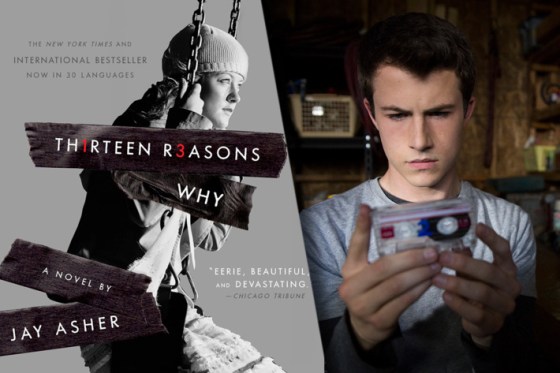
Another 13 Reasons Why Post

30-13-reasons-why.w710.h473

Spoilers abound below. You’ve been warned.

Two years ago I came across Thirteen Reasons Why whilst in a deep dive of the YAL shelves of my neighborhood library. In fact, it was the topic of my fourth blog post ever! Over the past few weeks there have been blog posts and think pieces a plenty about the new Netflix adaptation which coincides nicely with the book’s 10th anniversary. For years, this book has been a controversial work. It is a tale that sticks with you; a heavy realization that everything you do has an impact on those around you. In 2012 the book made the ALA’s list in their annual Top Ten Most Banned Books list for reasons stating: drugs/alcohol/smoking, sexually explicit, suicide, unsuited for age group. “These are not topics suitable for young readers” they say. Bullshit, lovelies. Those are topics our young ones are exposed to at earlier and earlier ages. The heart of this tale holds messages which are incredibly important for this generation to learn: compassion, empathy, responsibility, awareness. This is a super important work in both mediums, each of which portray Hannah Baker’s story in different ways.

For fans of the book, I think it is incredibly useful to go into watching the show with a conscious forethought, recognizing that these are separate creations in two different mediums. You have a 288 page book versus a 13 hour TV drama. Those aren’t really equal or comparable so thinking of them as such from the beginning is not going to do you any good. However, this is a good thing!

The book gives you Clay and Hannah and Tony. That’s pretty much it. There is some dialogue between others and you see people around as Clay visits all the spots on the map but that is it. Why no other characters? There’s no time. Clay binge listens to these tapes in one night. Primary difference right off the bat. There is a heightened tension as he speeds through these awful recollections and you learn along with him all of the truly unfortunate events that befell this girl. You realize slowly, along with Clay, what was passing through Hannah’s mind. He becomes consumed with them going from one tape to another just as you assume he would be when presented with this situation. Digesting it all while constantly being ready for the next tape to be yours. We are presented with Hannah’s tapes and Clay’s immediate reaction to them and during them. Alternatively, in the show, our experience is stretched out for at least two weeks. In this time, we are able to see a much much broader picture. What these tapes have sparked from his classmates, how Hannah’s parents are coping, and even providing time for a case to be built which (surprise!) Clay’s mom is lawyering for! There is a whole world that is created in this visual depiction. It creates a 3D image, a broader depiction showing the ripples of Hannah’s death. We are given more time for Clay to take in what he’s hearing and actually show a bit of resistance and perturbedness (that’s not a word) at what all of his fellow classmates have done. Which brings us to the next point: he takes it to his peers. Clay wants to hold them accountable for their actions but they say that some of these tellings are out of proportion or didn’t even happen or are versions of their own truths.  In some cases they are denied out right or maybe not remembered at first. In the book we are feeling directly from Hannah how she experienced these events and how they impacted her whereas in the show we are informed by others as well. I think this is why it is okay for these two to differ so much because it perfectly illustrates how different perspectives are valuable.

However, and this is a big however, not all of this fleshed out world is great. What follows are thoughts purely on the TV show. So many great things about this show from the astounding amount of diversity (in race and relationships) to a realness brought with the very human reaction you see from Hannah’s parents to the more full narrative we see from all the other characters. But there isn’t really a base for them from the source material outside of what we hear on the tapes. So these characters were developed largely by show creator Brian Yorkey and it’s not that he does a bad job, its just that many of them felt too extreme. From Justin’s wanting to literally put together a plan to kill Clay to Courtney’s blind eye to rape there are things that some of these characters say that have you going, “umm what?!” Not all of the time but definitely a notable amount. To go into a side rant about these “umm what” moments, let’s take Tony for example. ROCK CLIMBING?!?! Ummmm Whaaat?! There were so many prolonged encounters that involved Tony just popping up places and being Jiminy Cricket (or as Clay puts it, Unhelpful Yoda). Clay could’ve easily listened to these tapes two per episode and we could’ve cut things wayyyy down.

In addition to the extension of the characters there is an extension (as already mentioned) to the story. In reading, our experience stops when the tapes do. In viewing, we see Hannah’s end. We were told 10 years ago that she “swallowed a bunch of pills” however today’s method is different and much more detailed. Today we see Hannah slit her wrists; we see her parents find her after she has bled out in the tub. It is a heart wrenching scene. It is a striking step beyond the tapes. Even further still we hear Hannah narrate these tapes with so much emotion in her voice. Katherine Langford does an amazing job at making all the feelings feel. She’s telling the story as she knows it, how she has felt it. This adds so much to the story.

With all of the differences of the show and even the non differences, Jay Asher is fully on board with how the show depicts his story. At the top of this piece I listed all of the reasons the ALA cited as to why the book was placed on the Banned List, one of which was that it was inappropriate for it’s intended demographic. This show and this book depict a reality that parents and others might not want to deal with. But bullying and suicide rates are a very real thing.  As Asher said in an interview recently, “that raw and honest approach was my first big decision I had to make when writing the book, and the writers of the series felt the same way. These things happen, and to give respect to the people they do happen to, it felt wrong to hold back. It needs to be uncomfortable to read or watch. If it’s not, and we pull away, it felt like the story would only contribute to that problem of not truthfully tackling these things. We’re already good at avoiding uncomfortable subjects, and that needs to change.”

Read this book. Watch this show. Be conscious of how you treat others.

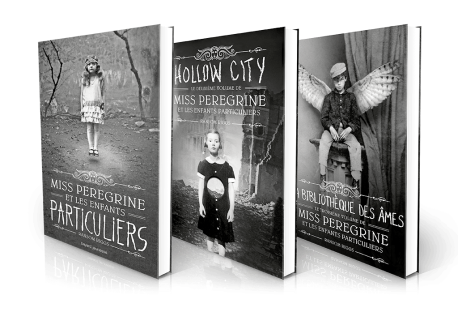
The Peculiar Children series by Ransom Riggs


Miss-Peregrine.png

The first, second, and third novels of Miss Peregrine’s Peculiar Children are very darkly whimsical. Not in a Tim Burton way (I promise lovelies, this is the only time I will mention him) but in a sepia toned, phonograph, crackling edges kind of way; a way that progresses at juuust the right pace. Ransom Riggs brings us into a tale that you have to read to believe.

We begin with the self titled Miss Peregrine’s Home for Peculiar Children and Jacob Portman’s adventure from being a normal to realizing his a peculiar. As Jacob is our narrator we learn things about this new world, its history and its secrets, at the same pace he does. Which is why we are equal parts unsure of his grandfather’s sanity and the possible truth to the far out stories of his past when he dies a tragic death by a creature only Jacob sees. It is this traumatic event that slowly begins the chain of events that will open Jacob’s (and our) mind to untold possibilities and bring us to the time loop(s).  We learn that Jacob’s gramps was a peculiar and so is Jake…they specifically can see these beasts that are ultimately Grandpa Portman’s downfall. Hollowgasts. They haunt peculiardom, eating the souls of any peculiar they can reach and are under the control of wights – the organized baddies. Anyway, peculiars. What are they, you ask? Who are they? Well, they are magnificent humans with the ability to do things like float, or have mouths on the back of their head, or create fire with their hands. I know your next thought: hmmm that sounds a lot like mutants. The thing is, these are all children…on the outside. The aforementioned timeloops are spaces on top of, or maybe behind, reality. They are little pockets that freeze a day and loop it forever; their inhabitants’s souls age however their bodies do not. This is where peculiars have taken to; unable to comfortably live in the open as wights and hollowgasts have hunted them for a century through the centuries. Not only are we introduced to this world in Riggs’s first title, we are also given brief glimpses of a much deeper narrative than just a boy grieving over his grandfather (that sounded dismissive but it is not meant to be) and finding his way back to the grandfather’s childhood home. There is the understanding that something serious is going on in these people’s worlds and we have arrived just in time!!!! (#savior) While the tone of this book is serious it has some moments of light. They are all still children: naive and living in a sunlit snapshot of time and when Jacob joins them he too has a lighter sense of self. As the book comes to a close we are promised that the understanding of and our perception of this time and place are about to be expanded even more. With a cliffhanger that leaves you thinking “Oh no!” there is no choice but to immediately pick up book number two.

Unfortunately it took me a whole year between buying the book and beginning to read it so there was a little remembering that I had to do which is okay because it picks up exactly where book one ended. Hollow City is the tale of Jacob and all of his new friends, Emma, Bronwyn, Enoch (et. al), on a rescue mission which has so many close calls you can’t help but speed through the book at the same breakneck pace. There is so much action and quick paced scenes that your eyes might not be able to keep up with your mind! We go from the sunny island of Cairnholm on which they have all lived for 60 years deeper into the loop to the same day but in London. The adventure of getting there and the people they meet gives us more insight into history and more is steadily revealed about this big bad. The fact that this is taking place during WWII is significant as the wights are able to pose as Nazis and no one thinks differently or realizes it. This allows them to be organized and systematically hunt down the entrances to these loops. They can’t go in, you see, so they employ traitors and trickery to get the peculiars and their guardians the ymbrynes to come out of the loop and get snatched right up. For what, you might ask? Well…that’s a mystery too. A dark and terrifying mystery as no one is ever seen from again and capturing an ymbryne is no easy feat. Over the course of Hollow City we are guided deeper and deeper into this loop and even into a couple of other ones too. The layers of the world that Riggs has created is dizzying at times. However, the addition of layers adds to the tone which has lost its sunshine and has gained an air of anxiety and fear; uncertainty about everything.

Just when you think we are about to have a happily ever after moment to end this rescue mission that has been chalk full of foiled plans and dastardly encounters the plot curves and leaves you gasping, “Well, fuck!”

This sentence is appropriate as it allows me to continue talking about this tone shift. I noticed a difference in Jacob’s words as the journey darkened and he had to grow up a bit and make some really tough decisions. It is in book three, Library of Souls, in which I first notice Jacob swearing. His shift is actually so perceptible in this one that he begins to think of himself as new Jacob and old Jacob. By this point, Jacob and Emma (who is our strong leading lady), have been through so much that they are exhausted and unable to trust anyone. A very old loop and a very shady ferryman usher J and E to Devil’s Acre where all of the outlaws of peculiardom have floated over the centuries. It is here that a steadily increasing amount of our friends are being held captive, abducted over the course of book two. Here we learn the twisted plan of the wights; this is the evil dungeon, the lair. Here we have the culmination of Jacob’s journey with Emma to save his friends. We also have, the final show down of the good vs. evil that has been plaguing these people. A carefully sleuthed plan, a final battle, and a resolution that covers all loose ends and loops. The dirge of Devil’s Acre is so disgusting and makes you squirm and grimace. It is in this horrible place that Jacob truly grasps his gifts and harnesses his ability. However, there are still a couple of chapters after the titanic tussle because life goes on after a battle and lives must be rebuilt. Can they be?

I tried to make these descriptions as vague as possible while staying interesting. I hope I did that. These books have really good twists and are very thoughtful in the telling of history (paradoxically) and an unravelling of what is behind a story. My favorite, I think, is book three as it has a character named Sharon whom I really enjoyed, shows what a community looks like in this horrid place, and reveals that there are so so many sides to a story. The evolution of Jacob Portman is really great to witness. I highly recommend this whole series and also the companion book. Tales of the Peculiar is a tome mentioned several times throughout the series and the printing of the books is comparable to that of Beetle the Bard’s tales. Something that I didn’t touch on at all yet is the fact that these books all include old early photographs of really odd and striking scenes with people who could very well be peculiar. They are all real and have been collected from various estates. This adds to that whimsicalness I mentioned at the top in which everything is just a bit spooky.

In closing, read these tales. Believe in the peculiar and in yourself.

Nobody Speak: Trials of the Free Press

nobody-speak-trials-of-the-free-press-F71891

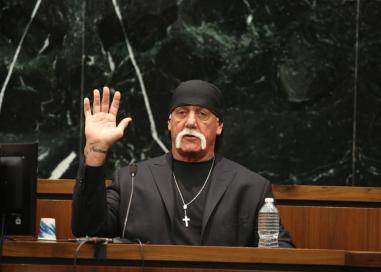
Hey there, lovelies! As reported last week, SXSW was in full swing and my Film badge was being put to full use. Now that the festival is over and I’ve had time to reflect on everything I saw over the course of the week, I realized that what I watched more than anything else was documentaries. There were so many of them and on such a wide range of topics. Out of all that I saw, I think that the most interesting and the most relevant by far was Nobody Speak: Trials of the Free Press. Award winning investigative documentarian Brian Knappenberger, known for The Internet’s Own Boy and We Are Legion helmed the project. The thumbnail photo for Nobody Speaks shows Hulk Hogan who is, admittedly, not someone whom I would want to watch a documentary about. However, do not let this deter you for there is something much bigger about this film and what it represents for the free press in our country.

In 2012 Gawker Media published a sex tape of Hulk Hogan (Terry Bollea) and Heather Clem. Apparently, Clem’s husband likes to film her with other men and watch it back. To each their own, ya know. Anyway, upon the posting of this video, Hogan sued Gawker for invasion of privacy and intentional infliction of emotional harm, among other things. The back and forth shown through court clips and interviews with Gawker editors shows how crazy this case was. In the end, Hogan ended up winning and was awarded $31 million which was roughly $100 million less than what the jury had come back with. Gawker did not have this kind of money and filed for bankruptcy last year.

What’s the big deal, you ask? Well, as the story unfolds, we learn that Silicon Valley billionaire Peter Thiel helped fund the case against Gawker. The site had published several unflattering stories about Thiel over the years and he had built up a grudge against the media outlet. He poured millions of dollars into Hogan’s defense allegedly without Hogan knowing who he was or why he was doing it. What is utterly terrifying about this is that there was a man who had a grudge against a digital print outlet, who used his resources to his advantage, and took a step into the legal world that until now no one else had done. This opens up the opportunity for other private citizens and/or corporations to do the same, meaning that if there is a magazine, newspaper, any sort of periodical that prints something that someone doesn’t like there is now precedent for them to take it upon themselves to facilitate a take down.

In addition to the Bollea v. Gawker case, Nobody Speaks also shines a light on the purchasing of one of Nevada’s most notable newspapers, the Las Vegas Review Journal, by the Adelson family. While you might not know the name off hand, the Adelsons are big in the gaming world and are apparently quite corrupt and shady (shocker, I know). The reporters and staff of LVRJ were told that their paper had been bought but not by whom. Good idea…try to hide something from a whole newspaper staff. The reporters start digging and soon unearth the truth of their acquisition. Penning an expose on the matter, they go to print without a green light and then many of them resign, principles and ethics still intact.

What brings these two storylines together, you ask? Apparently there is a connection between Thiel and the Adelson family: they both make huge contributions to the Republican party and most recently, Donald Trump. The significance of this is that Trump is very publicly against mainstream media and honest reporting of any kind and these two stories are instances where men saw an opportunity to influence/shut down a media organization whose ideals they didn’t agree with. While there is enough material for both of these stories to stand on their own, for they are both majorly important, they are tied together with what seemed like a hasty Trump through line. I say hasty because there was video of rallies and press conferences that are incredibly recent. Like since he’s been in office recent.

Towards the end of the film we begin seeing, through still images and voiced over short video clips, the ties that all of these men have with each other. This sort of made the ultimate message about how things lead back to Trump. I think the doc could have been a lot stronger if they had stuck to highlighting these terrifying cases and how they can potentially effect our future. This is my only complaint.

Netflix has reportedly purchased the film however when you search the title you’re not able to click on the result. I don’t know if that just means it is not yet available or what. Whatever the case, you should find a way to watch this documentary. It is incredibly important and impatiently relevant.


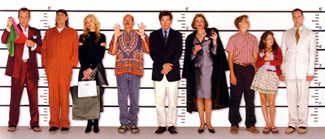
Late to the table: Arrested Development

arrested_development_cast_promo_photo

Upon scrolling through Netflix’s recommended section, I was repeatedly receiving Arrested Development as a suggestion. I had always heard great things about the original series…it was popular while I was in high school but I never got around to watching it. There is no question, now that I have viewed the series in its entirety that I don’t agree with the small masses that make up the cult following of the show. This entry though is specifically about season four. The “Netflix season” if you will. This season is also something that I had heard about …however nothing really good. At first, I must admit, I was in the same camp. The sets were slightly awkward as the show had been off the air for seven years. The dialogue was slightly off as if the writers and the actors took a bit to adjust back into their character’s grooves despite Mitchell Hurwitz (most recently he produced Lady Dynamite which you NEED TO SEE) returning to help co-write a majority of the episodes.

After tearing through the first three seasons in two weeks, I was hesitant after three or four episodes of season four. However, I couldn’t not finish it after all the time I had already invested. So, I soldiered onward and found that I ended it with a new found appreciation.

The Netflix season is structured differently than that of the original run. While there is still the premise of a show being shot about the family (complete with Ron Howard’s narration and the characters being aware of the cameras) there is one central storyline that unfolds and we see each character’s perspective; their side of the events. This creates a very interesting theme set around how each of their actions has impacts, sometimes unknown, on other people’s part in the story. It showed the interworkings of this family whom we have come to hold dear for reasons unexplainable. They are, after all, lying, cheating, connivers. What makes this way of storytelling even more interesting is that there are so many players involved and because of that so many avenues to explore. Including George Sr.’s twin there are 10 members of the Bluth family.

Picking up the storyline where it was left, we dive into the whole family being held in a police station after the events of season three’s finale. Lucille had tried to steal the Queen Mary, George Sr. had just been cleared of treason charges, Michael and George Michael had returned from their once again failed attempt to leave the family to their troubles, and many other pieces of the puzzle. Without explaining all of them: know that they were all there at this station. We bounce back and forth between the events here in the station and what comes after them with the understanding that it has been five years (not seven) in Bluth reality.

The through line slowly unfolds like like a bloom in the spring and each episode is labeled/assigned to a specific character. In doing this, you know that most of the episode is going to be dedicated to that character and the small degrees of separation between each person’s tale. It really becomes fascinating how something you do, it might be something small and insignificant to you, might effect someone else in a big way. It also serves to illustrate the seemingly isolated lives these characters live in that their actions so immediately impact each other. This way of unfolding highlights a couple of other points as well: those who don’t seem to have too much overlay (ex. Buster and George Michael) are brought together in the culminating scene of the tale (the night of Cinco de Quatro), and, while it is always insisted that “family is first” by the Bluths, each is in their own little world. While this is a fact we already knew from the original run, this sort of individual attention of their lives seems to showcase it even more.

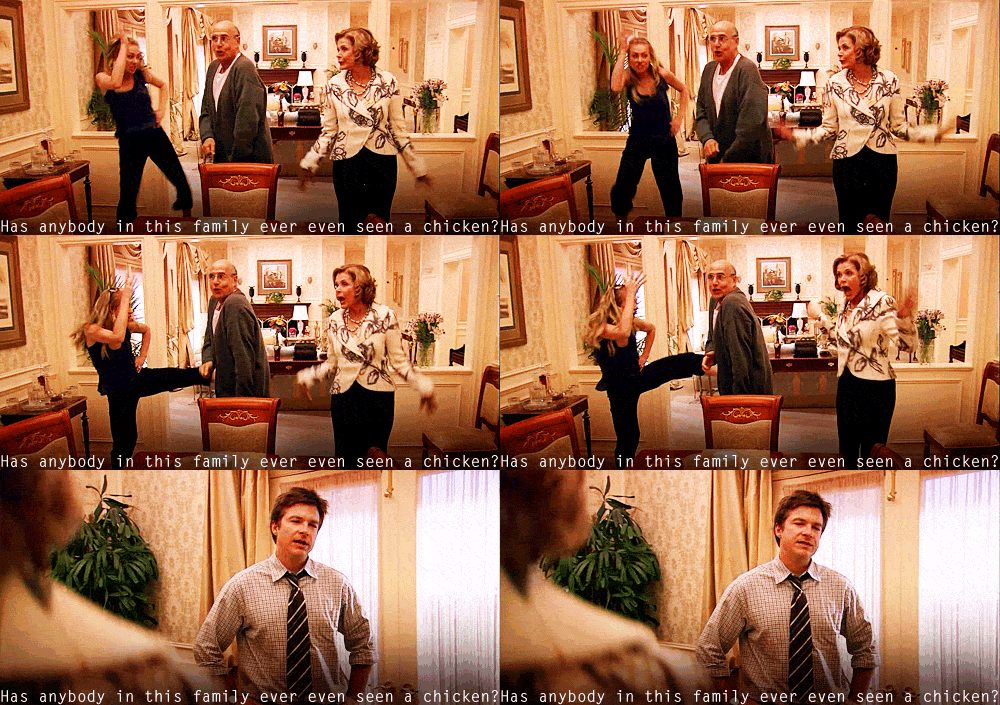
Outside of the interesting approach to storytelling, the reoccuring guests that appear over the course of the season really help give it a new feel despite old events occasionally being brought back up. There are familiar faces: Henry Winkler reprises his role as the Bluth family lawyer and is as incompetent ever, Gene Parmesan played by Martin Mull (the scenes where Lucille is surprised by his appearances make the whole show for me), and Kitty Sanchez the stage five clinger played to perfection by Judy Greer, and Liza Minnelli as the most unlucky neighbor Lucille 2. Then there are newcomers that bring even more charm and crazy to the table: Terry Crews as Herbert Love running for a seat in the House and Isla Fisher as Rebel Alley (an illegitimate daughter of Ron Howard). z1y2yyw

All of these elements: the story and how it unfolds, the characters new and old, and the awkwardness of the show in general made for what I found to be an enjoyable conclusion to our window into the lives of the Bluths. Again, all that being said, I totally understand where all the hate came from in reviews. I was really happy that I saw it through and didn’t give up.

What I take away from this experience is that even though Netflix Netflixed the season (made it shinier and a bit off), it worked. Now if only the same could be said for season two of Kimmy Schmidt.

  1. lcwqnsq

The Sirens of Titan- Kurt Vonnegut

When a good friend recommends a good read, I jump at the chance to see for myself what caught their eye and held it. In the case of The Sirens of Titan by Kurt Vonnegut, I was definitely not let down and by the end of the book I had so many feels and so many threads of thought. This is what a great piece of work does. It branches and fractures your thoughts well beyond the pages of the book.

That being said, let’s dive into this journey. From the start of the book we are given a somewhat reliable path that our main character will be taking; we are given the dots but they are by no means connected. And as X, Y and Z come to pass, we are taken on a journey whose settings exist from the Sun to Betelgeuse. As the scenery changes, so do the characters. This book contains probably the biggest evolution of a character I have had the pleasure of encountering.  Malachi Constant is one of our mains; beginning his journey with his full name, which is incredibly important to him. His name is his birthright and his claim to millions. As his situation changes, including but not limited to, the planet on which his story continues, he becomes Unk, a man stripped of everything from names to memories. He next becomes the Space Wanderer, nameless, planetless, helpless. He is stuck in his story, a pawn of something far greater.

This becomes a bigger and more important question as the novel progresses. Is something greater occurring? Who is pulling these strings and orchestrating all life on Earth? We think we know. In fact you’re entirely sure you know for the course of the whole work. Except you don’t, not even a little bit. The fact that someone/something could be pulling the strings your/our/my whole life is an intimidating thought. But what if this puppet master has a puppet master of his own? Being omniscient allows you to be all and see all, yes, but why does that become an inherent right? And how do this omni know whether what they are seeing and doing is not an orchestration all its own?

This is what made reading this book so much fun! Despite the fact that fairly close to the inception of the story, we are given a map, there are so many unbelievable twists and shocking turns that I challenge you to plot this course and get it completely right. Vonnegut’s whimsical voice creates a fantastically beautiful narrative. His descriptions of the world are abstractly and concretely breathtaking. .

If you need a read that is both quick and thought provoking, pick up The Sirens of Titan here

.