The strong female lead


I tend to read several books at a time. I tend to start books, pick up others, leave some unfinished. There might be an Audible I’m in the middle of at the same time I have two paperbacks going. The exception to this is when I get transfixed by a series. Three weeks ago I was listening to The Handmaid’s Tale (Margaret Atwood) whilst also going back and forth between The Sun is Also A Star (Nicola Yoon) and Fierce Kingdom  (Gin Phillips). Currently I am enthralled by the words of William Ritter in the Jackaby series. Pausing for a moment today I reflected on the thing that all of these titles have in common: strong and independent women at their core. Now more than ever lovelies, it is important that we do not forget that we have vastly important stories to tell no matter what the genre. Whether a it is a new bestseller or a title that has resurfaced in a timely fashion there are an abundance of damsels who keep their heads while in distress. I’d like to take a moment to speak about these ladies who have been in my life of late and how they are having an impact on me.

With the current adaptation of Atwood’s dystopian future, in which religion and fear have allowed for a militant God group to take society’s reins, we are reminded of the tale Offred told us originally 19 years ago. The Handmaid’s Tale gives us exactly what the title states. June is the handmaid ofFred and his wife Serena and it is her duty within the household to provide a baby for the family. This is done through repeated rapes and captivity along with the continual reminder that it is woman’s sole purpose to breed. Gone are any basic human rights and contact with the outside world. Offred recounts her tale having lived this reality for several years. As readers, we slowly learn of Offred’s daily life and are given glimpses into how the world was able to get to this point. I am watching the series as I listen to the audiobook and must admit that I have not yet finished either so I am still learning about her journey. I am struck by how courageous Offred is and in contrast how many times I have thought to myself, could I hold my tongue? Could I be repeatedly defiled and not go crazy? Several times I have thought to myself, well that would have pushed me over the edge. Society within Gilead and sections of the United States are transformed into these stepford-ly fake worlds in which climate change has effected the air and people have become sterile. The handmaids are society’s last hope for continuing the human race. Talk about pressure. The will to not let the bastards get you down is a hopeful outlook that Offred gives us of her situation. I hope, as I keep reading, that that continues and she is able to stay strong. Luckily I have not had the end spoiled for me so I don’t know what happens. However I have heard that the endings of the two mediums differ (as the show has a second season pending). In Offred I have hope. In Offred I recognize how important it is to keep your wits.

The Sun is Also A Star is the word vomit of two teenagers who meet on the streets of New York. One is Natasha and one is Daniel and the chapters alternate their perspectives allowing us to be told the same story from two different takes on what is happening. Something that I love about Yoon’s characters is that they are so fully realized that it does not take you long to recognize that the way of learning what happens in this story is going to be very real to each of them. Natasha is on the verge of being deported with her family and love is literally the last thing on her mind. She is supposed to be applying to colleges and studying for the SATs. Instead she is visiting government buildings and lawyers offices and trying anyway she can think of to be allowed to stay in America. Daniel is supposed to be on his way to an interview with someone from Harvard and is completely distracted after coming across Natasha as she is on her way to speak with the aforementioned lawyer. Over the course of this stressful day, Natasha brightens up in Daniel’s presence. Yes, there are hormones involved and the concept of love at first sight is debated but there is more than that. It is not just that Daniel is a cute boy whom she quickly realizes she is crushing on, it is that she allows herself to open up to him and smile. The driving force of Natasha’s story is this incredibly adult situation that she is having to deal with. The issue of deportation is immediate and scary and she is determined to find a way out of being punished for her father’s mistakes (it is his fault they were found out as being illegal immigrants). Because Daniel is naive to her situation there is no pressure to talk about it or stress over it. Natasha has strong scientific and fact based beliefs and she holds them tightly. It is because of this that in Natasha I recognize conviction and determination and a stick-to-your-guns attitude that is incredibly refreshing.

The cover of Fierce Kingdom is deceptively boring. There are carousel horses on the front along with jarring red block letters spelling out the title and author. It is because of this judgement that the advanced copy sat on my shelf for months before I finally read it. If ever there was a case for the saying “don’t judge a book by the cover” this would be it. The zoo is closing and Joan and her son Lincoln are making their way to the front when they hear some popping sounds. A few pages later we get confirmation that these were gun shots when Joan rounds a corner and sees dead bodies. She quickly steers Lincoln away from the scene and from that moment on we are involved in a fast paced game of hide and seek, cat and mouse. Due to the fact that it was the end of the day, there are not that many people around so the zoo is eerie and quiet. The animals sense the danger and we go many pages without seeing a single other person. We are within Joan’s mind for much of the narration. The fear and anxiety that Joan feels is made to feel very present in Phillip’s writing. The use of short terse sentences, the occasional disoriented thought from Joan about Lincoln’s Avenger toys in her purse, the way that silence and sound play into your reading. Survival instincts are brought to the front of her mind. Joan is levelheaded throughout: she has to keep Lincoln calm and entertained (there is passage in which sleepy Lincoln, who is four-ish, is starting to get hungry and these two things combined do not make for a quiet toddler. High. Anxiety.) while also helping him avoid too much trauma (the sight of dead animals and people), and she has to make decisions that are very hard to make (there is a part that involves a baby that is just heartbreaking). In addition to Joan we gain the points of view of Kailynn, a girl who works in a concession stand at the zoo and get some minor character development in a Margaret Powell a local teacher. These three women come from different backgrounds and they are all trying to survive the night in this terrifying situation. All three are strong and courageous and it is in them that I see the strength to carry on.

The last heroine that I would like to gush about is in the books that I am currently reading. Miss Abigail Rook tells us of her adventures with the detective for whom the series and the first book are named. Jackaby is the opener of the books and it is within these pages that Abigail recounts to us the strange and not always natural cases she investigates as the assistant of the detective. Much like Robin in the Cormoran Strike novels, Abigail is not content being an assistant who sits out of the cases whose notes she will inevitably end up transcribing. She is pulled immediately in to one, in fact, as she is in the process of convincing Jackaby to hire her while he is on his way to a crime scene. The series takes place in the 1890s and people tend to have preconceived notions of what a woman’s behavior looks like (it is full circle from the first title if you think about it…Offred having had her rights taken away, Abigail fighting to gain and maintain them…not a good circle, just something I noticed). Because of these notions people are constantly surprised by the tenacity and confidence exhibited by Miss Rook. After being told her whole life that her place was with the ladies in the parlor and not out in the field working with her paleontologist father, Abigail takes off with her school money and runs away to find her own freedom. As she reaches the shores of America (having gone on a couple of adventures between leaving England and arriving in New England), Abigail is able to find her footing and carves her own path with a clear sense of determination. I mean, imagine how it was back then, arriving on the shores of a foreign country and not knowing anyone and being a woman on top of that. Sure that is still something people do today but with the advancements in technology it isn’t the same. While she is a young lady in man’s world and while she has doubts and uncertainties about her path, she doesn’t let thisdeter her. One thing that I like about Abigail is that even when she is told no, she explores other ways to make it a yes. In Abigail I see a woman who is not afraid to stand up for herself and others in an effort to pursue what is right and just.

I briefly mentioned above the Cormoran Strike series and one of the primary characters, Robin. While this is not a current read (although I hope to the bibliogod that book four is coming out soon) it is also one to keep in mind when looking for a read with a strong female lead. She is a wonderful character and it is refreshing to have these two women (Abigail and Robin) in these detective stories as the genre is usually dominated by men. Additionally, next up on my list of must reads is a new American Gothic by Claire Messud called The Burning Girl in which we experience the ups and downs of a childhood friendship (and of course there is a creepy castle).

All of this is to say that for years growing up I had all of these wonderful boys and men leading me on my journeys; they took charge of situations and performed brave deeds. But where would Harry have been without Hermione? Would Holden have had any grounding if it weren’t for his sister? How far could Eragon have gotten if it weren’t for Saphira? Women are so often the backing these main characters need but these stories also show that we deserve and are capable of having our own adventures.
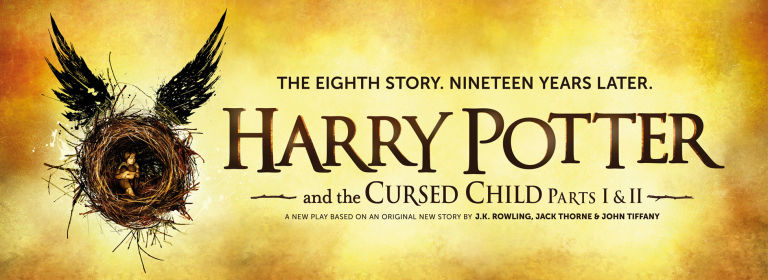


Harry Potter and the Cursed Child- Parts 1 & 2

gallery-potter-cursed-child-poster-1

I have, for many reasons,been putting off reading this playbook. When the series ended, I was content with its closing and was even glad of the epilogue showing that light can come to those who have faced the dark. This is one of the main reasons I was hesitant in picking up any sort of continuation of the story. That being said, I do think that there are so many tales that can be told from this world, which is why I am so excited about Fantastic Beasts coming out this week. So it was with much skepticism that I dove into Harry Potter and the Cursed Child.

HPCC was written for the stage by Jack Thorne and was based on an original story created by Thorne, J.K. Rowling and John Tiffany. A couple decades have passed since our trio left Hogwarts. Like we learn in the epilogue, Harry and Ginny end up together as do Ron and Hermione. Their kids are going off to school and it is here that the Potter’s middle child learns that he will be in Slytherin along with a boy who seems to be his only friend throughout: Scorpius Malfoy. The tale focuses on a couple of different parental relationships, how the younger generation are impacted by the past actions of their parents, and the importance of thought before action.

Albus Potter is the middle child. He often feels over looked and under appreciated. One night, in a heated fight, Harry accidentally comes back with a retort to the effect of “I wish you weren’t my son.” Ouch. This has a noticeable and obvious impact on the boy. Another important argument (this one Albus overhears and is not directly involved in) is had between Amos Diggory and Harry in which Amos blames Harry for Cedric’s death. All these many years later he is unable to accept the loss of his son and dwells on the fact that he was the “spare”. Collateral damage. The feeling of being the spare really resonates with Albus and he decides that preventing Cedric’s death would be a good course of action for setting things straight.

I don’t really understand this logic. This mission of his just doesn’t reeeeally make sense.

At this same time a Time Turner is discovered and taken in by the Ministry (oh yeah, Hermione is Minister for Magic, whaaaa?!) and isn’t this just perfect since Albus has decided that going back in time is exactly what he needs to do. How. Convenient.

So he and Scorpius go back in time to the Triwizard Tournament (a.k.a. book four). And wouldn’t you just know it but they mess shit up. Like really really badly. What frustrates me so much about this idea of theirs (which the story is largely based around) is that they are so inconsiderate of their actions and don’t even pause to think what undoing something that had happened two decades prior would do to the present. Preventing someones death that far back….I can’t even begin to fathom how many wrinkles that would produce. Which is why it seems so implausible. These kids have grown up in the wizarding world. Don’t you think they would be aware of the repercussions that something like this could have? I can see how there would be a counter argument formed: if they are living in a world in which all Time Turners had been abolished (/destroyed) maybe the perils of time travel weren’t taught to them. I don’t know. What I do know is that their ignorance sure does not create bliss.

When they get back to the present all sorts of things have gone haywire. So what do they do but decide to go back AGAIN to right what they’ve wronged. This time they travel to the second task and guess what…they eff some more shit up. When they get back to the present some people (including one of our main characters) weren’t even born! That’s how messed up things get. Also, Voldy is alive and well in this new present. Great. Now, to fix this, time must be travelled through…again.

This goes on and it is a total of four times that our characters traverse the time stream. Unbelievable.

A complaint that I have heard/read from many Potter fans is that the way Harry treats Albus doesn’t match up with the character we all grew up loving. I totally see where these thoughts are coming from. There are definitely some lines that I had to reread and recheck who the speaker was because it just seemed so out of touch. However, to that I say: Harry is a parent in this time. We have never before seen him in this role. So obviously there are going to be new facets of his character with which we are not as familiar. I mean, 20 years have passed, ya know? I definitely hope that some my 17 year old self’s traits evolve by the time I’m 37 (I’m about midway through that evolution and think things are going quite nicely…but I digress).

When all is said and done, I did not hate the read but I was not over the moon about it. It is very easy to get through because it is dialogue and stage direction and not any sort of expository “stuff” or narration. I would definitely encourage all Potter fans to check it out but I would caution them to go into it with an open mind. This is the story of Albus Potter despite Harry’s name being in the title. This is a play and not a book and as such should be viewed for what it is: a different medium. This is extensive fan fiction flushed out by Rowling and not penned by her. This is one to add to your Rowling shelf in the hopes that more stories (written by her or not) are to come.

pseu·do·nym /ˈso͞odnim/

pseudonym


In the 2001 movie Monkeybone, cartoonist Stu Miley (Brendan Fraser) switches the hand with which he draws his pieces. The result is that his creations go from dark twisted nightmares to this goofy monkey and his human pal (think Garfield as a monkey). This concept got me thinking about pseudonyms and the persona that is developed by and within an author’s works. In today’s publishing world many authors, both well established and those just starting out, create pen names under which they publish. The reasons for this vary from author to author: just starting out and trying to establish a name with spunk, switching genres and therefore perspectives, or trying to get away from an already established name. There are many great authors to think about who do this and I have a couple favorites.

Lemony Snicket is a mysterious, enchanting and hypnotizing storyteller (and no, he is not standing here dictating this sentence to me). He has published the accounts of the Baudelaire children and their escape from the dastardly Count Olaf. They have suffered a very hapless timeline, quite tragic really; but man are they brave children. The siblings are put through the ringer whilst trying to get to the bottom of their parents murders (which were covered up by a fire). According to his website Snicket is “insatiably inquisitive” and can only be contacted via HarperCollins Children’s Books. Snicket very rarely appears at book events, although it has happened on select few occasions. More often than not, Snicket’s handler is in attendance to answer questions to the best of his abilities and remind people how aloof his charge is. This man is one Daniel Handler. Mr. Handler leads a “relatively uneventful life” and is also the author of three books that are not for children. This past fall Daniel Handler spoke at the gala fundraiser for the 20th annual Texas Book Festival and at the fest itself. He is very interesting to listen to…quite captivating. He loves his fans and, after one of his panels, went out the front with the crowd instead of out the back. Taking picture after picture, joking the whole time. These two individuals seem to be vastly different in both character and in social settings. Now, I’m going to divulge something to you: they are one in the same. <<pause to allow gasps>>  While switching seamlessly from Snicker to Handler and back, Daniel composes symphonies, writes a column in which he discusses Nobel Laureate’s books, and writes books for non children folk.

In 1977, Richard Bachman published Rage, his first book. Over the course of the next few years, he published four more books all of which did moderately well on sales. It was after his title Thinner was published that it was revealed that Richard Bachman did not exist. All that time horror master Stephen King had been writing under the pseudonym. He reportedly was interested in seeing how his work would do if nobody knew it was his. Was he at his level of success because of his name or because of his words? (See his essay “The Importance of Being Bachman” here.) At the time of his reveal King was working on Misery which he had planned on releasing under Bachman’s moniker (I think Misery is my favorite of his works. It’s so creepy and plausible and they’re out there in the snow. Eep!) In this case, the writing style and genre were the same; that’s how he was found out. In addition to wanting to see how his work would fare on it’s own, King was feeling restricted by his publishing house who were only releasing one title of his a year so as not to over saturate the market with his “brand.” Seeing the loophole in this, he convinced them to put out titles under the name Richard Bachman.

Not unlink his father, Joe King publishes under the name Joe Hill so that his work stands away from his father’s shadow. Hill has produced some really amazing works like Horns and The Fireman even after it came out who he was. In 2007 he issued a statement confirming his parentage but not before having obtained respect in the literary community, being awarded a Ray Bradbury fellowship and also receiving for his short story collection 20th Century Ghosts the Bram Stoker Award.

Lastly, I would like to bring up Joanne Rowling. We all the know the story of Harry Potter being rejected by 12 houses (publishing not Hogwarts) but many aren’t as aware of the fact J.K. is just as much a pen name as Robert Galbraith. While they were smart enough to pick up her manuscript the publishers silly thought that young boys would be not as interested in reading a book by a woman (which doesn’t make any sense, as young boys throughout history have been told fantastic tales by their mothers and grandmothers and you would think that would inspire something or just all together not even matter, but whatever) and as such asked her to shorten it to initials and her surname. Thus, J(oanne) K( Kathleen) Rowling was penned. Joanna as her full first name and Kathleen from her grandmother’s name as she had no middle name). The success of the Harry Potter series has brought such fame to Rowling and her name that when she put out her first non Potter title after the series ended, Casual Vacancy, everyone waited on baited breathe. However, Casual Vacancy was not by any means a success. I actually stopped reading about 80 pages in because I didn’t understand any of the small town British government lingo and honestly, it was boring (although the HBO adaption is actually good for a watch). So, several years later when new crime writer Robert Galbraith burst onto the scene and awed critics and readers alike, the world was none the wiser to the fact that Jo had but out a new book. The Cuckoo’s Calling is a really solid read. I highly recommend these books, peeps. The news that Rowling and Galbraith were one in the same came shortly before the release of the second book in the Cormoran Strike series. Discovered by a reporter and confirmed by Little Brown, the news was followed by a reprint of the books which had quickly  sold out. There are now three books out by Galbraith and here is to hoping that another is announce soon. The complete departure from fantasy and the hard right turn at gruesome mysteries is very well done and really exciting.

In addition to the authors mentioned here, there are many well known writers who publish under more than just their given name. From C.S. Lewis to Agatha Christie to Dr. Seuss, the list is probably much more expansive than you might initially think.