
Byte-sized

headphones.jpg


Recently, I saw a listicle recommending the best one season binge-worthy series across several streaming platforms and I thought that this would be a great idea for podcasts too! So today we’re going to go through a couple of one season shows that span several genres. In the article Alternate Reality Podcasts, we covered several immersive storytelling/narrative podcasts whose production values were pretty stellar. Rabbits, The Message, TANIS, these have all been out for a couple of years now (and scale way above one season where TANIS is concerned) so what is new out there for our byte-sized attention spans? Lots!

Where to begin?

Let us start with horror. There are three podcasts I have in mind for this genre and they are all very different. First, we dive back into Halloween. Not just the holiday, but the phenomenon of the movie itself and the ethos created by the villain Mike Myers. The podcast is called Halloween Unmasked (The Ringer) and is hosted by Amy Nicholson. Listeners can tell right from the first few seconds of the first episode that Nicholson is a massive fan of John Carpenter’s work and her enthusiasm is unable to be missed. At some point within the first episode, I checked the playback speed because she was speaking so fast, it was set at regular, she was just speaking with such enthusiasm that she almost couldn’t keep up with herself. Once you get past that, this series is chock-full of interesting movie history that every film buff should have an awareness of. From tiny production details that make you smile upon rewatching the original to psychoanalysis of what someone who witnesses trauma goes through, this podcast will have you binge listening instantly – and if you’re really brave, you’ll listen to it at night while walking through your neighbourhood alone. My favorite episodes are three (the psychoanalysis one) and four (covering the Final Girl trend now seen in every horror film).

Next up is The Horror of Dolores Roach (Gimlet). Sounds promising, right? Horror is right there in the title. Man are you right! This tale is disgusting and disturbing on all the right levels. Imagine a modern day, politically correct, Sweeny Todd, whose main character is a woman of color who has just gotten out of jail after a long sentence. Dolores’ integration back into society does not keep her as “above board” as she wants. With a stellar voice cast that includes Daphne Rubin-Vega and Bobby Cannavale, we are taken through a gentrification allegory unlike any I’ve heard so far. The character development that occurs in the eight-episode run arches rapidly but is very well done and their morality is called into question as some pretty creepy decisions get made, causing the level of crazy to elevate quickly. Cannavale’s character welcomes Dolores into his home as soon as she shows back up in the neighbourhood and you have that feeling of “this guy is being a little tooooo nice.” It doesn’t take long for both Dolores and the listener to question where his motives lie. While the timeline of events feels a bit hasty at times, it makes you pause to think, how far would you go for love?

One more terror-ific cast to check out is Dr. Death (Wonderly) which chronicles the career and lawsuits of one Dr. Robert Henderson who is – or rather was- a spinal surgeon in Dallas, TX up until just a couple of years ago. This man was obstinately determined to continue in surgical pursuits even after several patients had become paralyzed after they let him operate on them. The show focuses on the mistakes and oversights which occurred right before and right after one of his colleagues finally calls him out on his malpractice. There are human, medical, and legal aspects to this show and each of them is as compelling as the last. How could someone have such disregard for those who trusted him, how had it never happened before, and what is going to happen to the communication and legal standards between major institutions like hospitals and the transparency they sometimes lack? Henderson’s case is ongoing and journalist Laura Beil is still reporting and creating up to date episodes, keeping the public informed as to the proceedings. Listening to this show provokes so many questions.

Now let’s take a total left turn: art history! Last Seen (WBUR and NPR) is produced in part by the Boston Globe and covers one of the most infamous art heists ever. With eight episodes out at the time of typing this and more to come, listening to Last Seen takes you into the world of art which is not always as accessible as a podcast might be. In 1990, the Isabella Stewart Gardener Museum was burgled in the wee hours of a mid-March morning. In a scene straight from a movie, the thieves disguised themselves as policemen to gain entry to the museum and then proceeded to tie up the guards and cut from the frames $200 million worth of art. There have been zero arrests and zero recoveries in this case and the agents at the FBI who have been working on the case for almost 30 years now have stated that they believe the original perpetrators to be deceased. But the mystery still remains as to where the paintings are and what has really happened in the intervening decades. You don’t have to be a fan of capital “a” Art or a well-versed historian to be interested in this mystery. There is plenty of intrigue to be had in these captivating episodes.

I will be the first to admit that I listen to far too much political content via podcasts. At one point this summer I stopped and counted what my weekly episode intake was and it was over 12! That’s too many. At a certain point, Rachel Maddow and the fellas at Crooked Media all come back to the same points. Underdog (Beto vs Cruz) (Texas Monthly), however, is not a nightly update on what our current disastrous state is. Instead, we get a close examination of a race which captivated the country: that of the Senate race between Beto O’Rourke and Ted Cruz. This podcast, produced by Texas Monthly, goes on the road with the underdog of the race, Democratic Congressman O’Rourke and examines how his campaign was run and what was so different about the momentum felt this year as opposed to years past. Texas has been deep red for almost 30 years and even high profile candidates like Wendy Davis have fallen short of beginning the shift to purple or blue. It is really nice to listen to something that is in the political sphere without having people yelling at you about national catastrophes and instead focus on the smaller, more personal aspects of a campaign. Despite the fact that the election is over, I would still encourage people to listen to this show. There is an excitement felt through the speakers and while hope is present, so is reality. The last episode in the season is a follow-up the day after election day. You can hear the heartbreak but you can also hear the determination. Refer to Presidential for further political listening that has nothing to do with the current political state.

Lastly, to tie it back to the first recommendation, Amy Nicholson and Paul Scheer have been going through AFI’s top 100 films of all time in the podcast Unspooled (Earwolf). After watching each movie, the two talk about what it is that makes each title qualified to be on this list. You can listen in order of episode or skip around to titles that you are more familiar with because each episode is self-contained. Yes, as the list goes on they begin to make connections between the films and the qualities they exhibit in getting on the list, but I don’t think that would diminish your listening experience.

No matter what your interest, there are so many great podcasts out there. With binge listening in mind for a lot of these, there is so much content to lose yourself in. Your ears will thank you.
 

World building whimsy

The best part of getting lost in a world (be it through a book or a film) is that anything can happen. Certain storytellers have the ability to submerge their audience in world’s that can be very similar to ours or very, very different. It is not just that full characters are created or that the story line is well thought out and planned, it is that every aspect of the world is notably considered and taken into accordance within the story’s unfolding. A writer who is able to convey the mores of a culture which they’ve created or enhanced without shoving it down your throat via clunky exposition is a talented one indeed. This is most evident of series in that there is so much more time for customs to be laid out and histories to be relayed. Tolkien took up volumes with the detailed history of a whole land as did Paolini. Lewis built his world volume by volume which allowed for a slow expansion and understanding of the world in which Narnia existed. I think this is why The Magician’s Nephew has always been my favorite. This world building is something that I am noticing more and more as I tear through the Game of Thrones saga (I’m currently in book three) and also something I noticed recently while watching the latest installment of Disney’s Pirates of the Caribbean films. I realize I may lose some of you there. What?! The Pirates movies are being thought of in the same breath as GoT?! Hear me out, lovelies.

When considering a fully realized world, we are able to recognize geography and history yes but there is something else that is also important. The rules of the reality of this alternate-verse are very important to establish so that the author knows what is and isn’t possible and so does the viewer/reader. Rules within a world establish these parameters so that characters experience events with logical outcomes, so that there is a reason when crazy events happen, and so on. What got me thinking about the importance of this was watching the latest (and hopefully last (although through my research I see it won’t be the last)) installment of the Pirates movies.

Over the course of the five films that make up this series there are many things that happen that in our reality would not be possible. From the very beginning of the first movie we are let known that curses and magic are real. This is evident even from the title: The Curse of the Black Pearl. Thus begins our education into this world. We are taken in to a time that existed (early to mid 1700’s) and a place that is real (the Caribbean) however the reality is altered from ours. Having Will Turner (Orlando Bloom) as our primary guide through the events of the first film, we learn as he does about the lives of pirates. To start, Turner is pretty landlocked in his life and does not know much about pirate culture. It is only once his love Elizabeth Swann (Kierra Knightly) is abducted by pirates does he get pulled in to the mysteries of the sea. We see with Will that curses are not to be trifled with and that they are indeed very real. Once out at sea, we learn that most of the terrifying tales told by sailors have some sort of basis in the sea’s reality. Monstrous creatures of lore like the Kraken do exist and the boogiemen of your dreams like Davy Jones are real and perfectly able to getcha! As we adventure along with Turner and Jack Sparrow (Johnny Depp) we almost become used to the fact that, yeah, of course they’re encountering monsters. Because of this I feel we almost become jaded in a sense through to the latest installment in which our leading lady Carina Smyth (Kaya Scodelario) is thrust into the mystical world that revolves around Jack Sparrow. There is a point when Carina finally sees something supernatural. She screams and runs out of the water and up the shore shouting that ghosts are real. An appropriate reaction, honestly.

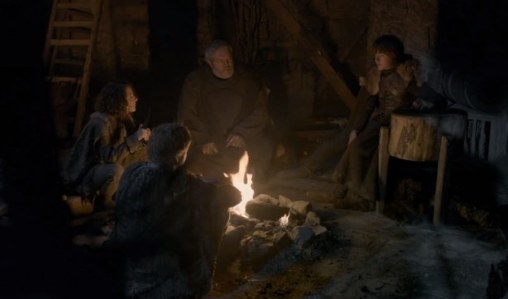
This moment is what really got me paying attention to the world within these films. Because of this moment I realized how prevalent these mystical adventures are in the lives of our leading men and I realized something else too: they all take place far out at sea. We are along for the ride with these men seeing pirate royalty convene for a summit; witnessing undead men, monkeys, and sharks; boarding ships that have been sunk for hundreds of years. These things are very real in this world however there is a whole population who is unawares of their existence. This is a part of the rules of this world. Creatures whose presence cannot be explained shock those who are not used to them (which is again, appropriate). Even when a character becomes used to these things and is part of the pirate life there are still instances where one of them will see something and have wtf moment.

Pirates image

Another saga that I am currently immersed in is that of A Song of Ice and Fire. With five books published and seven total promised, George R. R. Martin has created a whole universe with its own precedence and standards. The history of Westeros and the surrounding lands extends for thousands of years and with one continent and many island countries, the make up of these lands is vast. In fact, there is so much history to cover that in addition to the primary novels that make up the saga ASoIaF, there are also several novellas that give us further knowledge of different times within this world that we come to know so well. Because there are many houses and each of them have their own pasts (in  addition to a global history of wars and times of peace) there is an endless amount of possibilities for characters we already know and for those whom we have not met. But again, it is not the characters that make the rules of the world.

Much like our world and that of the world in Pirates, there are laws of reality that must be followed. Due to the fact that there are many different cultures that we are encountering, there are several different realms in which people exist. Those who live in the far North have very different lives than those who live in the far South and very different again from those who are Dothraki or Lyseni. While there are many different realms there still is only one reality within which everyone operates. It is established within the prologue of the very first book that otherworldly magic exists but is not wholly understood by persons at large.

Something interesting that Martin has done in this land is to establish that there are old gods, ancient myths that revolve around the First Men; new gods, known as the seven; and a Lord of Light, who is very mysterious [and seems somewhat cultish]. I find this compelling as it is a small similarity to our own world in which many different religions and schools of thought exist. Because of this, we are able to see very quickly that the many different regions of this land operate under different beliefs. Most often the new gods are mentioned. Those who worship in this manner visit the Sept to pray to one god who is represented by seven faces seen as the Mother, Maiden, Warrior, Father, Crone, Stranger, and Smith. Each of these are prayed to for different reasons: to keep a son safe in battle, to keep a woman safe during childbirth, etc. Then there are the old gods, worshiped in the North by the first men and by some who live still. There is a magic in this belief; a connectivity to the forest and all its creatures. The wierwood trees in the forests and in the godswoods of castles and forts create a conduit of sorts for these gods to see through and be prayed to. Lastly, there is the Lord of Light, who is said to show his true believers the way if they stare into the flames of fires. The character Melisandre is who [largely] leads us through our knowledge of this particular religion and because it is not widely known or practiced in Westeros, many men distrust this vein of thought and see it as witchcraft. That last bit is interesting. The fact that the Lord of Light’s followers are mistrusted because of their “devil worship” or “sorcery” draws attention to the fact that magic is not something that is trusted in this land. The gods of old seemed to posses some magic but their times are long gone and there doesn’t seem to be any magic left in the world. That is, until dragons are born and a crippled boy becomes the keeper of knowledge past and present.

Aside from religion, there are other aspects of the world of Westeros that are outlined to establish the world. In battle, men die (whereas as pointed out above in the Pirates world, ghosts exist). There is a hierarchy that exists by which the land is governed. Despite the fact that there is a very large scale war going on for the Iron Throne, there is a system in place: lords, wardens, etc. Culture is explored through songs sung by bards and tales told around the campfire. It is fascinating to me how deep and rich the history of this land is.

GoT image

Getting lost in a world that is not our own is part of what makes reading and watching movies so compelling. We are able to escape our lives for a span of pages/the run time of a film and truly be somewhere else. The greatest storytellers create fully realized settings to further allow for this escape and totally submerse their audiences. While it might be easy to create a tale, coming up with the entire world is what makes the escape successful. Whether it is building the world from scratch (example: Lord of the Rings) or slightly altering our reality to make it their own (example: Inception), an author who takes the time to think out all aspects of their world is a skilled one indeed.

The Peculiar Children series by Ransom Riggs


Miss-Peregrine.png

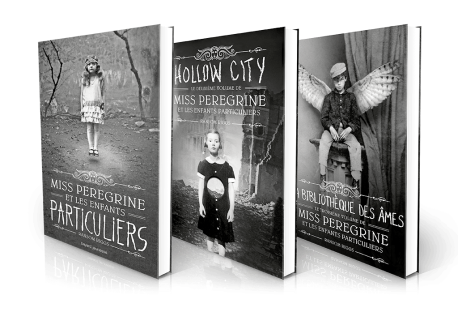
The first, second, and third novels of Miss Peregrine’s Peculiar Children are very darkly whimsical. Not in a Tim Burton way (I promise lovelies, this is the only time I will mention him) but in a sepia toned, phonograph, crackling edges kind of way; a way that progresses at juuust the right pace. Ransom Riggs brings us into a tale that you have to read to believe.

We begin with the self titled Miss Peregrine’s Home for Peculiar Children and Jacob Portman’s adventure from being a normal to realizing his a peculiar. As Jacob is our narrator we learn things about this new world, its history and its secrets, at the same pace he does. Which is why we are equal parts unsure of his grandfather’s sanity and the possible truth to the far out stories of his past when he dies a tragic death by a creature only Jacob sees. It is this traumatic event that slowly begins the chain of events that will open Jacob’s (and our) mind to untold possibilities and bring us to the time loop(s).  We learn that Jacob’s gramps was a peculiar and so is Jake…they specifically can see these beasts that are ultimately Grandpa Portman’s downfall. Hollowgasts. They haunt peculiardom, eating the souls of any peculiar they can reach and are under the control of wights – the organized baddies. Anyway, peculiars. What are they, you ask? Who are they? Well, they are magnificent humans with the ability to do things like float, or have mouths on the back of their head, or create fire with their hands. I know your next thought: hmmm that sounds a lot like mutants. The thing is, these are all children…on the outside. The aforementioned timeloops are spaces on top of, or maybe behind, reality. They are little pockets that freeze a day and loop it forever; their inhabitants’s souls age however their bodies do not. This is where peculiars have taken to; unable to comfortably live in the open as wights and hollowgasts have hunted them for a century through the centuries. Not only are we introduced to this world in Riggs’s first title, we are also given brief glimpses of a much deeper narrative than just a boy grieving over his grandfather (that sounded dismissive but it is not meant to be) and finding his way back to the grandfather’s childhood home. There is the understanding that something serious is going on in these people’s worlds and we have arrived just in time!!!! (#savior) While the tone of this book is serious it has some moments of light. They are all still children: naive and living in a sunlit snapshot of time and when Jacob joins them he too has a lighter sense of self. As the book comes to a close we are promised that the understanding of and our perception of this time and place are about to be expanded even more. With a cliffhanger that leaves you thinking “Oh no!” there is no choice but to immediately pick up book number two.

Unfortunately it took me a whole year between buying the book and beginning to read it so there was a little remembering that I had to do which is okay because it picks up exactly where book one ended. Hollow City is the tale of Jacob and all of his new friends, Emma, Bronwyn, Enoch (et. al), on a rescue mission which has so many close calls you can’t help but speed through the book at the same breakneck pace. There is so much action and quick paced scenes that your eyes might not be able to keep up with your mind! We go from the sunny island of Cairnholm on which they have all lived for 60 years deeper into the loop to the same day but in London. The adventure of getting there and the people they meet gives us more insight into history and more is steadily revealed about this big bad. The fact that this is taking place during WWII is significant as the wights are able to pose as Nazis and no one thinks differently or realizes it. This allows them to be organized and systematically hunt down the entrances to these loops. They can’t go in, you see, so they employ traitors and trickery to get the peculiars and their guardians the ymbrynes to come out of the loop and get snatched right up. For what, you might ask? Well…that’s a mystery too. A dark and terrifying mystery as no one is ever seen from again and capturing an ymbryne is no easy feat. Over the course of Hollow City we are guided deeper and deeper into this loop and even into a couple of other ones too. The layers of the world that Riggs has created is dizzying at times. However, the addition of layers adds to the tone which has lost its sunshine and has gained an air of anxiety and fear; uncertainty about everything.

Just when you think we are about to have a happily ever after moment to end this rescue mission that has been chalk full of foiled plans and dastardly encounters the plot curves and leaves you gasping, “Well, fuck!”

This sentence is appropriate as it allows me to continue talking about this tone shift. I noticed a difference in Jacob’s words as the journey darkened and he had to grow up a bit and make some really tough decisions. It is in book three, Library of Souls, in which I first notice Jacob swearing. His shift is actually so perceptible in this one that he begins to think of himself as new Jacob and old Jacob. By this point, Jacob and Emma (who is our strong leading lady), have been through so much that they are exhausted and unable to trust anyone. A very old loop and a very shady ferryman usher J and E to Devil’s Acre where all of the outlaws of peculiardom have floated over the centuries. It is here that a steadily increasing amount of our friends are being held captive, abducted over the course of book two. Here we learn the twisted plan of the wights; this is the evil dungeon, the lair. Here we have the culmination of Jacob’s journey with Emma to save his friends. We also have, the final show down of the good vs. evil that has been plaguing these people. A carefully sleuthed plan, a final battle, and a resolution that covers all loose ends and loops. The dirge of Devil’s Acre is so disgusting and makes you squirm and grimace. It is in this horrible place that Jacob truly grasps his gifts and harnesses his ability. However, there are still a couple of chapters after the titanic tussle because life goes on after a battle and lives must be rebuilt. Can they be?

I tried to make these descriptions as vague as possible while staying interesting. I hope I did that. These books have really good twists and are very thoughtful in the telling of history (paradoxically) and an unravelling of what is behind a story. My favorite, I think, is book three as it has a character named Sharon whom I really enjoyed, shows what a community looks like in this horrid place, and reveals that there are so so many sides to a story. The evolution of Jacob Portman is really great to witness. I highly recommend this whole series and also the companion book. Tales of the Peculiar is a tome mentioned several times throughout the series and the printing of the books is comparable to that of Beetle the Bard’s tales. Something that I didn’t touch on at all yet is the fact that these books all include old early photographs of really odd and striking scenes with people who could very well be peculiar. They are all real and have been collected from various estates. This adds to that whimsicalness I mentioned at the top in which everything is just a bit spooky.

In closing, read these tales. Believe in the peculiar and in yourself.