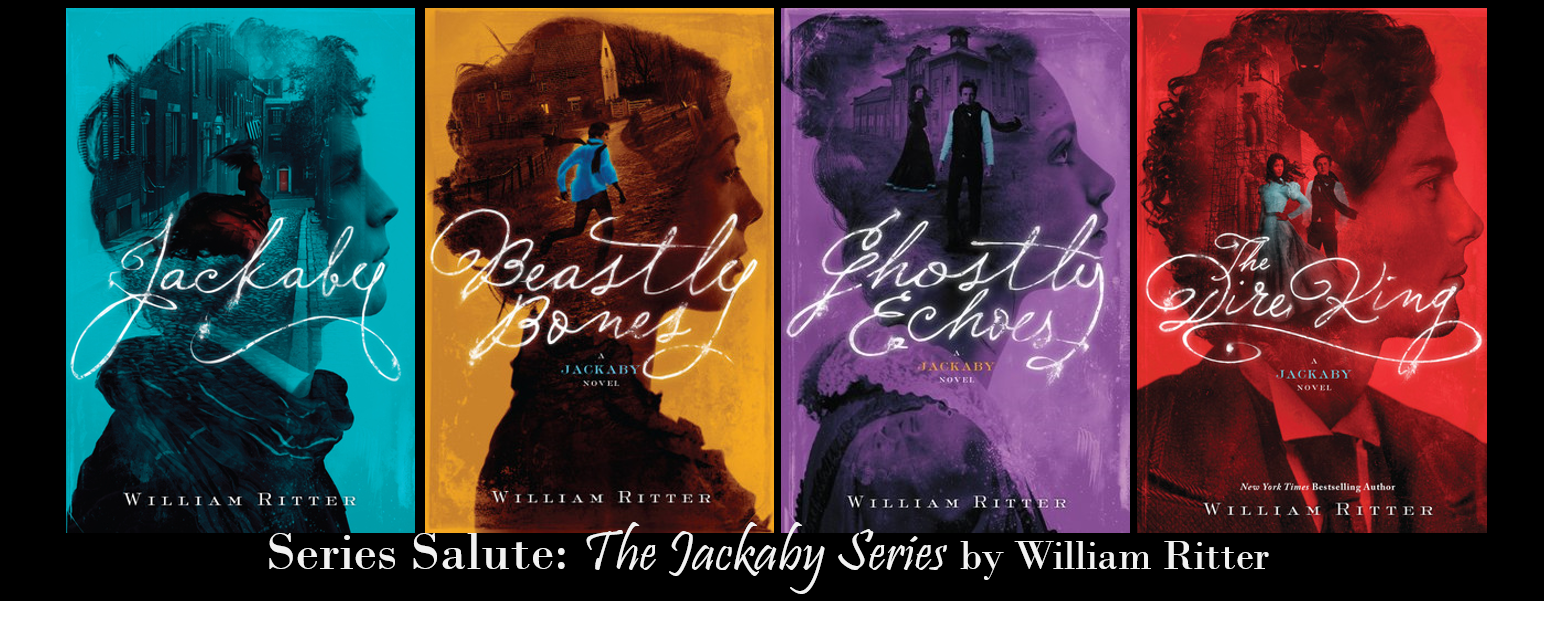
The Jackaby novels by William Ritter

** Tiny bits of spoilers lie beneath this sentence. **

There are times, lovelies, when a series seems harmless, there are times when a title sits on your shelves for months maybe even years and you give no second thought to it. There are times when you finally pick up one of those books and it is just as boring and uninteresting as you had thought. As avid readers, we get used to the spines on our shelves and whether we have read them or not, they are our trophies, our scores and finds, our prizes. Then there are other times, where you finally crack one of those spines and it sucks you in like spell has been cast. You are able to think of nothing but the characters and their adventures and when you do not have it open in front of you the book is still on your mind and in your head calling out to be reopened and dived into once more. The Jackaby novels are very very much the latter of those scenarios. I don’t think there are enough positive words in the English language for me to gush enough about how much I loved this four part series. But, for your benefit, I will try.

Abigail Rook (mentioned in the previous post regarding female leads) is our narrator over the course of these tales. As the series opens she is fresh off the boat from a failed paleontology dig and is in look of a fresh start – immediately establishing her as an adventerous woman. One of the first people she meets in New Fiddleham is Jackaby himself although it is not until a few chapters later that we are properly introduced to him. By the time he officially hires Ms. Rook to be his assistant we have already visited a crime scene with him and seen that Abigail is not as prim and proper as many other ladies of the time. She is incredibly observant and determined and as readers we get the sense very quickly that she is going to be a good and reliable narrator. R.F. Jackaby is a paranormal investigator and the world’s current Seer. It is his duty to use his Sight to keep the peace between [mostly] oblivious humans and the magical beings who secretly populate our world and exist among us. He has been at it for about 20 years and has made quite a name and life for himself in New Fidddleham. His offices and housing (as well as Abigail’s once she is hired) are in the house of a deceased woman named Jenny Cavanaugh. Jenny still presides in the house as the resident ghost and her emotional journey is really amazing. (More on that point in a bit.) These are our three main characters and their relationships to each other and with the magical community at large become central to the story…or is the story central to them?

One of the things that I think Ritter does so well in this work is that the overarching plot from start to finish is so cohesive. It is bananas! Something so simple and well structured makes the storytelling so amazing. As readers we first get hints of this larger thread that connects everything in book two. We are able to see that the events in book one weren’t the beginning and that strings have been being pulled puppet style for years. This type of tight knit, no lose ends story telling is refreshing in it’s simplicity (as I’ve already mentioned and will probably mention again). There are red herrings and twists and turns and if you really pay attention it is easily figured out but that is not the point. The point is that Ritter takes this tale as old as time of good and evil of us versus them and gives it a positive female perspective and makes it engaging for young readers. So far, all of these books (with the exception of 4 because it is brand new) have topped Year’s End lists and have been super positively received.

While there are many supernatural points in these stories, there are also parallels for very real issues. Many of our other worldly characters have glamours on themselves so that they appear human to the untrained eye. One character who does not have to do this is Charlie Cane/Barker as he is able to transform at will from a human to a (not naming his creature as it is a spoiler). While this ability allows him to lead a fairly undetected life, events in book one make it necessary for him to reveal his true self during which time townspeople see him and demonize him. The hatred and fear exhibited towards Charlie is only a prelude to the racial prejudice that many of the townspeople have once they find out there are many more fantastical beings among them. In a scene in book four, all of the jail cells are full of creatures who have done nothing wrong except not being human. There is no way to not draw a parallel to the segregation of our races here in America and the fear that many have of people and things who are different and unknown. What Jackaby shows us is that there is nothing inherently wrong with you for being different, we are all just who we are.

Another character who helps us see that it is okay to be who you are is Miss Lydia Lee. While Ritter never goes into explicit detail regarding labels, we are let known that Lydia Lee is a man who likes to dress as a woman. When we first meet her, she is being attacked physically and verbally by men who do not understand her; who are uncomfortable with her decision to live her life the way she has decided. What I thought was particularly amazing about this is that these stories take place in the early 1890s and I don’t feel like, when you go that far back in a setting, you see anyone represented who isn’t white and straight or black and a slave. The fact that Ritter takes the time to make it clear that Lydia is who she wants to be whether anyone else likes or understands it is really wonderful.

Lastly, as mentioned above, Jenny is another example of a larger metaphor. Jenny was murdered and her death plays largely in to the grand scheme of things once it becomes clear that so many “huh that was weird” occurrences start becoming connected. While Jackaby has tried many times over the years to help Jenny solve her murder and move on to the afterlife, a big issue in preventing this closure is that Jenny seems unable to leave the house. She is able to exist within the walls and is able to touch things/items that belonged to her in life but that is the extent of her physical capabilities. Once Abigail comes along, she and Jenny really get to work trying to help Jenny get out of this cycle of disappearing any time she tries to leave the house or dropping objects that aren’t or weren’t hers. This behavior seemed to me to be a metaphor for depression and a bit of agoraphobia. With the help and patience of Abigail she is able to overcome this. However, it is not an easy task and is by no means minimized or dismissed. Her peers are encouraging and inclusive even when Jenny is down on herself. This is super important and really compelling.

While these themes and metaphors are very important, something that is even more central is the building that Ritter does throughout both in terms of the world and it’s characters. We start with knowing as little about the world as Abigail does and through her eyes and Jackaby’s tutelage we gain perspective and become woke to the intricacies and magic surrounding us in every day life. We start off naive and unaware and become entranced and enlightened. There are histories alluded to and stories that exist in this world however it never feels like we are being preached to or talked at. Due to his insight Jackaby provides us with information on the world that Abigail might not have come by on her own. We are, at times, taken out of new Fiddleham and the into other communities (both of this world and the next) that are connected to the story, we are taken back in time in memories of characters. These flashbacks (and I hesitate to call them that as they are not cheesy exposition but well done exposition) provide an expansion not only of the world but of how each of these people fit in to it. Motivation is shown, not just action. By mid way through book one I was already longing to be  Abigail and Jenny’s best friend and to be part of Jackaby’s team. These are fully realized people with hopes and dreams and I that is not an easy thing to do nor is it always achieved by writers (especially so quickly).

I think the last time I got this sucked in to a series and devoured it as quickly was two Christmases ago when my partner introduced me to Susan Collin’s The Underland Chronicles. These four books (Jackaby, Beastly Bones, Ghostly Echoes, and The Dire King) are impeccably written and really smart. As Jackaby says, “I have never found a book that did not have at least a little magic in it…They can’t help it.” If you are on the prowl for your next obsession, look no further!
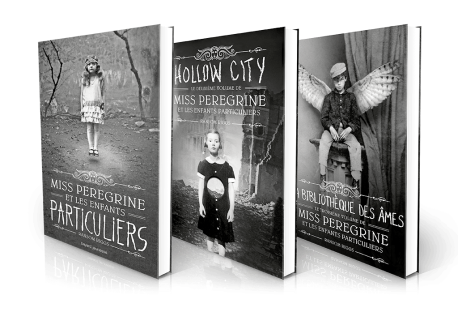
 

The Peculiar Children series by Ransom Riggs


Miss-Peregrine.png

The first, second, and third novels of Miss Peregrine’s Peculiar Children are very darkly whimsical. Not in a Tim Burton way (I promise lovelies, this is the only time I will mention him) but in a sepia toned, phonograph, crackling edges kind of way; a way that progresses at juuust the right pace. Ransom Riggs brings us into a tale that you have to read to believe.

We begin with the self titled Miss Peregrine’s Home for Peculiar Children and Jacob Portman’s adventure from being a normal to realizing his a peculiar. As Jacob is our narrator we learn things about this new world, its history and its secrets, at the same pace he does. Which is why we are equal parts unsure of his grandfather’s sanity and the possible truth to the far out stories of his past when he dies a tragic death by a creature only Jacob sees. It is this traumatic event that slowly begins the chain of events that will open Jacob’s (and our) mind to untold possibilities and bring us to the time loop(s).  We learn that Jacob’s gramps was a peculiar and so is Jake…they specifically can see these beasts that are ultimately Grandpa Portman’s downfall. Hollowgasts. They haunt peculiardom, eating the souls of any peculiar they can reach and are under the control of wights – the organized baddies. Anyway, peculiars. What are they, you ask? Who are they? Well, they are magnificent humans with the ability to do things like float, or have mouths on the back of their head, or create fire with their hands. I know your next thought: hmmm that sounds a lot like mutants. The thing is, these are all children…on the outside. The aforementioned timeloops are spaces on top of, or maybe behind, reality. They are little pockets that freeze a day and loop it forever; their inhabitants’s souls age however their bodies do not. This is where peculiars have taken to; unable to comfortably live in the open as wights and hollowgasts have hunted them for a century through the centuries. Not only are we introduced to this world in Riggs’s first title, we are also given brief glimpses of a much deeper narrative than just a boy grieving over his grandfather (that sounded dismissive but it is not meant to be) and finding his way back to the grandfather’s childhood home. There is the understanding that something serious is going on in these people’s worlds and we have arrived just in time!!!! (#savior) While the tone of this book is serious it has some moments of light. They are all still children: naive and living in a sunlit snapshot of time and when Jacob joins them he too has a lighter sense of self. As the book comes to a close we are promised that the understanding of and our perception of this time and place are about to be expanded even more. With a cliffhanger that leaves you thinking “Oh no!” there is no choice but to immediately pick up book number two.

Unfortunately it took me a whole year between buying the book and beginning to read it so there was a little remembering that I had to do which is okay because it picks up exactly where book one ended. Hollow City is the tale of Jacob and all of his new friends, Emma, Bronwyn, Enoch (et. al), on a rescue mission which has so many close calls you can’t help but speed through the book at the same breakneck pace. There is so much action and quick paced scenes that your eyes might not be able to keep up with your mind! We go from the sunny island of Cairnholm on which they have all lived for 60 years deeper into the loop to the same day but in London. The adventure of getting there and the people they meet gives us more insight into history and more is steadily revealed about this big bad. The fact that this is taking place during WWII is significant as the wights are able to pose as Nazis and no one thinks differently or realizes it. This allows them to be organized and systematically hunt down the entrances to these loops. They can’t go in, you see, so they employ traitors and trickery to get the peculiars and their guardians the ymbrynes to come out of the loop and get snatched right up. For what, you might ask? Well…that’s a mystery too. A dark and terrifying mystery as no one is ever seen from again and capturing an ymbryne is no easy feat. Over the course of Hollow City we are guided deeper and deeper into this loop and even into a couple of other ones too. The layers of the world that Riggs has created is dizzying at times. However, the addition of layers adds to the tone which has lost its sunshine and has gained an air of anxiety and fear; uncertainty about everything.

Just when you think we are about to have a happily ever after moment to end this rescue mission that has been chalk full of foiled plans and dastardly encounters the plot curves and leaves you gasping, “Well, fuck!”

This sentence is appropriate as it allows me to continue talking about this tone shift. I noticed a difference in Jacob’s words as the journey darkened and he had to grow up a bit and make some really tough decisions. It is in book three, Library of Souls, in which I first notice Jacob swearing. His shift is actually so perceptible in this one that he begins to think of himself as new Jacob and old Jacob. By this point, Jacob and Emma (who is our strong leading lady), have been through so much that they are exhausted and unable to trust anyone. A very old loop and a very shady ferryman usher J and E to Devil’s Acre where all of the outlaws of peculiardom have floated over the centuries. It is here that a steadily increasing amount of our friends are being held captive, abducted over the course of book two. Here we learn the twisted plan of the wights; this is the evil dungeon, the lair. Here we have the culmination of Jacob’s journey with Emma to save his friends. We also have, the final show down of the good vs. evil that has been plaguing these people. A carefully sleuthed plan, a final battle, and a resolution that covers all loose ends and loops. The dirge of Devil’s Acre is so disgusting and makes you squirm and grimace. It is in this horrible place that Jacob truly grasps his gifts and harnesses his ability. However, there are still a couple of chapters after the titanic tussle because life goes on after a battle and lives must be rebuilt. Can they be?

I tried to make these descriptions as vague as possible while staying interesting. I hope I did that. These books have really good twists and are very thoughtful in the telling of history (paradoxically) and an unravelling of what is behind a story. My favorite, I think, is book three as it has a character named Sharon whom I really enjoyed, shows what a community looks like in this horrid place, and reveals that there are so so many sides to a story. The evolution of Jacob Portman is really great to witness. I highly recommend this whole series and also the companion book. Tales of the Peculiar is a tome mentioned several times throughout the series and the printing of the books is comparable to that of Beetle the Bard’s tales. Something that I didn’t touch on at all yet is the fact that these books all include old early photographs of really odd and striking scenes with people who could very well be peculiar. They are all real and have been collected from various estates. This adds to that whimsicalness I mentioned at the top in which everything is just a bit spooky.

In closing, read these tales. Believe in the peculiar and in yourself.

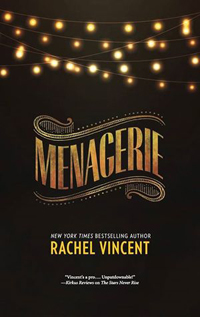
Menagerie- Rachel Vincent

Former English teacher and YA goddess Rachel Vincent is back with a new story and man is it compelling. Menagerie takes place in a world in which cryptids are out in the open and known to humans. They do not however coexist. Seen as less than human, shifters, succubi,minotaurs and others have less than no rights and are either captured and exploited or captured and hunted on game reservations. They are treated as animals. The vein of capture and exploitation is the one which we explore alongside Delilah Marlow who has grown up her whole life believing she was human. On the night of her birthday, Marlow and friends visit the famous Metzger’s Menagerie and things go horribly, devastatingly wrong. What follows is an expose of sorts on the mistreatment of these “creatures” and the lives afforded to them as subhumans.

Vincent has a real knack for combining detail and emotion, causing the reader to become incredibly invested in Marlow’s plight. We root for her and mourn with her and applaud her bravery. The way Vincent writes is so compelling. Her characters have a true depth to them that will tug on even the hardest of heartstrings. Menagerie puts a spotlight on creature cruelty in a very upfront way as these creatures are capable of shifting into their human forms, putting a face to the cryptid and a soul to the character.

While the storyline occurs in the near present with all the trappings of reality (cell phones, the Internet and YouTube), the feel of the world is very old timey and the story progresses the menagerie itself becomes a character. Like traveling ciruses and freak shows of the past, Metzger’s is all glitz and glam on the outside with loud music churning through speakers and brightly lit bulbs strung from tent to tent. We as readers though, know the whole story. And man is it twisted.

Upon looking Menagerie up on Amazon, it has a parenthetical detailing The Menagerie Series Book 1 and that made me so excited to know that we will get to continue to journey alongside Delilah Marlow who is such a strong and independent female lead. Alas, as I am not an oracle, I will have to wait alongside my fellow mortals to see what the future holds for the Menagerie. 

Four out of five books to Mrs. Vincent. You can get a copy of Menagerie for yourself here.

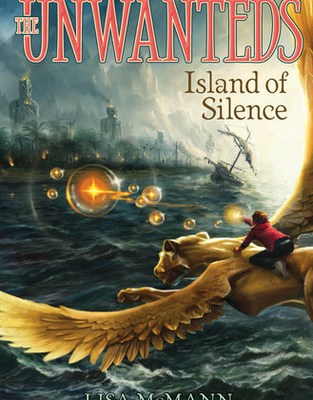
The Unwanteds: Island of Silence- Lisa McMann

Where many an author goes wrong in a series is not being able to find the perfect balance of recap and new details, Island of Silence by Lisa McMann however does this seamlessly. The second book in The Unwanteds series welcomes back readers without heavily burdening them with synopsis while at the same time clues in readers that maybe didn’t read book one (though shame on you for skipping around).

Book two picks up very soon after the events of of book one and we are shown almost immediately how those from Quill are reacting to the information that all the Unwanteds are alive and well; some take to this new world easily while others wish that everyone had in fact been thrown in to the lake of burning oil. It is really interesting to see how these new revelations have defined with even greater detail the class system that has been in effect for all 50 years of Quills existence. Those who had been Necessary had been relegated to doing tasks such as farming all the food and picking up everyone’s trash for years and once Mr. Today extended an open invitation for anyone and everyone to come to Artimè, who could blame them for shirking their duties. However if one were a part of the Wanteds, the upper class and highest echelon, one is at a loss as to why these people would desert Quill. This, coupled with the death of his idol and leader Justine, is what drives Aaron Stowe to begin plotting and scheming and soon a war begins.

As if his evil twins’ dastardly plans weren’t enough to worry about, Alex has been chosen by Mr. Today to begin learning how to take over for the mage should he want to go on something called a “vacation”  or “retire.” There is so much to keeping Artimè ticking that Alex is unsure of his ability to lead. Additionally, two children appear one day on the beach having floated up on a dilapidated raft. As if this weren’t strange enough, the two have wire collars with thorns embeded around their necks, rendering them silent.

The story begins to be more complex in Island of Silence in regards to exposition and new plot points, weird feelings emerge (like how Samheed keeps looking strangely at Meg) and alliances are tested. McMann’s second tale in The Unwanteds saga is rich in scenery as we explore new places like the Island of Silence and takes us deep into the emotions of our main characters. It is especially interesting to see how Alex and Aaron mirror each other in their opposition. One is so entirely good and the other [seems to be so] entirely evil. I think there is more than meets the eye to these two and I can’t wait to see how they continue to shape the courses of Artimè and Quill. As their powers grow and their leadership roles increase, is one island big enough for the two?

I give this tale five out of five books for rarely is a sequel even more compelling than the first.