Another 13 Reasons Why Post

30-13-reasons-why.w710.h473

Spoilers abound below. You’ve been warned.

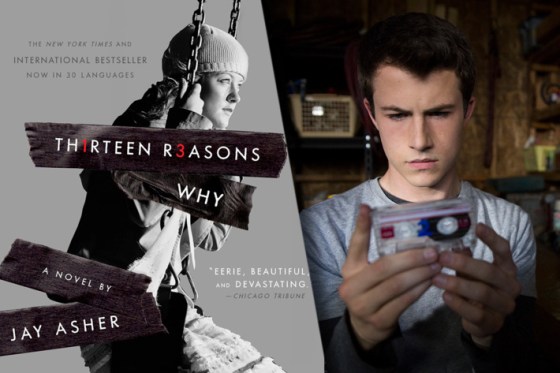
Two years ago I came across Thirteen Reasons Why whilst in a deep dive of the YAL shelves of my neighborhood library. In fact, it was the topic of my fourth blog post ever! Over the past few weeks there have been blog posts and think pieces a plenty about the new Netflix adaptation which coincides nicely with the book’s 10th anniversary. For years, this book has been a controversial work. It is a tale that sticks with you; a heavy realization that everything you do has an impact on those around you. In 2012 the book made the ALA’s list in their annual Top Ten Most Banned Books list for reasons stating: drugs/alcohol/smoking, sexually explicit, suicide, unsuited for age group. “These are not topics suitable for young readers” they say. Bullshit, lovelies. Those are topics our young ones are exposed to at earlier and earlier ages. The heart of this tale holds messages which are incredibly important for this generation to learn: compassion, empathy, responsibility, awareness. This is a super important work in both mediums, each of which portray Hannah Baker’s story in different ways.

For fans of the book, I think it is incredibly useful to go into watching the show with a conscious forethought, recognizing that these are separate creations in two different mediums. You have a 288 page book versus a 13 hour TV drama. Those aren’t really equal or comparable so thinking of them as such from the beginning is not going to do you any good. However, this is a good thing!

The book gives you Clay and Hannah and Tony. That’s pretty much it. There is some dialogue between others and you see people around as Clay visits all the spots on the map but that is it. Why no other characters? There’s no time. Clay binge listens to these tapes in one night. Primary difference right off the bat. There is a heightened tension as he speeds through these awful recollections and you learn along with him all of the truly unfortunate events that befell this girl. You realize slowly, along with Clay, what was passing through Hannah’s mind. He becomes consumed with them going from one tape to another just as you assume he would be when presented with this situation. Digesting it all while constantly being ready for the next tape to be yours. We are presented with Hannah’s tapes and Clay’s immediate reaction to them and during them. Alternatively, in the show, our experience is stretched out for at least two weeks. In this time, we are able to see a much much broader picture. What these tapes have sparked from his classmates, how Hannah’s parents are coping, and even providing time for a case to be built which (surprise!) Clay’s mom is lawyering for! There is a whole world that is created in this visual depiction. It creates a 3D image, a broader depiction showing the ripples of Hannah’s death. We are given more time for Clay to take in what he’s hearing and actually show a bit of resistance and perturbedness (that’s not a word) at what all of his fellow classmates have done. Which brings us to the next point: he takes it to his peers. Clay wants to hold them accountable for their actions but they say that some of these tellings are out of proportion or didn’t even happen or are versions of their own truths.  In some cases they are denied out right or maybe not remembered at first. In the book we are feeling directly from Hannah how she experienced these events and how they impacted her whereas in the show we are informed by others as well. I think this is why it is okay for these two to differ so much because it perfectly illustrates how different perspectives are valuable.

However, and this is a big however, not all of this fleshed out world is great. What follows are thoughts purely on the TV show. So many great things about this show from the astounding amount of diversity (in race and relationships) to a realness brought with the very human reaction you see from Hannah’s parents to the more full narrative we see from all the other characters. But there isn’t really a base for them from the source material outside of what we hear on the tapes. So these characters were developed largely by show creator Brian Yorkey and it’s not that he does a bad job, its just that many of them felt too extreme. From Justin’s wanting to literally put together a plan to kill Clay to Courtney’s blind eye to rape there are things that some of these characters say that have you going, “umm what?!” Not all of the time but definitely a notable amount. To go into a side rant about these “umm what” moments, let’s take Tony for example. ROCK CLIMBING?!?! Ummmm Whaaat?! There were so many prolonged encounters that involved Tony just popping up places and being Jiminy Cricket (or as Clay puts it, Unhelpful Yoda). Clay could’ve easily listened to these tapes two per episode and we could’ve cut things wayyyy down.

In addition to the extension of the characters there is an extension (as already mentioned) to the story. In reading, our experience stops when the tapes do. In viewing, we see Hannah’s end. We were told 10 years ago that she “swallowed a bunch of pills” however today’s method is different and much more detailed. Today we see Hannah slit her wrists; we see her parents find her after she has bled out in the tub. It is a heart wrenching scene. It is a striking step beyond the tapes. Even further still we hear Hannah narrate these tapes with so much emotion in her voice. Katherine Langford does an amazing job at making all the feelings feel. She’s telling the story as she knows it, how she has felt it. This adds so much to the story.

With all of the differences of the show and even the non differences, Jay Asher is fully on board with how the show depicts his story. At the top of this piece I listed all of the reasons the ALA cited as to why the book was placed on the Banned List, one of which was that it was inappropriate for it’s intended demographic. This show and this book depict a reality that parents and others might not want to deal with. But bullying and suicide rates are a very real thing.  As Asher said in an interview recently, “that raw and honest approach was my first big decision I had to make when writing the book, and the writers of the series felt the same way. These things happen, and to give respect to the people they do happen to, it felt wrong to hold back. It needs to be uncomfortable to read or watch. If it’s not, and we pull away, it felt like the story would only contribute to that problem of not truthfully tackling these things. We’re already good at avoiding uncomfortable subjects, and that needs to change.”

Read this book. Watch this show. Be conscious of how you treat others.
Nobody Speak: Trials of the Free Press

nobody-speak-trials-of-the-free-press-F71891

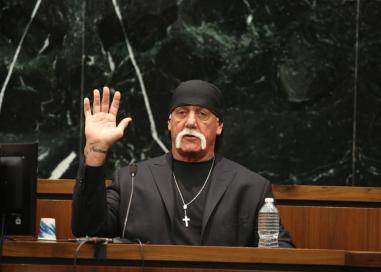
Hey there, lovelies! As reported last week, SXSW was in full swing and my Film badge was being put to full use. Now that the festival is over and I’ve had time to reflect on everything I saw over the course of the week, I realized that what I watched more than anything else was documentaries. There were so many of them and on such a wide range of topics. Out of all that I saw, I think that the most interesting and the most relevant by far was Nobody Speak: Trials of the Free Press. Award winning investigative documentarian Brian Knappenberger, known for The Internet’s Own Boy and We Are Legion helmed the project. The thumbnail photo for Nobody Speaks shows Hulk Hogan who is, admittedly, not someone whom I would want to watch a documentary about. However, do not let this deter you for there is something much bigger about this film and what it represents for the free press in our country.

In 2012 Gawker Media published a sex tape of Hulk Hogan (Terry Bollea) and Heather Clem. Apparently, Clem’s husband likes to film her with other men and watch it back. To each their own, ya know. Anyway, upon the posting of this video, Hogan sued Gawker for invasion of privacy and intentional infliction of emotional harm, among other things. The back and forth shown through court clips and interviews with Gawker editors shows how crazy this case was. In the end, Hogan ended up winning and was awarded $31 million which was roughly $100 million less than what the jury had come back with. Gawker did not have this kind of money and filed for bankruptcy last year.

What’s the big deal, you ask? Well, as the story unfolds, we learn that Silicon Valley billionaire Peter Thiel helped fund the case against Gawker. The site had published several unflattering stories about Thiel over the years and he had built up a grudge against the media outlet. He poured millions of dollars into Hogan’s defense allegedly without Hogan knowing who he was or why he was doing it. What is utterly terrifying about this is that there was a man who had a grudge against a digital print outlet, who used his resources to his advantage, and took a step into the legal world that until now no one else had done. This opens up the opportunity for other private citizens and/or corporations to do the same, meaning that if there is a magazine, newspaper, any sort of periodical that prints something that someone doesn’t like there is now precedent for them to take it upon themselves to facilitate a take down.

In addition to the Bollea v. Gawker case, Nobody Speaks also shines a light on the purchasing of one of Nevada’s most notable newspapers, the Las Vegas Review Journal, by the Adelson family. While you might not know the name off hand, the Adelsons are big in the gaming world and are apparently quite corrupt and shady (shocker, I know). The reporters and staff of LVRJ were told that their paper had been bought but not by whom. Good idea…try to hide something from a whole newspaper staff. The reporters start digging and soon unearth the truth of their acquisition. Penning an expose on the matter, they go to print without a green light and then many of them resign, principles and ethics still intact.

What brings these two storylines together, you ask? Apparently there is a connection between Thiel and the Adelson family: they both make huge contributions to the Republican party and most recently, Donald Trump. The significance of this is that Trump is very publicly against mainstream media and honest reporting of any kind and these two stories are instances where men saw an opportunity to influence/shut down a media organization whose ideals they didn’t agree with. While there is enough material for both of these stories to stand on their own, for they are both majorly important, they are tied together with what seemed like a hasty Trump through line. I say hasty because there was video of rallies and press conferences that are incredibly recent. Like since he’s been in office recent.

Towards the end of the film we begin seeing, through still images and voiced over short video clips, the ties that all of these men have with each other. This sort of made the ultimate message about how things lead back to Trump. I think the doc could have been a lot stronger if they had stuck to highlighting these terrifying cases and how they can potentially effect our future. This is my only complaint.

Netflix has reportedly purchased the film however when you search the title you’re not able to click on the result. I don’t know if that just means it is not yet available or what. Whatever the case, you should find a way to watch this documentary. It is incredibly important and impatiently relevant.


Presidential – The Washington Post

presidential-podcast-2100_gw.jpg


Hello there, y’all! Happy President’s Day or happy two-days-early-birthday to President George Washington! On this happy day while Congress has been given the week “off” I encourage you to take a look at the presidency in a different light. The Washington Post, beacon of truth that it has been through the decades, has a new(ish) podcast out which is really rather enjoyable! I’ve never talked about a podcast on this here blog but, much like with audiobooks, if you’re ingesting words, it counts. Like books and movies, they are a way to escape reality for a moment.

Presidential goes episode by episode through each president’s tenure in office while looking at various aspects of the make-up of these men. What discerning character trait did John Adams have that allowed him to follow after Washington stepped away from office? Who is overlooked and why? The introduction of the “campaign”. These episodes are chalk full of little tidbits that you didn’t know about the Founding Fathers, the presidents during the Era of Good Feelings, and up through the present. Our host Lillian Cunningham is a reporter at TWP and her guests are people like the keepers of the keys at the Library of Congress, Pulitzer Prize winning historians, and Bob Woodward. There is a running question throughout the series where Lillian asks the historian on what it would be like to go on a blind date with the episode’s gentleman. Pieces like this really humanize these people some of whom lived over two hundred years ago.

I am currently on Andrew Johnson, president number 17 and I cannot get enough of these stories that are retold and relayed by these historians. Letters, diaries, and papers are all provided as sources for the information you learn in these episodes. For instance, AJ here was piss drunk at Lincoln’s inauguration and gave a really embarrassing speech…weeks later he was sworn in after Lincoln was assassinated. John Quincy Adams was the first son of a former president to hold the office and was also the only man to hold elected office after leaving the presidency. He went back to Congress and worked hard to fight slavery. In fact (this is one of my favorite recountings so far) there was a motion to make the word “slavery” illegal on the floor as it was becoming too much of a hot button issue in 1836. JQA went and got himself in trouble on purpose by saying the word. Now, as per the rules, he had a chance to defend himself of this action and he took advantage of this, his time to speak, and ran with it for TWO WEEKS talking about the injustices of slavery. This in and of itself is amazing and then as the story comes to an end and the episode is winding down we learn something else: who was a first term Representative at that same time but Abraham Lincoln. Bits like this make that whole thing so intricate and fascinating.

It really is amazing how far we’ve come in this country considering our government was put together by ideas proposed by men who didn’t really know what they were doing. George Washington espoused the belief that he was not fit to run the country and was firmly and vociferously  of the mind that he had no  idea what he was doing. We have been led by these men who have differed vastly in their ideals, these men who supported and encouraged the guidance of others, and whose legacies set examples for history. Our country has had its ups and downs (and there have certainly been a lot of both) and it is incredibly important to know where we’ve come from. How did we get from one to 44? How did we get to where we are now? This is monumentally important…to put it in presidential terms.

So whether you just listen to Obama and Kennedy or if you listen to them all in order, Presidential should definitely be on your radar.

…and so should this picture…

abraham-lincoln-sexy-photos-17.jpg


Banned Books Week 2k16

banned.jpg

Sunday September 25- October 1 is 2016’s Banned Book Week. Since the 80’s the designated week is a time for teachers and parents to encourage their children to read books that push barriers, broach hard topics, and create engaging conversations. Every year the American Library Association keeps tracks of all of the titles that have been challenged or banned in both school and community libraries.

When I was a freshman in undergrad, I did one of my year end projects on the ALA and banned books. It was so interesting and also somewhat mind blowing to research some of the reasons that certain titles are banned. “Sexually explicit” content and “language” are the two most cited reasons that a title is challenged and the majority of the time it is a parent that submits the challenge. While these two reasons are understandable for a parent to say, “hold off on reading this title” to their child it does not give them the right to make that decision for an entire school or town. Censorship on literature is just one more way the sheltering parents of today are blinding their kids to the world around them. This topic makes me so mad! Encouraging children to read is one of the most important things in a child’s young life; it is an incredibly fundamental part of embarking on their education. However, when a person steps in and denies any title to someone, that is just unfair.

The top 10 most frequently banned books of 2015 were

  1. Looking for Alaska, by John Green
    Reasons: Offensive language, sexually explicit, and unsuited for age group.
  2. Fifty Shades of Grey, by E. L. James
    Reasons: Sexually explicit, unsuited to age group, and other (“poorly written,” “concerns that a group of teenagers will want to try it”).
  3. I Am Jazz, by Jessica Herthel and Jazz Jennings
    Reasons: Inaccurate, homosexuality, sex education, religious viewpoint, and unsuited for age group.
  4. Beyond Magenta: Transgender Teens Speak Out, by Susan Kuklin
    Reasons: Anti-family, offensive language, homosexuality, sex education, political viewpoint, religious viewpoint, unsuited for age group, and other (“wants to remove from collection to ward off complaints”).
  5. The Curious Incident of the Dog in the Night-Time, by Mark Haddon
    Reasons: Offensive language, religious viewpoint, unsuited for age group, and other (“profanity and atheism”).
  6. The Holy BibleThe Holy Bible
    Reasons: Religious viewpoint.
  7. Fun Home, by Alison Bechdel
    Reasons: Violence and other (“graphic images”).
  8. Habibi, by Craig Thompson
    Reasons: Nudity, sexually explicit, and unsuited for age group.
  9. Nasreen’s Secret School: A True Story from Afghanistan, by Jeanette Winter
    Reasons: Religious viewpoint, unsuited to age group, and violence.
  10. Two Boys KissingTwo Boys Kissing, by David Levithan
    Reasons: Homosexuality and other (“condones public displays of affection”).

As you can see, these objections are not confined to newly published titles . I Am Jazz is a kids book about a child who dealt with transgender issues and was published in 2014. It is based on real events in the author’s life yet one of the reasons for it’s being banned is that it is inaccurate. EXCUSE ME?!?! REAL EVENTS!!! While the “reasons” for banning a book vary, there is a common theme that is easily detectable. If someone doesn’t agree with something or might be afraid of something due to close mindedness, then it is challenged. Some of my favorite books and titles that have really stuck with me are on these lists. From 13 Reasons Why to A Wrinkle in Time, there is no genre or style that is safe!

According to the ALA, “a challenge is an attempt to remove or restrict materials, based upon the objections of a person or group.  A banning is the removal of those materials.” While it is difficult to push through a ban, that doesn’t stop the attempt nor does it lessen the amount of challenges submitted each year.

Organizations such as the ALA and the Banned Books Week campaign are incredibly important in drawing attention to the titles that receive the most scrutiny and hate. There are amazing lists on the ALA’s website which show the top 100 banned books, break lists down by years, and keeps track of all the ludicrous ideas behind why a title should be taken off of a shelf. The Banned Books Week website has a breakdown of events that take place in each state that promote literacy and encourage reading.

I highly encourage you to cruise around both websites and get involved with your local libraries and bookstores particularly this week as they make an extra effort to get knowledge (and a good read) into the hands of anyone who wants it.  There are usually really great displays that libraries and bookstores will create to show off popular banned titles. This always makes me so happy to see because it is putting all of these “dangerous” works into one space and defying the challenges put forth by those who would see them disappeared forever.