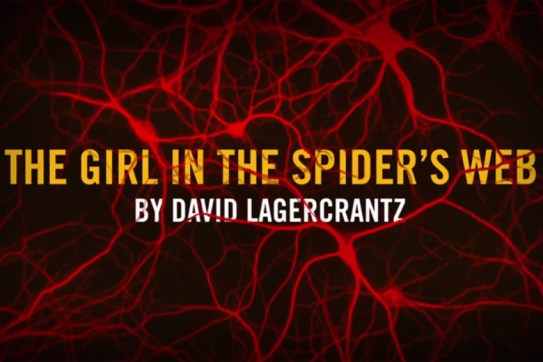
The Girl in the Spider’s Web-David Lagercrantz

spiders-web


Hello there book lovers. Today we will be diving into The Girl in the Spider’s Web which is book four in the Millennium series. Before diving into the review and analysis, however, I would like to discuss the amazing journey that has transpired behind the scenes over the course of this series’ existence.

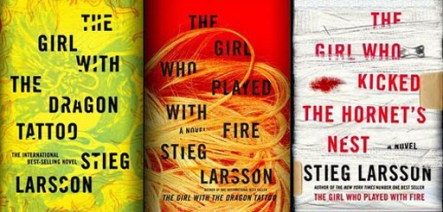
Stieg Larsson created the world in which the magazine Millennium exists. It is run by  Mikael Blomkvist and a savvy team of reporters in Sweden. Blomkvist, over the course of the first book, meets Lisbeth Salander who is a hacker and an amazing one at that. Larsson stated initially that he had enough material for the series to span 10 novels though his untimely death in 2004 seemingly put a halt to this idea. After his death, The Girl with the Dragon Tattoo was published in 2005 and was incredibly well received. The following two  years, in 2006 and 2007,  The Girl Who Played with Fire and The Girl Who Kicked the Hornet’s Nest were published respectively. The ’07 publication of Hornet’s Nest was the last of the complete manuscripts Larsson left behind.

It was at this time that Larsson’s publishing house Norstedts Förlag was at a cross roads. Leave the Millennium series as is or continue the work that Larsson began by passing the torch onto another writer. However, it was not as simple as that and it is here where the literary soap opera gets juicy. You see, Larsson’s longtime partner Eva Gabrielsson was in possession of all of Larsson’s outlines and notes and partial manuscripts. The two had never married due to safety issues stemming from Larsson’s activism and journalism.  The will Larsson left behind had not been witnessed or documented properly and because of this, his estate fell into the hands of the deceased’s brother and father. They were on board with the continuation of Larsson’s series however Gabrielsson staunchly opposed the idea. A very public dispute ensued. In the end, the Larsson’s gave permission to Norstedts to proceed with a fourth installation of Mikael Blomkvist and Lisbeth Salander’s escapades and at the very end of 2013 it was announced that David Lagercrantz would pen the title. In August 2015 The Girl in the Spider’s Web was published worldwide followed by a release the following month in the United States.

That being said, let us now dive into the title in question:

This was the first time that I listened to an audiobook. I know, I know, get with the times. I am a huge podcast fan and love talk radio, but for some reason I had never listened to a book on tape file. Man I loved it!

The Girl in the Spider’s Web was written by David Lagercrantz and was recorded by Simon Vance. I was apprehensive about this title because I have been such a fan of the series and to hear that another author would be taking over is enough to make anyone skeptical. I think Lagercrantz did a really good job though! There are a lot of negative reviews on the title and so that only added to my apprehension but I was pleasantly surprised to find that I was of a different mind.

Firstly, Lagercrantz did something that I noticed fairly quickly in that he made Mickael Blomkvist much more believable as a real person. How did he do this, you might ask. Well, for starters, he did not have every woman Blomkvist encounters throw herself immediately at our main character. This was so refreshing. Previously, Blomkvist had been such a ladies man that by the second and third book it was almost farcical. Every. Woman. Like, what? I know he is charismatic and that he is a reporter so he has a certain je ne said quo but cooooome ooooon. So that was a definite improvement.

This was a super important shift that I found very refreshing and humanizing.

But it wasn’t only this detail that made for an obvious departure of Larsson’s writing. The story itself unfolded in an interesting way. Before I dive into that, however, let us get a brief overview of The Girl in the Spider’s Web. 

There has again been a lapse in time from where the previous title left off, as has been the pattern for the series. We open with Millennium magazine not doing too well and rumors run wild that Mikael Blomkvist is now a washed up journalist who is feebly riding on the waves of his past success. Timing is everything though and a scandal soon begins to unfold. Scientist Frans Bolder is murdered in front of his autistic son and it is later determined that one of his computers is missing along with the A.I. technology that he had been working on. At the same time, the NSA in America is hacked. Something no one thought possible. The hacker players in Spider’s Web are very interesting and it is here that we learn that Lisbeth Salander just cannot escape her past and the family that she so deeply despises. You see, it is revealed early on that Lisbeth’s twin sister is in on the plot. This I loved and will get into more detail on in a second. Blomkvist gets involved because the night that Bolder was killed he had called the journalist saying that he had information that needed to be shared and that he was nervous about who wanted this knowledge and what lengths they might go to to get it. Thus begins the unraveling of what his technology did, who wanted it (both criminal and government), and how Lisbeth Salander fits into the equation.

There is a writing technique that Lagercrantz employs frequently and with great affect. He goes through a scene/time frame from one character’s point of view and then he alternates this view and retells the same moment from a different perspective. For example, Bolder’s death scene. We are outside the house with the police officers who have been assigned as protective detail for Bolder. They encounter someone outside and are speaking with him when Blomkvist arrives. The next passage is seen from inside the house as the murder is taking place. The killer runs out of the house and slams into the newly arrived Blomkvist as he makes his way up to the house. This happens again and again throughout the book and it is very well done. These time frame parallels enable us to have a fuller understanding of a particular scene and point in time. This is also a great tool because it allows a tense moment to play out from different vantage points and then it is easy to cut away from the tension and switch to another which creates cliffhangers in interesting spots. Very exciting.

As we dive into the hacker aspect of Spider’s Web we get further insight to Lisbeth’s past; something that I always enjoy and which was a particularly important through line of Hornet’s Nest. In book three we gain a deeper understanding of Lisbeth’s father and the terrible things he did to her and her mother that formed the Lisbeth we all know. Closed off, man-hating, curious, incredibly smart, and somewhat on the spectrum (not that her dad caused her to be on the spectrum but how his behavior impacted her). So then in Spider’s Web we meet and get more info about her sister Camilla who had briefly been mentioned in titles past. Camilla is described as a polar opposite of Lisbeth. She glows with beauty, has charm for days, and is able to persuade anyone to pretty much do anything. She is their father’s heir to his criminal empire and she is a cold and nasty piece of work. Seeing the contrast of the sisters becomes a big part of the third act as we find out more and more what Camilla is capable of. At the same time, we see a more tinder side of Lisbeth than has been expressed so far.

After his murder, Lisbeth takes Bolder’s son August into hiding as he was a witness to the crime. Despite the fact that he doesn’t speak, he is a savant in numbers and drawing. He saw the face of his father’s killer. While on the road with the boy, Lisbeth begins trying to open him up. Lagercrantz does this in a very real way. Lisbeth does not speak down to August, does not try to pander to a child. She speaks to him like a fellow human and it is very refreshing and eventually something comes of it in that he draws his father’s murderer. In true Lisbeth fashion, she just wants what is best for the boy and his mother and there are parts of the story that transpire between the three of them that are solely known by these three characters. It is special and I really enjoyed seeing how that part played out.

Going back to Lisbeth’s sister, we see how deep seeded their hatred for each other is and are taken back to their childhood. It is here, in the past, that Lisbeth’s hacker name Wasp is given explanation. The Marvel universe is brought into play and we learn how important the Janet van Dyne character and the Avengers are to Lisbeth. As Camilla becomes more nemesis than sister, she begins to call herself Thanos. This pull from pop culture was the only thing that stuck out as odd to me and while it is interesting to hear about the psychology behind this, it took me out of the story a bit to have something so American mentioned. I am not sure if that was always the origin of the Wasp handle; it makes a lot of sense when the backstory is given but I wonder if that was Lagercrantz’s doing or taken from notes of Larsson’s.

Overall, The Girl in the Spider’s Web was a really great listen and Simon Vance does a great job with all of the Swedish that occurs throughout. I am really interested to see if he continues on with the series or if the publishing house will do each title by a separate author. The sales for book four have been pretty good and the title stayed on bestsellers lists for 16 weeks where it sold over 200,000 copies in it’s first week! Lisbeth Salander is such a compelling and stimulating heroine who stands up for the rights of women, what is right and just, and doesn’t take any shit from anyone. I hope that these numbers will parlay into a book five and that we won’t have to wait eight more years for it!
millenium_trilogy_mar3


Banned Books Week 2k16

banned.jpg

Sunday September 25- October 1 is 2016’s Banned Book Week. Since the 80’s the designated week is a time for teachers and parents to encourage their children to read books that push barriers, broach hard topics, and create engaging conversations. Every year the American Library Association keeps tracks of all of the titles that have been challenged or banned in both school and community libraries.

When I was a freshman in undergrad, I did one of my year end projects on the ALA and banned books. It was so interesting and also somewhat mind blowing to research some of the reasons that certain titles are banned. “Sexually explicit” content and “language” are the two most cited reasons that a title is challenged and the majority of the time it is a parent that submits the challenge. While these two reasons are understandable for a parent to say, “hold off on reading this title” to their child it does not give them the right to make that decision for an entire school or town. Censorship on literature is just one more way the sheltering parents of today are blinding their kids to the world around them. This topic makes me so mad! Encouraging children to read is one of the most important things in a child’s young life; it is an incredibly fundamental part of embarking on their education. However, when a person steps in and denies any title to someone, that is just unfair.

The top 10 most frequently banned books of 2015 were

  1. Looking for Alaska, by John Green
    Reasons: Offensive language, sexually explicit, and unsuited for age group.
  2. Fifty Shades of Grey, by E. L. James
    Reasons: Sexually explicit, unsuited to age group, and other (“poorly written,” “concerns that a group of teenagers will want to try it”).
  3. I Am Jazz, by Jessica Herthel and Jazz Jennings
    Reasons: Inaccurate, homosexuality, sex education, religious viewpoint, and unsuited for age group.
  4. Beyond Magenta: Transgender Teens Speak Out, by Susan Kuklin
    Reasons: Anti-family, offensive language, homosexuality, sex education, political viewpoint, religious viewpoint, unsuited for age group, and other (“wants to remove from collection to ward off complaints”).
  5. The Curious Incident of the Dog in the Night-Time, by Mark Haddon
    Reasons: Offensive language, religious viewpoint, unsuited for age group, and other (“profanity and atheism”).
  6. The Holy BibleThe Holy Bible
    Reasons: Religious viewpoint.
  7. Fun Home, by Alison Bechdel
    Reasons: Violence and other (“graphic images”).
  8. Habibi, by Craig Thompson
    Reasons: Nudity, sexually explicit, and unsuited for age group.
  9. Nasreen’s Secret School: A True Story from Afghanistan, by Jeanette Winter
    Reasons: Religious viewpoint, unsuited to age group, and violence.
  10. Two Boys KissingTwo Boys Kissing, by David Levithan
    Reasons: Homosexuality and other (“condones public displays of affection”).

As you can see, these objections are not confined to newly published titles . I Am Jazz is a kids book about a child who dealt with transgender issues and was published in 2014. It is based on real events in the author’s life yet one of the reasons for it’s being banned is that it is inaccurate. EXCUSE ME?!?! REAL EVENTS!!! While the “reasons” for banning a book vary, there is a common theme that is easily detectable. If someone doesn’t agree with something or might be afraid of something due to close mindedness, then it is challenged. Some of my favorite books and titles that have really stuck with me are on these lists. From 13 Reasons Why to A Wrinkle in Time, there is no genre or style that is safe!

According to the ALA, “a challenge is an attempt to remove or restrict materials, based upon the objections of a person or group.  A banning is the removal of those materials.” While it is difficult to push through a ban, that doesn’t stop the attempt nor does it lessen the amount of challenges submitted each year.

Organizations such as the ALA and the Banned Books Week campaign are incredibly important in drawing attention to the titles that receive the most scrutiny and hate. There are amazing lists on the ALA’s website which show the top 100 banned books, break lists down by years, and keeps track of all the ludicrous ideas behind why a title should be taken off of a shelf. The Banned Books Week website has a breakdown of events that take place in each state that promote literacy and encourage reading.

I highly encourage you to cruise around both websites and get involved with your local libraries and bookstores particularly this week as they make an extra effort to get knowledge (and a good read) into the hands of anyone who wants it.  There are usually really great displays that libraries and bookstores will create to show off popular banned titles. This always makes me so happy to see because it is putting all of these “dangerous” works into one space and defying the challenges put forth by those who would see them disappeared forever.

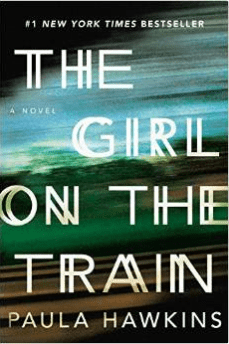
The Girl on the Train- Paula Hawkins

I was very proud of myself for going as long as I did without reading The Girl on the Train while simultaneously avoiding any spoilers of the twist and the reveal. After Gone Girl‘s twisty turny ride and the onslaught of similar twisty turny plots came out, I resisted the trend. It is something that really bothers me, market flooding. I get that imitation is the best form of flattery however if an author does something truly spectacular in a genre that does not mean that every title in the six months following needs to follow the same pattern (read my pseudonym article to see how Stephen King solved this problem). That being said, I resisted the raves that came out following the release of The Girl on the Train (hence forth seen as GotT). However, with the movie coming out soon, I had to adhere to my policy of book reading before movie viewing even though this does from the trailer to seem to be more of a “based on” than “adapted from”. This is more of an overview of my thoughts on the novel as I wish not to spoil this book as it was not spoiled for me. So, here it is:

The_Girl_On_The_Train_(US_cover_2015)


The tale of the GotT is told to us through the perspective of three unreliable narrators. We have Rachel (who is the title character) who commutes to London every morning on the same train and it is on this train that Rachel observes Megan and her husband Scott (Rachel doesn’t know their real names at the start). The observations seem harmless, she sees them from the train everyday and creates a mental profile of their lives; seeing them as characters more than people. It is made abundantly clear to us from the second page onward that Rachel is an alcoholic. Like full on day drinking, all the time drinking, alcoholic. Hence, her unreliability.

Our second narrator is Megan. There aren’t so much chapters, the way the book is laid out, but with each perception shift, the woman whose view it is in  is up in the chapter heading space and there are notations of dates and times of day. Somewhat diary/snapshot like however the timeframes are restrained to morning and evening. Why am I detailing this? Well, it is from this that we see that these view points are nonlinear. This is important later on as events unfold and you gather details out of order and piece them together. It makes the puzzle engaging and you quickly realize that every piece of the story matters. We learn slowly that Megan is not happy with her life. She feels agitated and stuck; like there is something else that is just beyond her reach that would complete things for her. A former gallery owner, she is restless and while she seems to think she is good at hiding this from everyone…that is not always the case.

Lastly, we gain pieces of our story from Anna who is married to Tom. Their courtship and family beginnings are unfolded at a nice pace and we slowly learn that these three women are separated by a small number of degrees and that makes their web even tighter than you might at first realize. Anna has snooty opinions of other women and so her views of our two fellow narrators is a bit colored for her own personal reasons. She is no more reliable that the alcoholic or the pretender. So, it all trickles down to the fact that everyone has secrets and none of us are as completely fine as we might present.

These three women’s lives unfold over the course of the novel and it is not just their degrees of separation that shrink, so too does the fact that you really do not know who to trust. Who is giving the whole story or at least the story closest to the truth? Everyone has motive. Everyone has opportunity. When someone goes missing, there is no way to know who is trying to keep the biggest secret of them all.

That being said, the twist at the end was very good and pretty pyscho. However, if you pay really close attention you are able to figure it out pretty far ahead of the reveal. I wasn’t 100% sure I knew…but I was rewarded with being right which is always so satisfying, don’t you think?

Now, the last thing that I would like to follow up with is the that of the treatment that each  these ladies extend to their fellow females. None of the women in this book are nice to each other. While some of it is for understandable reasons (like Rachel being piss drunk and walking out of a house with a baby that isn’t hers) most of it is a bit exaggerated. The women are mean and sneaky and snide. Even the female detective is just downright rude and untrustworthy. It is apparent from the get go that none of them are besties but at times I feel like it was a bit unnecessarily hateful.

I flew through this book in a matter of days; couldn’t put it down. It is very fast-paced and has a really quick flow because of how it is broken down. GotT would be the perfect book to put in your pool/beach bag and tear through as the warm sun shines down on you. I highly recommend it!

pseu·do·nym /ˈso͞odnim/

pseudonym


In the 2001 movie Monkeybone, cartoonist Stu Miley (Brendan Fraser) switches the hand with which he draws his pieces. The result is that his creations go from dark twisted nightmares to this goofy monkey and his human pal (think Garfield as a monkey). This concept got me thinking about pseudonyms and the persona that is developed by and within an author’s works. In today’s publishing world many authors, both well established and those just starting out, create pen names under which they publish. The reasons for this vary from author to author: just starting out and trying to establish a name with spunk, switching genres and therefore perspectives, or trying to get away from an already established name. There are many great authors to think about who do this and I have a couple favorites.

Lemony Snicket is a mysterious, enchanting and hypnotizing storyteller (and no, he is not standing here dictating this sentence to me). He has published the accounts of the Baudelaire children and their escape from the dastardly Count Olaf. They have suffered a very hapless timeline, quite tragic really; but man are they brave children. The siblings are put through the ringer whilst trying to get to the bottom of their parents murders (which were covered up by a fire). According to his website Snicket is “insatiably inquisitive” and can only be contacted via HarperCollins Children’s Books. Snicket very rarely appears at book events, although it has happened on select few occasions. More often than not, Snicket’s handler is in attendance to answer questions to the best of his abilities and remind people how aloof his charge is. This man is one Daniel Handler. Mr. Handler leads a “relatively uneventful life” and is also the author of three books that are not for children. This past fall Daniel Handler spoke at the gala fundraiser for the 20th annual Texas Book Festival and at the fest itself. He is very interesting to listen to…quite captivating. He loves his fans and, after one of his panels, went out the front with the crowd instead of out the back. Taking picture after picture, joking the whole time. These two individuals seem to be vastly different in both character and in social settings. Now, I’m going to divulge something to you: they are one in the same. <<pause to allow gasps>>  While switching seamlessly from Snicker to Handler and back, Daniel composes symphonies, writes a column in which he discusses Nobel Laureate’s books, and writes books for non children folk.

In 1977, Richard Bachman published Rage, his first book. Over the course of the next few years, he published four more books all of which did moderately well on sales. It was after his title Thinner was published that it was revealed that Richard Bachman did not exist. All that time horror master Stephen King had been writing under the pseudonym. He reportedly was interested in seeing how his work would do if nobody knew it was his. Was he at his level of success because of his name or because of his words? (See his essay “The Importance of Being Bachman” here.) At the time of his reveal King was working on Misery which he had planned on releasing under Bachman’s moniker (I think Misery is my favorite of his works. It’s so creepy and plausible and they’re out there in the snow. Eep!) In this case, the writing style and genre were the same; that’s how he was found out. In addition to wanting to see how his work would fare on it’s own, King was feeling restricted by his publishing house who were only releasing one title of his a year so as not to over saturate the market with his “brand.” Seeing the loophole in this, he convinced them to put out titles under the name Richard Bachman.

Not unlink his father, Joe King publishes under the name Joe Hill so that his work stands away from his father’s shadow. Hill has produced some really amazing works like Horns and The Fireman even after it came out who he was. In 2007 he issued a statement confirming his parentage but not before having obtained respect in the literary community, being awarded a Ray Bradbury fellowship and also receiving for his short story collection 20th Century Ghosts the Bram Stoker Award.

Lastly, I would like to bring up Joanne Rowling. We all the know the story of Harry Potter being rejected by 12 houses (publishing not Hogwarts) but many aren’t as aware of the fact J.K. is just as much a pen name as Robert Galbraith. While they were smart enough to pick up her manuscript the publishers silly thought that young boys would be not as interested in reading a book by a woman (which doesn’t make any sense, as young boys throughout history have been told fantastic tales by their mothers and grandmothers and you would think that would inspire something or just all together not even matter, but whatever) and as such asked her to shorten it to initials and her surname. Thus, J(oanne) K( Kathleen) Rowling was penned. Joanna as her full first name and Kathleen from her grandmother’s name as she had no middle name). The success of the Harry Potter series has brought such fame to Rowling and her name that when she put out her first non Potter title after the series ended, Casual Vacancy, everyone waited on baited breathe. However, Casual Vacancy was not by any means a success. I actually stopped reading about 80 pages in because I didn’t understand any of the small town British government lingo and honestly, it was boring (although the HBO adaption is actually good for a watch). So, several years later when new crime writer Robert Galbraith burst onto the scene and awed critics and readers alike, the world was none the wiser to the fact that Jo had but out a new book. The Cuckoo’s Calling is a really solid read. I highly recommend these books, peeps. The news that Rowling and Galbraith were one in the same came shortly before the release of the second book in the Cormoran Strike series. Discovered by a reporter and confirmed by Little Brown, the news was followed by a reprint of the books which had quickly  sold out. There are now three books out by Galbraith and here is to hoping that another is announce soon. The complete departure from fantasy and the hard right turn at gruesome mysteries is very well done and really exciting.

In addition to the authors mentioned here, there are many well known writers who publish under more than just their given name. From C.S. Lewis to Agatha Christie to Dr. Seuss, the list is probably much more expansive than you might initially think.

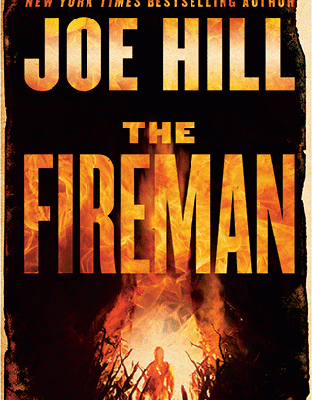
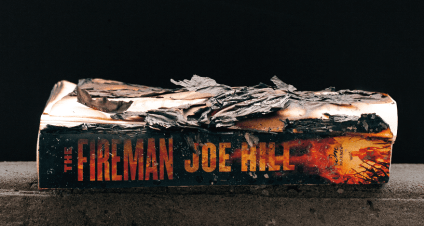
The Fireman by Joe Hill

Well y’all. I did it. I finished the behemoth tome that is Joe Hill’s latest, The Fireman.

What. A. Journey.

<<Spoilers ahead. You’ve been warned.>>

Tapping out at 747 pages, The Fireman follows Harper Grayson née Willowes as an airborne spore destabilizes the world. We sit with Harper and Jakob in their New Hampshire living room in the first chapter and watch as the Space Needle in Seattle burns on the news, watch people jumping out of windows to escape the all encompassing fire that makes up these pages. The sickness is Draco Incendia Trychophyton and it creeps into you without causing any harm at first. You breathe in the infected air and slowly, lines begin inking themselves in intricate patterns; one here, one there. At first. Then it covers your whole body and your insides reflect your outsides; the Dragonscale begins impacting your very make-up.

If you paid any attention in Latin, or have any Harry Potter knowledge you recognize the first word in the disease’s name. Draco, dragon. It’s pretty easy to infer Incendia after that. When the spore begins feeling (feeling?) that the host is threatened (anxiety, sickness, fear) it begins to save itself. The host, the human, the body combusts and burns from the inside. Our lovely Harper is a school nurse who, after schools shut down and institutions begin crumbling (which happens pretty quickly as this book spans a little over nine months…) begins volunteering at the hospital where the sick and infected are asked to stay/are corralled and kept. It is in this setting that we first meet three of the four people with whom Harper will primarily share this journey. First is the Fireman.

Our title character is charming and aggravating (as most are) and British (think Rufus Sewell). And as the world is breaking down and falling apart this fireman is bringing in an injured, deaf boy Nick to the hospital (the whole time I pictured Ben from Stepmom). Neither of them seem to show any visible signs of the ‘scale, are not complaining about the usual symptoms. After much debate, they are waved through to the small portion of the hospital still seeing non-‘scaled individuals. We don’t see them again for a bit but fret not fellow swooners, the Brit comes back. Next, we meet Ms. Renee Gilmonton who is the just the absolute sweetest lady. She reads to her fellow infected hospitalmates, primarily the children; keeping them calm and relaxed (Renee reminds me of Oprah, not glam Oprah, but the Oprah of that famous camping trip with Gale).

Anyways, now that you’ve got some visuals, let us move right along.

We quickly discover with Harper as our guide that she is not only pregnant but she is also infected and boy howdy let me tell you, Jakob is not happy about this combo. So not happy, in fact that he actually blames her for having a Florence Nightingale type syndrome in which she can’t leave people be. Yeah, because that’s a bad thing. Jakob is a grade-A-Scott-Disick-type-douche; something that is apparent from the first time we see how his name is spelled. After he leaves Harper alone for in their house for days (weeks?) he comes back and suggests they kill themselves. Yup. She has it, so he infers that he has it. There is no conversation of should we or shouldn’t we, no concern for the fact that there is also their unborn child to consider, nada. Let’s just do the damn thing is pretty much his attitude. The reader is able to very quickly realize that not only is Jakob an ass but he is also legit crazy. His decision on the matter has been made up and as Harper tries to get away from this nutcase, with whom she has very quickly fallen out of love, she runs UPSTAIRS to escape him. Because that always works so well in the movies, right? I won’t say anymore on the manner of her escape because it is super tense and I would like you to feel that anxiety along with Harper as you read for yourself the measures she takes to get away from him.

And obviously she escapes because there are still 700 pages left in the novel.

JoeHill-1600x856.png

After our heroine ditches the psycho we arrive at Camp Wyndham which is where the second act begins. Where better to hide a growing group of infected than an abandoned summer camp? It really is a great setting. Here we meet Ally, Nick’s older sister. Ally, Nick, and their family began bringing in infected to the safe haven of Wyndham pretty early into the epidemic and this is where Harper finds community, safety, and a chance to breathe…and sing. This is a community that is no great risk of burning up for they have found refuge in harmony.

Throughout history, fear has always inspired hatred and that is incredibly prevalent in the world of The Fireman. Society very quickly devolves into an “us and them” type divide and the small bits of news we hear on the mostly static filled radio demonstrate this. Cremation Crews are formed and murder goes from frowned upon to commonplace. Throughout the whole book, Hill keeps his characters very black and white making bad guys and good guys very easily discernible (with an exception towards the end of the second act). The divide between good and evil and right and wrong is prevalent throughout. This is something that goes beyond the characters and extends to morals and beliefs. What is right to a “bad guy” is not what is right to a “good guy” but who is to say which is which? If you were not infected and viewed those who were as a threat to your well being and that of your family’s, then you would protect yourself in whatever way possible, right? If you are infected but not dangerous you would want to live and not be put down/out of your misery because you wouldn’t be miserable. Perspective is very important in this tale despite the fact that ours as readers never shifts.

Sprinkled through the middle of the book are mentions of an island that has remained under the care of the CDC despite the collapse of all other official acronymed orgs. Martha Quinn’s island (yes, that Martha Quinn) promises safety and developments and doctors. Sounds too good to be true; a point made by several in the Wyndham community. However as time goes on and disastrous events occur, it is clear to our little band within the camp that they need to get to this island one way or another. Harper is particularly keen to get there as it is unknown what the ‘scale will have done to the baby. And so, as the second act closes with a bell tolling, the final act opens with our heroes on a somewhat forced and hasty journey to the mysterious island. Miles and miles are crossed and mishap after tragedy follow our travelers.

Up until now there have been some pretty good plot twists, real solidly developed characters, and fairly good pacing despite the book’s page count. There are amazing pop culture references throughout (his description of how J.K. Rowling meets her end is gut wrenching). However, towards the end, the last 100/150 pages or so, things begin to get pretty predictable. While this is an obvious bummer, you’ve got to give Hill props for keeping things exciting and juke filled for as many pages as he does. The Fireman offers readers adventure and romance, heartache and danger, terror and hope. There are factions of mankind that turn into despicable monsters and there are those who are able to keep their compasses pointed North in hopes that not all is ruined.

Hope burns fiercely in Joe Hill‘s The Fireman. 


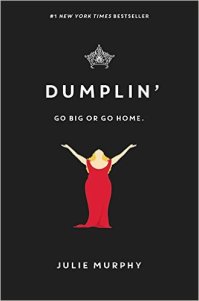
Dumplin’ by Julie Murphy

Murphy cover

I have had Dumplin’ by Julie Murphy on my shelves since last summer when I was given a proof copy at work. It has been sitting there unread ever since and every time my eye would pass over it I would think to myself, “that one is next.” But then it kept not being next. Last week I made it a point to put everything else on pause and read it since Murphy is giving a talk that I wanted to attend. I am so glad I was finally able to dive into these pages because once I did I could not put them down.

Willowdean Dickson lives in a small Texas town that is so accurately cultivated, I kept expecting to encounter someone from my own high school within the pages. Be it football or beauty queens, most small towns have a focus like nothing else on hype. In Dumplin’ the latter is the be all end all of not only the town but of Willowdean’s life. You see, her mother is in charge of the Miss Teen Blue Bonnet pageant (a title which she herself won back in the day) and as such, Will’s life is overrun year after year by glitter and sewing machines as their house becomes ground zero for pageant planning.  Until now, Willowdean has not thought too much about the pageant except for maybe that her mother cares a little more for the glitz and glam than she does about her daughter. But that hasn’t really bothered her too much as she’s left to go about her life without the pressure of worrying about wether she fits in an evening dress or can define what her “talent” is. Until now, that is…because now, Willowdean is tired of being the fat best firend and the dumpy sidekick. She’s tired of the school bully picking on not just her but other members of the lower social tier. In a decision that she makes concrete by telling her best friend Ellen (so now she can’t back out) Willowdean is going to enter the Miss Teen Blue Bonnet pageant. Not because she wants to prance around on stage being the center of attention. Not because she thinks she has a shot at winning. Not even to have something to put on her college transcript. It is a decision she makes for herself; a decision that takes the power away from everyone who has discounted her her entire life.

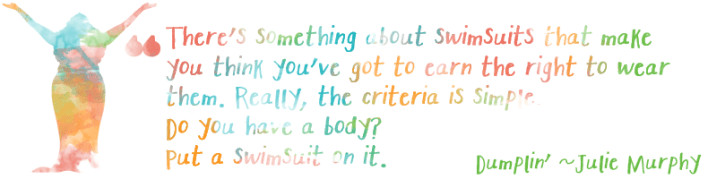
What I loved about Willowdean was that she didn’t wallow in self pity or cop out of things because of she was ashamed of herself. In fact, one of the first places we go with Willowdean and Ellen is a swimming pool and she dons her swimsuit without any apology and gets in that cool cool water.

dumplinbanner1

Dumplin’ was such an easy read because Willowdean is so charming. I was able to relate to her on a level I was surprised by as I too have been on the receiving end of teasing about things I can’t help about myself. Willowdean is strong and stubborn and so encouraging to others.

When a group of fellow misfits (a girl who wears corrective shoes, a girl who is mercilessly teased because of her teeth, and the only lesbian in their high school) join Willowdean in her pageant mission she is shocked that she has become a source of inspiration. She is completely unaware of the impact she has on those around her. These girls develop a bond that is deeper than simply being pageant buddies. They band together and support each other when there is no one else to tell their secrets to, no one else to confide their worries in. This is an aspect of the story which I absolutely loved. Yes, the main plot point driving the story is a beauty pageant, but it is about so much more than that!

Throughout the story we experience several firsts with Willowdean that do a great job in taking the reader back to those nerve-wracking days of self doubt known as high school. We are with Will when she receives her first kiss and when she is asked on her first date. We are with her to experience her shock that those two events occur with two separate boys and the self-conscious fear she feels when one of them kisses her and slides his hand down her back (“Beautiful,” he says. “Fat,” I think.). We are there when she fights with her best friend and when she attends her first drag show (something that none of the girls hope their parents find out about). She is an incredibly well rounded (zero pun intended) character and the empathy I was able to feel towards her warmed my heart. I really enjoyed getting to know Willowdean Dixon who like her idol Dolly Parton decides “live big or go home” are words to live by.

Definitely recommend this book to fans of Rainbow Rowell. I hope Julie Murphy continues to write because I cannot wait to meet her next knock out lead.

Stranger Than Fiction

I don’t know if it is because I would much rather get lost in a world that is not our own or if I’ve not found the right story but non-fiction has never interested me. Now, change that genre description to historical fiction and you’ve found yourself a fan. The history of historical fiction stretches back centuries and the most famous example is that of the epic poem The Iliad which tells of the Trojan War. Perhaps you’ve heard of it…One aspect of the genre that I find to be really interesting is the scope of reality that exists within these stories.

On one hand, you have fantastical tales like Abraham Lincoln Vampire Hunter written by Seth Grahame-Smith in which our beloved president undertakes the role of savior of the human race. This novel incorporates real figures from history while putting a bit of a spin on the past. Or, maybe it is a true account and we were none the wiser for over a hundred years. Either way, Grahame-Smith told a tale that wound together the biography of Lincoln (his youth and his accomplishments in politics) and the fictional shadow world of vampires (creatures that have fascinated and terrified us for countless years). The book itself is quite silly and very fun and the reader gets the sense that it is not to be taken too seriously. It is a story that is very obviously not true but the fact that it is set in a land that we are so familiar with is part of what draws us in. These are people with whom we are familiar and the great thing about the tale is that it is sprinkled with just enough “what if” to truly capture the imagination.

On the other hand, you have scary and morbid tales like Devil in the White City by Erik Larson which is the chilling tale of America’s first documented serial killer. The events transpired over the course of the years leading up to and even during the World’s Fair in Chicago, IL in the late 1890’s. What makes this tale so eerie is the maniacal man at the heart of the story, Dr. H.H. Holmes. However, this is not the sole thread of the book’s plot. We also follow the crafting of the Fair from its inception to its grand opening through the eyes of the lead architect Mr. Daniel H. Burnham. This novel is interesting because it combines actual correspondence found through letters and telegrams with bits of exaggerated reality making it almost impossible to tell what is fact and what was Larson’s design. While these two men are as different as night and day, they are both real figures in recent history. Both live on in infamy for very different reasons, even more so now that they have been committed to the page.

The amount of text dedicated to historical fiction could fill your whole library. Where in history do you want to go? Victorian England? Ancient Egypt? Chances are, there’s a story waiting for you. What are some of your favorite pieces from the historical fiction genre? Leave your titles in the comments section below!


(Post script: a series that I highly recommend is the All Souls trilogy by Deborah Harkness. The first one doesn’t have tooo much history in it but the second one is chalk full of it! Harkness herself is an historian and to view history, and this story, through her eyes was really interesting…despite the fact that I have several issues with the confidence and independence displayed by the heroine. Oh, and this one has vampires too.)


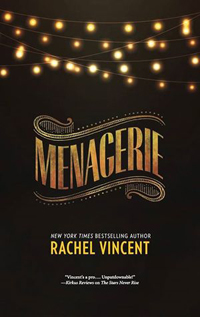
Menagerie- Rachel Vincent

Former English teacher and YA goddess Rachel Vincent is back with a new story and man is it compelling. Menagerie takes place in a world in which cryptids are out in the open and known to humans. They do not however coexist. Seen as less than human, shifters, succubi,minotaurs and others have less than no rights and are either captured and exploited or captured and hunted on game reservations. They are treated as animals. The vein of capture and exploitation is the one which we explore alongside Delilah Marlow who has grown up her whole life believing she was human. On the night of her birthday, Marlow and friends visit the famous Metzger’s Menagerie and things go horribly, devastatingly wrong. What follows is an expose of sorts on the mistreatment of these “creatures” and the lives afforded to them as subhumans.

Vincent has a real knack for combining detail and emotion, causing the reader to become incredibly invested in Marlow’s plight. We root for her and mourn with her and applaud her bravery. The way Vincent writes is so compelling. Her characters have a true depth to them that will tug on even the hardest of heartstrings. Menagerie puts a spotlight on creature cruelty in a very upfront way as these creatures are capable of shifting into their human forms, putting a face to the cryptid and a soul to the character.

While the storyline occurs in the near present with all the trappings of reality (cell phones, the Internet and YouTube), the feel of the world is very old timey and the story progresses the menagerie itself becomes a character. Like traveling ciruses and freak shows of the past, Metzger’s is all glitz and glam on the outside with loud music churning through speakers and brightly lit bulbs strung from tent to tent. We as readers though, know the whole story. And man is it twisted.

Upon looking Menagerie up on Amazon, it has a parenthetical detailing The Menagerie Series Book 1 and that made me so excited to know that we will get to continue to journey alongside Delilah Marlow who is such a strong and independent female lead. Alas, as I am not an oracle, I will have to wait alongside my fellow mortals to see what the future holds for the Menagerie. 

Four out of five books to Mrs. Vincent. You can get a copy of Menagerie for yourself here.

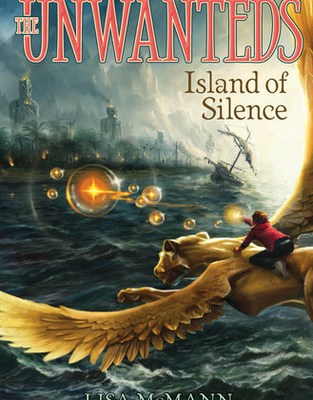
The Unwanteds: Island of Silence- Lisa McMann

Where many an author goes wrong in a series is not being able to find the perfect balance of recap and new details, Island of Silence by Lisa McMann however does this seamlessly. The second book in The Unwanteds series welcomes back readers without heavily burdening them with synopsis while at the same time clues in readers that maybe didn’t read book one (though shame on you for skipping around).

Book two picks up very soon after the events of of book one and we are shown almost immediately how those from Quill are reacting to the information that all the Unwanteds are alive and well; some take to this new world easily while others wish that everyone had in fact been thrown in to the lake of burning oil. It is really interesting to see how these new revelations have defined with even greater detail the class system that has been in effect for all 50 years of Quills existence. Those who had been Necessary had been relegated to doing tasks such as farming all the food and picking up everyone’s trash for years and once Mr. Today extended an open invitation for anyone and everyone to come to Artimè, who could blame them for shirking their duties. However if one were a part of the Wanteds, the upper class and highest echelon, one is at a loss as to why these people would desert Quill. This, coupled with the death of his idol and leader Justine, is what drives Aaron Stowe to begin plotting and scheming and soon a war begins.

As if his evil twins’ dastardly plans weren’t enough to worry about, Alex has been chosen by Mr. Today to begin learning how to take over for the mage should he want to go on something called a “vacation”  or “retire.” There is so much to keeping Artimè ticking that Alex is unsure of his ability to lead. Additionally, two children appear one day on the beach having floated up on a dilapidated raft. As if this weren’t strange enough, the two have wire collars with thorns embeded around their necks, rendering them silent.

The story begins to be more complex in Island of Silence in regards to exposition and new plot points, weird feelings emerge (like how Samheed keeps looking strangely at Meg) and alliances are tested. McMann’s second tale in The Unwanteds saga is rich in scenery as we explore new places like the Island of Silence and takes us deep into the emotions of our main characters. It is especially interesting to see how Alex and Aaron mirror each other in their opposition. One is so entirely good and the other [seems to be so] entirely evil. I think there is more than meets the eye to these two and I can’t wait to see how they continue to shape the courses of Artimè and Quill. As their powers grow and their leadership roles increase, is one island big enough for the two?

I give this tale five out of five books for rarely is a sequel even more compelling than the first.