World building whimsy

The best part of getting lost in a world (be it through a book or a film) is that anything can happen. Certain storytellers have the ability to submerge their audience in world’s that can be very similar to ours or very, very different. It is not just that full characters are created or that the story line is well thought out and planned, it is that every aspect of the world is notably considered and taken into accordance within the story’s unfolding. A writer who is able to convey the mores of a culture which they’ve created or enhanced without shoving it down your throat via clunky exposition is a talented one indeed. This is most evident of series in that there is so much more time for customs to be laid out and histories to be relayed. Tolkien took up volumes with the detailed history of a whole land as did Paolini. Lewis built his world volume by volume which allowed for a slow expansion and understanding of the world in which Narnia existed. I think this is why The Magician’s Nephew has always been my favorite. This world building is something that I am noticing more and more as I tear through the Game of Thrones saga (I’m currently in book three) and also something I noticed recently while watching the latest installment of Disney’s Pirates of the Caribbean films. I realize I may lose some of you there. What?! The Pirates movies are being thought of in the same breath as GoT?! Hear me out, lovelies.

When considering a fully realized world, we are able to recognize geography and history yes but there is something else that is also important. The rules of the reality of this alternate-verse are very important to establish so that the author knows what is and isn’t possible and so does the viewer/reader. Rules within a world establish these parameters so that characters experience events with logical outcomes, so that there is a reason when crazy events happen, and so on. What got me thinking about the importance of this was watching the latest (and hopefully last (although through my research I see it won’t be the last)) installment of the Pirates movies.

Over the course of the five films that make up this series there are many things that happen that in our reality would not be possible. From the very beginning of the first movie we are let known that curses and magic are real. This is evident even from the title: The Curse of the Black Pearl. Thus begins our education into this world. We are taken in to a time that existed (early to mid 1700’s) and a place that is real (the Caribbean) however the reality is altered from ours. Having Will Turner (Orlando Bloom) as our primary guide through the events of the first film, we learn as he does about the lives of pirates. To start, Turner is pretty landlocked in his life and does not know much about pirate culture. It is only once his love Elizabeth Swann (Kierra Knightly) is abducted by pirates does he get pulled in to the mysteries of the sea. We see with Will that curses are not to be trifled with and that they are indeed very real. Once out at sea, we learn that most of the terrifying tales told by sailors have some sort of basis in the sea’s reality. Monstrous creatures of lore like the Kraken do exist and the boogiemen of your dreams like Davy Jones are real and perfectly able to getcha! As we adventure along with Turner and Jack Sparrow (Johnny Depp) we almost become used to the fact that, yeah, of course they’re encountering monsters. Because of this I feel we almost become jaded in a sense through to the latest installment in which our leading lady Carina Smyth (Kaya Scodelario) is thrust into the mystical world that revolves around Jack Sparrow. There is a point when Carina finally sees something supernatural. She screams and runs out of the water and up the shore shouting that ghosts are real. An appropriate reaction, honestly.

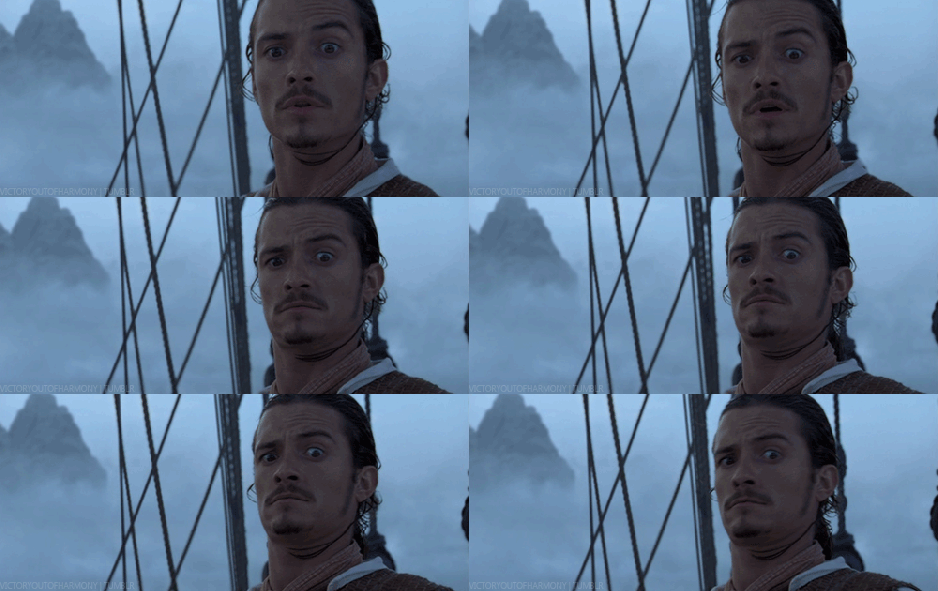
This moment is what really got me paying attention to the world within these films. Because of this moment I realized how prevalent these mystical adventures are in the lives of our leading men and I realized something else too: they all take place far out at sea. We are along for the ride with these men seeing pirate royalty convene for a summit; witnessing undead men, monkeys, and sharks; boarding ships that have been sunk for hundreds of years. These things are very real in this world however there is a whole population who is unawares of their existence. This is a part of the rules of this world. Creatures whose presence cannot be explained shock those who are not used to them (which is again, appropriate). Even when a character becomes used to these things and is part of the pirate life there are still instances where one of them will see something and have wtf moment.
Pirates image

Another saga that I am currently immersed in is that of A Song of Ice and Fire. With five books published and seven total promised, George R. R. Martin has created a whole universe with its own precedence and standards. The history of Westeros and the surrounding lands extends for thousands of years and with one continent and many island countries, the make up of these lands is vast. In fact, there is so much history to cover that in addition to the primary novels that make up the saga ASoIaF, there are also several novellas that give us further knowledge of different times within this world that we come to know so well. Because there are many houses and each of them have their own pasts (in  addition to a global history of wars and times of peace) there is an endless amount of possibilities for characters we already know and for those whom we have not met. But again, it is not the characters that make the rules of the world.

Much like our world and that of the world in Pirates, there are laws of reality that must be followed. Due to the fact that there are many different cultures that we are encountering, there are several different realms in which people exist. Those who live in the far North have very different lives than those who live in the far South and very different again from those who are Dothraki or Lyseni. While there are many different realms there still is only one reality within which everyone operates. It is established within the prologue of the very first book that otherworldly magic exists but is not wholly understood by persons at large.

Something interesting that Martin has done in this land is to establish that there are old gods, ancient myths that revolve around the First Men; new gods, known as the seven; and a Lord of Light, who is very mysterious [and seems somewhat cultish]. I find this compelling as it is a small similarity to our own world in which many different religions and schools of thought exist. Because of this, we are able to see very quickly that the many different regions of this land operate under different beliefs. Most often the new gods are mentioned. Those who worship in this manner visit the Sept to pray to one god who is represented by seven faces seen as the Mother, Maiden, Warrior, Father, Crone, Stranger, and Smith. Each of these are prayed to for different reasons: to keep a son safe in battle, to keep a woman safe during childbirth, etc. Then there are the old gods, worshiped in the North by the first men and by some who live still. There is a magic in this belief; a connectivity to the forest and all its creatures. The wierwood trees in the forests and in the godswoods of castles and forts create a conduit of sorts for these gods to see through and be prayed to. Lastly, there is the Lord of Light, who is said to show his true believers the way if they stare into the flames of fires. The character Melisandre is who [largely] leads us through our knowledge of this particular religion and because it is not widely known or practiced in Westeros, many men distrust this vein of thought and see it as witchcraft. That last bit is interesting. The fact that the Lord of Light’s followers are mistrusted because of their “devil worship” or “sorcery” draws attention to the fact that magic is not something that is trusted in this land. The gods of old seemed to posses some magic but their times are long gone and there doesn’t seem to be any magic left in the world. That is, until dragons are born and a crippled boy becomes the keeper of knowledge past and present.

Aside from religion, there are other aspects of the world of Westeros that are outlined to establish the world. In battle, men die (whereas as pointed out above in the Pirates world, ghosts exist). There is a hierarchy that exists by which the land is governed. Despite the fact that there is a very large scale war going on for the Iron Throne, there is a system in place: lords, wardens, etc. Culture is explored through songs sung by bards and tales told around the campfire. It is fascinating to me how deep and rich the history of this land is.
GoT image

Getting lost in a world that is not our own is part of what makes reading and watching movies so compelling. We are able to escape our lives for a span of pages/the run time of a film and truly be somewhere else. The greatest storytellers create fully realized settings to further allow for this escape and totally submerse their audiences. While it might be easy to create a tale, coming up with the entire world is what makes the escape successful. Whether it is building the world from scratch (example: Lord of the Rings) or slightly altering our reality to make it their own (example: Inception), an author who takes the time to think out all aspects of their world is a skilled one indeed.
The 5th Wave – Rick Yancey

the5thwavebook


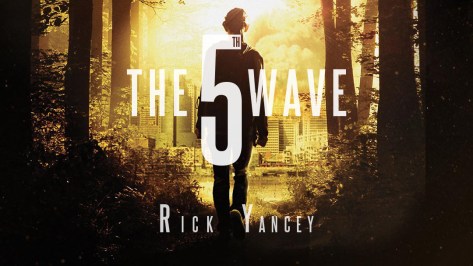
Well wasn’t May just a kick in the pants, lovelies?! Life was hectic in general but to top things off I was bookless for almost the whole month. I think I started like four or five different books. These are books that I will eventually read (…she tells herself) but I needed something with a hook. I needed a tale that captured me from go. You know, that feeling that you get when you open a book and 10 seconds later you’re 60 pages in? That book that calls to you when you’re not reading it…The 5th Wave did that to me. Rick Yancey does an amazing job weaving the overtaking of our planet. This book is horrifically terrifying. For example, are you currently not really a fan of birds? Do you think that angry children are actually super dangerous tiny humans? If you have fears like these, this book might be too much for you. But you should read it anyways because it is. That. Good.

Cassie Sullivan is our primary storyteller through whom we learn about the beginning of the end of the world. There have been four waves so far. First, all of the electricity went out. Second, massive earthquakes and tidal waves cause flooding of every coastline in the world. By this time three billion are dead. Next is a plague transmitted by birds that wipes out 97% percent of the population. As we walk through this world with Cassie, alone and terrified, we learn with her about what comes next in the invasion. It is, at this point still hard to imagine the magnitude of this end of days situation. As Yancey says in the book, a “single death is a tragedy; a million is a statistic.” The scope of this book narrows in and then zooms out again. So, many times, are you reading and just going through the pages and then you stop and reread a sentence and realize how truly horrible some of the things going on in this book are!

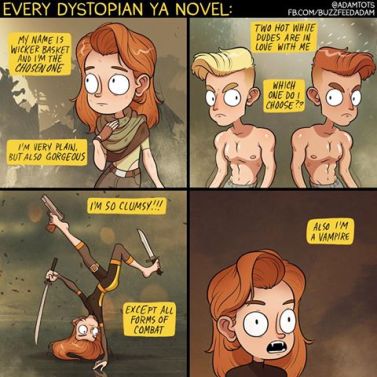
There are other strands of narration as well which add to the awareness of the horror. We get in the mind of an alien sniper, who wades through the aftermath killing any human he comes across; additionally you also have Cassie’s brother, someone she went to high school with, and a person who saves her. One element that creates and holds tension throughout is that They look like us (Obvi.) so even though you might know someone, how do you know you know them? You know what I mean? The whole book is like that!! Yes, if you really think hard you can figure it out as you go. But, if you’re just reading this to get excited about suspense that isn’t your standard Every-Distopian-YA-Novel a la:

YA Comic

then this is for you! I really was invested in each of these perspectives and what’s more, they didn’t spend their whole section/part being worried about “the girl” and not doing their own shit, as it is, ya know, the end of the world and what not. Themes of keeping promises and love being the primary driving force are present, yes. However, I thought they were done in great ways. There were times when I went, “oh come on!” when it was getting a little too formulaic but those issues straightened themselves out fairly quickly.

While we do get to see these other perspectives, I really appreciated getting to know Cassie’s voice. When we are first introduced to her she is on her own after her brother has been taken by uniformed men and her parents die during two different waves. She is trying to survive in a world in which, as far as she knows, she is the only one left alive. She is strong and focused after not having seen another person in weeks…or is it months? This uncertainty of time is something that Yancey plays around with very beautifully. Characters often think of time in relation to their actions and the happenings around them, seconds into eons when a bullet is speeding towards you, hours into years when you’re left alone in the dark. When you’re solo in the world, things can get screwy. The noticings about time are interesting in the end when you realize the grand scale of these aliens coming from who knows where and how far away…how long has this been in the works? And we as humans can only think in the smallest increments of time.

In addition to the time talk, there is often weighty, lofty things that only get said in books and movies that are somehow just on this side of okay. For example,

“Cassie Sullivan didn’t run…He could see the familiar look of fear in her eyes, a look he had seen a hundred times, the look we give back to death when death looks at us. “

Is quickly followed by,

“His heart, the war.

Her face, the battlefield.”

But it is all okay! I’m fine with goofy lines if the story is strong and the people have good solid reasons to be on these “missions” that they are invariably always on.

The gravitas of what these kids go through – because they are all kids – is disturbing. Imagine all of the adults in the world dying and the kids being taken in by some sort of military unit and being trained to hunt. They don’t know if they are being told the truth (and neither do you), nor are they old enough to really question things. Over the course of the fourth wave, you again realize what is going on and have to occasionally re-read paragraphs. Whether they are made to do these things by humans or Others, going through dead bodies and “processing” thousands for cremation is not something that should be on an eight year old’s to do list. Neither, for that matter, should weapons training and emergency medical/tactical care be subjects that should be taught to six year olds. You realize that these children, who are now parentless, are being guided by people who are not at all concerned for their well being or what is best for them. They are being trained brainwashed to kill. These horrors of the day keep tolling up and these kids are so glad to no longer be on their own in the middle of an alien invasion that they believe everything they are told!

Over the course of the entire book, you think for a section that you have something figured out and then the next chapter can go two ways: you could be wrong or you could be right which is sometimes even more scary. I haven’t read any of Yancey’s other works so I don’t know if he is just always good at suspense but man alive I am glad I fell into this book. There two books which round out the trilogy and I am anxious to start the second. I do know that there is a film that was made on the book in 2016 and I have heard nothing but terrible things about it so I haven’t as much as even seen the trailer. I wanted nothing to taint my experience of the book. This is an action that I am grateful for. There is also a lesson in that: don’t just watch dystopian thrillers. Read them. For an adventure that takes you to the end of the world and frequently punches you in the gut, pick up The 5th Wave.

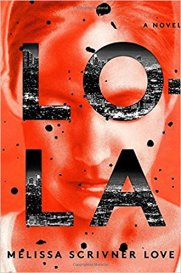
LOLA – Melissa Scrivner Love

LOLA


This week I finished LOLA which came out in March of this year and was written by debut author Melissa Scrivner Love. Over the course of a week and a half we go through an experience with Lola that has the potential to solidify her in a world she leads from the shadows. With a deadline and the threat of death from multiple drug lords, Lola is tested as she emerges as the true leader of LA gang, the Crenshaw Six.

When the book opens, we meet Lola, our narrator and the girlfriend of a man named Garcia who is assumed to be the leader of a gang which controls blocks in the neighborhood of Crenshaw. We are at a back yard BBQ when a messenger from the cartel arrives and wants to speak to Garcia, giving him a mission to interrupt a drug deal between a cartel customer and a rival supplier. Throughout this meeting Lola hovers on the fringe, notting everything the man says and also how he acts and her inner dialogue immediately sheds color on the woman whose psyche we are going to be in for the next couple hundred pages. Short sentences, to the point and very observant.  Whether or not someone’s English has an accent, if they are sweating and nervous, the way the air feels and tastes in the LA heat. It is clear that she is a very reliable narrator…and one who knows a vast amount more than what people expect her to. Within the first few pages, it is clear that Lola is the one running things and no one yet realizes this outside of her five soldiers.

The mission set to the Crenshaw Six, the drug deal from which they are to recoup a name plus both the cash and the loot, goes terribly wrong. And from here we have a chain of events that propel Lola into having to navigate between the cartel and this new drug supplier (who turns out to be rich and white) selling heroin to upper class users. First daunting task set to Lola: find out who this new man is, infiltrate his organization, and find out where his stash is held. Her deadline: one week. Next task: after having infiltrated said organization, Lola must prove her loyalty to the white man for him to trust her. He tells her to kill the man who was the cartel client. The one from the deal. She is again given one week. Throughout all of this, Lola is pretty collected. We see the actions of a calculating leader who’s people trust her and the plans that she comes up with to get them through these situations. It is wonderfully eerie to read passages outlined with her practical business like manner and then to flip the page and have her trying to  do good and create a safe space for a little girl.

In addition to the little girl, Lola also cares for her mother who is a recovering junkie. These two responsibilities illustrate the domestic side of Lola’s life. The balance that is consciously kept between gang leader Lola and dutiful daughter and woman Lola. She narrates about how she uses conceptions of her, often misconceptions, to her advantage. And people constantly underestimate her. I really enjoyed how she trolled these waters looking for her in to the game with the men. Lola’s confidence and level headedness is what I enjoyed most about her and this work, I think. There are a couple of other females that aren’t as flushed out as they could’ve been whose deeper perspectives could’ve been interesting.


The deadline and climax of both missions happens so near the end I thought it was going to be a cliffhanger. That being said, wether she makes it or not, there is room in this world to flush out more stories. I think Love could develop quite a few tales and am interested to see what she does next.

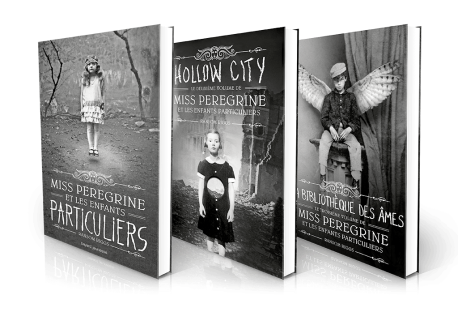
The Peculiar Children series by Ransom Riggs


Miss-Peregrine.png

The first, second, and third novels of Miss Peregrine’s Peculiar Children are very darkly whimsical. Not in a Tim Burton way (I promise lovelies, this is the only time I will mention him) but in a sepia toned, phonograph, crackling edges kind of way; a way that progresses at juuust the right pace. Ransom Riggs brings us into a tale that you have to read to believe.

We begin with the self titled Miss Peregrine’s Home for Peculiar Children and Jacob Portman’s adventure from being a normal to realizing his a peculiar. As Jacob is our narrator we learn things about this new world, its history and its secrets, at the same pace he does. Which is why we are equal parts unsure of his grandfather’s sanity and the possible truth to the far out stories of his past when he dies a tragic death by a creature only Jacob sees. It is this traumatic event that slowly begins the chain of events that will open Jacob’s (and our) mind to untold possibilities and bring us to the time loop(s).  We learn that Jacob’s gramps was a peculiar and so is Jake…they specifically can see these beasts that are ultimately Grandpa Portman’s downfall. Hollowgasts. They haunt peculiardom, eating the souls of any peculiar they can reach and are under the control of wights – the organized baddies. Anyway, peculiars. What are they, you ask? Who are they? Well, they are magnificent humans with the ability to do things like float, or have mouths on the back of their head, or create fire with their hands. I know your next thought: hmmm that sounds a lot like mutants. The thing is, these are all children…on the outside. The aforementioned timeloops are spaces on top of, or maybe behind, reality. They are little pockets that freeze a day and loop it forever; their inhabitants’s souls age however their bodies do not. This is where peculiars have taken to; unable to comfortably live in the open as wights and hollowgasts have hunted them for a century through the centuries. Not only are we introduced to this world in Riggs’s first title, we are also given brief glimpses of a much deeper narrative than just a boy grieving over his grandfather (that sounded dismissive but it is not meant to be) and finding his way back to the grandfather’s childhood home. There is the understanding that something serious is going on in these people’s worlds and we have arrived just in time!!!! (#savior) While the tone of this book is serious it has some moments of light. They are all still children: naive and living in a sunlit snapshot of time and when Jacob joins them he too has a lighter sense of self. As the book comes to a close we are promised that the understanding of and our perception of this time and place are about to be expanded even more. With a cliffhanger that leaves you thinking “Oh no!” there is no choice but to immediately pick up book number two.

Unfortunately it took me a whole year between buying the book and beginning to read it so there was a little remembering that I had to do which is okay because it picks up exactly where book one ended. Hollow City is the tale of Jacob and all of his new friends, Emma, Bronwyn, Enoch (et. al), on a rescue mission which has so many close calls you can’t help but speed through the book at the same breakneck pace. There is so much action and quick paced scenes that your eyes might not be able to keep up with your mind! We go from the sunny island of Cairnholm on which they have all lived for 60 years deeper into the loop to the same day but in London. The adventure of getting there and the people they meet gives us more insight into history and more is steadily revealed about this big bad. The fact that this is taking place during WWII is significant as the wights are able to pose as Nazis and no one thinks differently or realizes it. This allows them to be organized and systematically hunt down the entrances to these loops. They can’t go in, you see, so they employ traitors and trickery to get the peculiars and their guardians the ymbrynes to come out of the loop and get snatched right up. For what, you might ask? Well…that’s a mystery too. A dark and terrifying mystery as no one is ever seen from again and capturing an ymbryne is no easy feat. Over the course of Hollow City we are guided deeper and deeper into this loop and even into a couple of other ones too. The layers of the world that Riggs has created is dizzying at times. However, the addition of layers adds to the tone which has lost its sunshine and has gained an air of anxiety and fear; uncertainty about everything.

Just when you think we are about to have a happily ever after moment to end this rescue mission that has been chalk full of foiled plans and dastardly encounters the plot curves and leaves you gasping, “Well, fuck!”

This sentence is appropriate as it allows me to continue talking about this tone shift. I noticed a difference in Jacob’s words as the journey darkened and he had to grow up a bit and make some really tough decisions. It is in book three, Library of Souls, in which I first notice Jacob swearing. His shift is actually so perceptible in this one that he begins to think of himself as new Jacob and old Jacob. By this point, Jacob and Emma (who is our strong leading lady), have been through so much that they are exhausted and unable to trust anyone. A very old loop and a very shady ferryman usher J and E to Devil’s Acre where all of the outlaws of peculiardom have floated over the centuries. It is here that a steadily increasing amount of our friends are being held captive, abducted over the course of book two. Here we learn the twisted plan of the wights; this is the evil dungeon, the lair. Here we have the culmination of Jacob’s journey with Emma to save his friends. We also have, the final show down of the good vs. evil that has been plaguing these people. A carefully sleuthed plan, a final battle, and a resolution that covers all loose ends and loops. The dirge of Devil’s Acre is so disgusting and makes you squirm and grimace. It is in this horrible place that Jacob truly grasps his gifts and harnesses his ability. However, there are still a couple of chapters after the titanic tussle because life goes on after a battle and lives must be rebuilt. Can they be?

I tried to make these descriptions as vague as possible while staying interesting. I hope I did that. These books have really good twists and are very thoughtful in the telling of history (paradoxically) and an unravelling of what is behind a story. My favorite, I think, is book three as it has a character named Sharon whom I really enjoyed, shows what a community looks like in this horrid place, and reveals that there are so so many sides to a story. The evolution of Jacob Portman is really great to witness. I highly recommend this whole series and also the companion book. Tales of the Peculiar is a tome mentioned several times throughout the series and the printing of the books is comparable to that of Beetle the Bard’s tales. Something that I didn’t touch on at all yet is the fact that these books all include old early photographs of really odd and striking scenes with people who could very well be peculiar. They are all real and have been collected from various estates. This adds to that whimsicalness I mentioned at the top in which everything is just a bit spooky.

In closing, read these tales. Believe in the peculiar and in yourself.

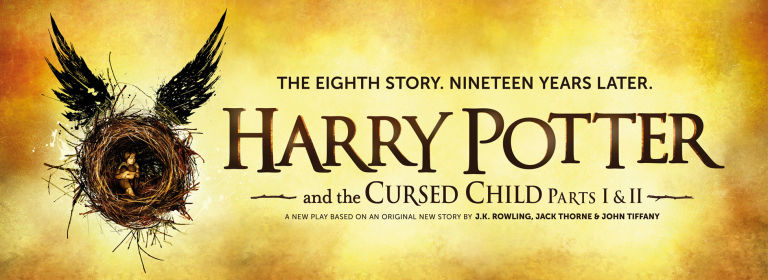
Harry Potter and the Cursed Child- Parts 1 & 2

gallery-potter-cursed-child-poster-1

I have, for many reasons,been putting off reading this playbook. When the series ended, I was content with its closing and was even glad of the epilogue showing that light can come to those who have faced the dark. This is one of the main reasons I was hesitant in picking up any sort of continuation of the story. That being said, I do think that there are so many tales that can be told from this world, which is why I am so excited about Fantastic Beasts coming out this week. So it was with much skepticism that I dove into Harry Potter and the Cursed Child.

HPCC was written for the stage by Jack Thorne and was based on an original story created by Thorne, J.K. Rowling and John Tiffany. A couple decades have passed since our trio left Hogwarts. Like we learn in the epilogue, Harry and Ginny end up together as do Ron and Hermione. Their kids are going off to school and it is here that the Potter’s middle child learns that he will be in Slytherin along with a boy who seems to be his only friend throughout: Scorpius Malfoy. The tale focuses on a couple of different parental relationships, how the younger generation are impacted by the past actions of their parents, and the importance of thought before action.

Albus Potter is the middle child. He often feels over looked and under appreciated. One night, in a heated fight, Harry accidentally comes back with a retort to the effect of “I wish you weren’t my son.” Ouch. This has a noticeable and obvious impact on the boy. Another important argument (this one Albus overhears and is not directly involved in) is had between Amos Diggory and Harry in which Amos blames Harry for Cedric’s death. All these many years later he is unable to accept the loss of his son and dwells on the fact that he was the “spare”. Collateral damage. The feeling of being the spare really resonates with Albus and he decides that preventing Cedric’s death would be a good course of action for setting things straight.

I don’t really understand this logic. This mission of his just doesn’t reeeeally make sense.

At this same time a Time Turner is discovered and taken in by the Ministry (oh yeah, Hermione is Minister for Magic, whaaaa?!) and isn’t this just perfect since Albus has decided that going back in time is exactly what he needs to do. How. Convenient.

So he and Scorpius go back in time to the Triwizard Tournament (a.k.a. book four). And wouldn’t you just know it but they mess shit up. Like really really badly. What frustrates me so much about this idea of theirs (which the story is largely based around) is that they are so inconsiderate of their actions and don’t even pause to think what undoing something that had happened two decades prior would do to the present. Preventing someones death that far back….I can’t even begin to fathom how many wrinkles that would produce. Which is why it seems so implausible. These kids have grown up in the wizarding world. Don’t you think they would be aware of the repercussions that something like this could have? I can see how there would be a counter argument formed: if they are living in a world in which all Time Turners had been abolished (/destroyed) maybe the perils of time travel weren’t taught to them. I don’t know. What I do know is that their ignorance sure does not create bliss.

When they get back to the present all sorts of things have gone haywire. So what do they do but decide to go back AGAIN to right what they’ve wronged. This time they travel to the second task and guess what…they eff some more shit up. When they get back to the present some people (including one of our main characters) weren’t even born! That’s how messed up things get. Also, Voldy is alive and well in this new present. Great. Now, to fix this, time must be travelled through…again.

This goes on and it is a total of four times that our characters traverse the time stream. Unbelievable.

A complaint that I have heard/read from many Potter fans is that the way Harry treats Albus doesn’t match up with the character we all grew up loving. I totally see where these thoughts are coming from. There are definitely some lines that I had to reread and recheck who the speaker was because it just seemed so out of touch. However, to that I say: Harry is a parent in this time. We have never before seen him in this role. So obviously there are going to be new facets of his character with which we are not as familiar. I mean, 20 years have passed, ya know? I definitely hope that some my 17 year old self’s traits evolve by the time I’m 37 (I’m about midway through that evolution and think things are going quite nicely…but I digress).

When all is said and done, I did not hate the read but I was not over the moon about it. It is very easy to get through because it is dialogue and stage direction and not any sort of expository “stuff” or narration. I would definitely encourage all Potter fans to check it out but I would caution them to go into it with an open mind. This is the story of Albus Potter despite Harry’s name being in the title. This is a play and not a book and as such should be viewed for what it is: a different medium. This is extensive fan fiction flushed out by Rowling and not penned by her. This is one to add to your Rowling shelf in the hopes that more stories (written by her or not) are to come.

Banned Books Week 2k16

banned.jpg

Sunday September 25- October 1 is 2016’s Banned Book Week. Since the 80’s the designated week is a time for teachers and parents to encourage their children to read books that push barriers, broach hard topics, and create engaging conversations. Every year the American Library Association keeps tracks of all of the titles that have been challenged or banned in both school and community libraries.

When I was a freshman in undergrad, I did one of my year end projects on the ALA and banned books. It was so interesting and also somewhat mind blowing to research some of the reasons that certain titles are banned. “Sexually explicit” content and “language” are the two most cited reasons that a title is challenged and the majority of the time it is a parent that submits the challenge. While these two reasons are understandable for a parent to say, “hold off on reading this title” to their child it does not give them the right to make that decision for an entire school or town. Censorship on literature is just one more way the sheltering parents of today are blinding their kids to the world around them. This topic makes me so mad! Encouraging children to read is one of the most important things in a child’s young life; it is an incredibly fundamental part of embarking on their education. However, when a person steps in and denies any title to someone, that is just unfair.

The top 10 most frequently banned books of 2015 were

  1. Looking for Alaska, by John Green
    Reasons: Offensive language, sexually explicit, and unsuited for age group.
  2. Fifty Shades of Grey, by E. L. James
    Reasons: Sexually explicit, unsuited to age group, and other (“poorly written,” “concerns that a group of teenagers will want to try it”).
  3. I Am Jazz, by Jessica Herthel and Jazz Jennings
    Reasons: Inaccurate, homosexuality, sex education, religious viewpoint, and unsuited for age group.
  4. Beyond Magenta: Transgender Teens Speak Out, by Susan Kuklin
    Reasons: Anti-family, offensive language, homosexuality, sex education, political viewpoint, religious viewpoint, unsuited for age group, and other (“wants to remove from collection to ward off complaints”).
  5. The Curious Incident of the Dog in the Night-Time, by Mark Haddon
    Reasons: Offensive language, religious viewpoint, unsuited for age group, and other (“profanity and atheism”).
  6. The Holy BibleThe Holy Bible
    Reasons: Religious viewpoint.
  7. Fun Home, by Alison Bechdel
    Reasons: Violence and other (“graphic images”).
  8. Habibi, by Craig Thompson
    Reasons: Nudity, sexually explicit, and unsuited for age group.
  9. Nasreen’s Secret School: A True Story from Afghanistan, by Jeanette Winter
    Reasons: Religious viewpoint, unsuited to age group, and violence.
  10. Two Boys KissingTwo Boys Kissing, by David Levithan
    Reasons: Homosexuality and other (“condones public displays of affection”).

As you can see, these objections are not confined to newly published titles . I Am Jazz is a kids book about a child who dealt with transgender issues and was published in 2014. It is based on real events in the author’s life yet one of the reasons for it’s being banned is that it is inaccurate. EXCUSE ME?!?! REAL EVENTS!!! While the “reasons” for banning a book vary, there is a common theme that is easily detectable. If someone doesn’t agree with something or might be afraid of something due to close mindedness, then it is challenged. Some of my favorite books and titles that have really stuck with me are on these lists. From 13 Reasons Why to A Wrinkle in Time, there is no genre or style that is safe!

According to the ALA, “a challenge is an attempt to remove or restrict materials, based upon the objections of a person or group.  A banning is the removal of those materials.” While it is difficult to push through a ban, that doesn’t stop the attempt nor does it lessen the amount of challenges submitted each year.

Organizations such as the ALA and the Banned Books Week campaign are incredibly important in drawing attention to the titles that receive the most scrutiny and hate. There are amazing lists on the ALA’s website which show the top 100 banned books, break lists down by years, and keeps track of all the ludicrous ideas behind why a title should be taken off of a shelf. The Banned Books Week website has a breakdown of events that take place in each state that promote literacy and encourage reading.

I highly encourage you to cruise around both websites and get involved with your local libraries and bookstores particularly this week as they make an extra effort to get knowledge (and a good read) into the hands of anyone who wants it.  There are usually really great displays that libraries and bookstores will create to show off popular banned titles. This always makes me so happy to see because it is putting all of these “dangerous” works into one space and defying the challenges put forth by those who would see them disappeared forever.

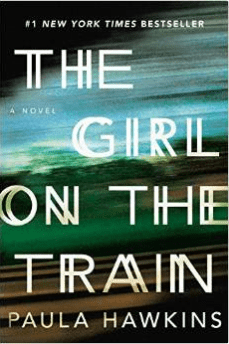
The Girl on the Train- Paula Hawkins

I was very proud of myself for going as long as I did without reading The Girl on the Train while simultaneously avoiding any spoilers of the twist and the reveal. After Gone Girl‘s twisty turny ride and the onslaught of similar twisty turny plots came out, I resisted the trend. It is something that really bothers me, market flooding. I get that imitation is the best form of flattery however if an author does something truly spectacular in a genre that does not mean that every title in the six months following needs to follow the same pattern (read my pseudonym article to see how Stephen King solved this problem). That being said, I resisted the raves that came out following the release of The Girl on the Train (hence forth seen as GotT). However, with the movie coming out soon, I had to adhere to my policy of book reading before movie viewing even though this does from the trailer to seem to be more of a “based on” than “adapted from”. This is more of an overview of my thoughts on the novel as I wish not to spoil this book as it was not spoiled for me. So, here it is:

The_Girl_On_The_Train_(US_cover_2015)


The tale of the GotT is told to us through the perspective of three unreliable narrators. We have Rachel (who is the title character) who commutes to London every morning on the same train and it is on this train that Rachel observes Megan and her husband Scott (Rachel doesn’t know their real names at the start). The observations seem harmless, she sees them from the train everyday and creates a mental profile of their lives; seeing them as characters more than people. It is made abundantly clear to us from the second page onward that Rachel is an alcoholic. Like full on day drinking, all the time drinking, alcoholic. Hence, her unreliability.

Our second narrator is Megan. There aren’t so much chapters, the way the book is laid out, but with each perception shift, the woman whose view it is in  is up in the chapter heading space and there are notations of dates and times of day. Somewhat diary/snapshot like however the timeframes are restrained to morning and evening. Why am I detailing this? Well, it is from this that we see that these view points are nonlinear. This is important later on as events unfold and you gather details out of order and piece them together. It makes the puzzle engaging and you quickly realize that every piece of the story matters. We learn slowly that Megan is not happy with her life. She feels agitated and stuck; like there is something else that is just beyond her reach that would complete things for her. A former gallery owner, she is restless and while she seems to think she is good at hiding this from everyone…that is not always the case.

Lastly, we gain pieces of our story from Anna who is married to Tom. Their courtship and family beginnings are unfolded at a nice pace and we slowly learn that these three women are separated by a small number of degrees and that makes their web even tighter than you might at first realize. Anna has snooty opinions of other women and so her views of our two fellow narrators is a bit colored for her own personal reasons. She is no more reliable that the alcoholic or the pretender. So, it all trickles down to the fact that everyone has secrets and none of us are as completely fine as we might present.

These three women’s lives unfold over the course of the novel and it is not just their degrees of separation that shrink, so too does the fact that you really do not know who to trust. Who is giving the whole story or at least the story closest to the truth? Everyone has motive. Everyone has opportunity. When someone goes missing, there is no way to know who is trying to keep the biggest secret of them all.

That being said, the twist at the end was very good and pretty pyscho. However, if you pay really close attention you are able to figure it out pretty far ahead of the reveal. I wasn’t 100% sure I knew…but I was rewarded with being right which is always so satisfying, don’t you think?

Now, the last thing that I would like to follow up with is the that of the treatment that each  these ladies extend to their fellow females. None of the women in this book are nice to each other. While some of it is for understandable reasons (like Rachel being piss drunk and walking out of a house with a baby that isn’t hers) most of it is a bit exaggerated. The women are mean and sneaky and snide. Even the female detective is just downright rude and untrustworthy. It is apparent from the get go that none of them are besties but at times I feel like it was a bit unnecessarily hateful.

I flew through this book in a matter of days; couldn’t put it down. It is very fast-paced and has a really quick flow because of how it is broken down. GotT would be the perfect book to put in your pool/beach bag and tear through as the warm sun shines down on you. I highly recommend it!

pseu·do·nym /ˈso͞odnim/

pseudonym


In the 2001 movie Monkeybone, cartoonist Stu Miley (Brendan Fraser) switches the hand with which he draws his pieces. The result is that his creations go from dark twisted nightmares to this goofy monkey and his human pal (think Garfield as a monkey). This concept got me thinking about pseudonyms and the persona that is developed by and within an author’s works. In today’s publishing world many authors, both well established and those just starting out, create pen names under which they publish. The reasons for this vary from author to author: just starting out and trying to establish a name with spunk, switching genres and therefore perspectives, or trying to get away from an already established name. There are many great authors to think about who do this and I have a couple favorites.

Lemony Snicket is a mysterious, enchanting and hypnotizing storyteller (and no, he is not standing here dictating this sentence to me). He has published the accounts of the Baudelaire children and their escape from the dastardly Count Olaf. They have suffered a very hapless timeline, quite tragic really; but man are they brave children. The siblings are put through the ringer whilst trying to get to the bottom of their parents murders (which were covered up by a fire). According to his website Snicket is “insatiably inquisitive” and can only be contacted via HarperCollins Children’s Books. Snicket very rarely appears at book events, although it has happened on select few occasions. More often than not, Snicket’s handler is in attendance to answer questions to the best of his abilities and remind people how aloof his charge is. This man is one Daniel Handler. Mr. Handler leads a “relatively uneventful life” and is also the author of three books that are not for children. This past fall Daniel Handler spoke at the gala fundraiser for the 20th annual Texas Book Festival and at the fest itself. He is very interesting to listen to…quite captivating. He loves his fans and, after one of his panels, went out the front with the crowd instead of out the back. Taking picture after picture, joking the whole time. These two individuals seem to be vastly different in both character and in social settings. Now, I’m going to divulge something to you: they are one in the same. <<pause to allow gasps>>  While switching seamlessly from Snicker to Handler and back, Daniel composes symphonies, writes a column in which he discusses Nobel Laureate’s books, and writes books for non children folk.

In 1977, Richard Bachman published Rage, his first book. Over the course of the next few years, he published four more books all of which did moderately well on sales. It was after his title Thinner was published that it was revealed that Richard Bachman did not exist. All that time horror master Stephen King had been writing under the pseudonym. He reportedly was interested in seeing how his work would do if nobody knew it was his. Was he at his level of success because of his name or because of his words? (See his essay “The Importance of Being Bachman” here.) At the time of his reveal King was working on Misery which he had planned on releasing under Bachman’s moniker (I think Misery is my favorite of his works. It’s so creepy and plausible and they’re out there in the snow. Eep!) In this case, the writing style and genre were the same; that’s how he was found out. In addition to wanting to see how his work would fare on it’s own, King was feeling restricted by his publishing house who were only releasing one title of his a year so as not to over saturate the market with his “brand.” Seeing the loophole in this, he convinced them to put out titles under the name Richard Bachman.

Not unlink his father, Joe King publishes under the name Joe Hill so that his work stands away from his father’s shadow. Hill has produced some really amazing works like Horns and The Fireman even after it came out who he was. In 2007 he issued a statement confirming his parentage but not before having obtained respect in the literary community, being awarded a Ray Bradbury fellowship and also receiving for his short story collection 20th Century Ghosts the Bram Stoker Award.

Lastly, I would like to bring up Joanne Rowling. We all the know the story of Harry Potter being rejected by 12 houses (publishing not Hogwarts) but many aren’t as aware of the fact J.K. is just as much a pen name as Robert Galbraith. While they were smart enough to pick up her manuscript the publishers silly thought that young boys would be not as interested in reading a book by a woman (which doesn’t make any sense, as young boys throughout history have been told fantastic tales by their mothers and grandmothers and you would think that would inspire something or just all together not even matter, but whatever) and as such asked her to shorten it to initials and her surname. Thus, J(oanne) K( Kathleen) Rowling was penned. Joanna as her full first name and Kathleen from her grandmother’s name as she had no middle name). The success of the Harry Potter series has brought such fame to Rowling and her name that when she put out her first non Potter title after the series ended, Casual Vacancy, everyone waited on baited breathe. However, Casual Vacancy was not by any means a success. I actually stopped reading about 80 pages in because I didn’t understand any of the small town British government lingo and honestly, it was boring (although the HBO adaption is actually good for a watch). So, several years later when new crime writer Robert Galbraith burst onto the scene and awed critics and readers alike, the world was none the wiser to the fact that Jo had but out a new book. The Cuckoo’s Calling is a really solid read. I highly recommend these books, peeps. The news that Rowling and Galbraith were one in the same came shortly before the release of the second book in the Cormoran Strike series. Discovered by a reporter and confirmed by Little Brown, the news was followed by a reprint of the books which had quickly  sold out. There are now three books out by Galbraith and here is to hoping that another is announce soon. The complete departure from fantasy and the hard right turn at gruesome mysteries is very well done and really exciting.

In addition to the authors mentioned here, there are many well known writers who publish under more than just their given name. From C.S. Lewis to Agatha Christie to Dr. Seuss, the list is probably much more expansive than you might initially think.

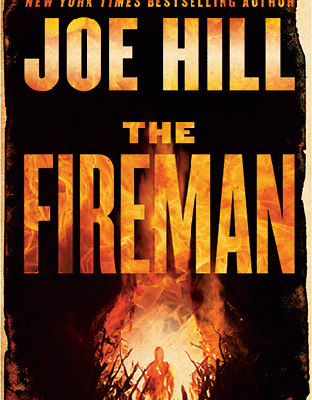
The Fireman by Joe Hill

Well y’all. I did it. I finished the behemoth tome that is Joe Hill’s latest, The Fireman.

What. A. Journey.

<<Spoilers ahead. You’ve been warned.>>

Tapping out at 747 pages, The Fireman follows Harper Grayson née Willowes as an airborne spore destabilizes the world. We sit with Harper and Jakob in their New Hampshire living room in the first chapter and watch as the Space Needle in Seattle burns on the news, watch people jumping out of windows to escape the all encompassing fire that makes up these pages. The sickness is Draco Incendia Trychophyton and it creeps into you without causing any harm at first. You breathe in the infected air and slowly, lines begin inking themselves in intricate patterns; one here, one there. At first. Then it covers your whole body and your insides reflect your outsides; the Dragonscale begins impacting your very make-up.

If you paid any attention in Latin, or have any Harry Potter knowledge you recognize the first word in the disease’s name. Draco, dragon. It’s pretty easy to infer Incendia after that. When the spore begins feeling (feeling?) that the host is threatened (anxiety, sickness, fear) it begins to save itself. The host, the human, the body combusts and burns from the inside. Our lovely Harper is a school nurse who, after schools shut down and institutions begin crumbling (which happens pretty quickly as this book spans a little over nine months…) begins volunteering at the hospital where the sick and infected are asked to stay/are corralled and kept. It is in this setting that we first meet three of the four people with whom Harper will primarily share this journey. First is the Fireman.

Our title character is charming and aggravating (as most are) and British (think Rufus Sewell). And as the world is breaking down and falling apart this fireman is bringing in an injured, deaf boy Nick to the hospital (the whole time I pictured Ben from Stepmom). Neither of them seem to show any visible signs of the ‘scale, are not complaining about the usual symptoms. After much debate, they are waved through to the small portion of the hospital still seeing non-‘scaled individuals. We don’t see them again for a bit but fret not fellow swooners, the Brit comes back. Next, we meet Ms. Renee Gilmonton who is the just the absolute sweetest lady. She reads to her fellow infected hospitalmates, primarily the children; keeping them calm and relaxed (Renee reminds me of Oprah, not glam Oprah, but the Oprah of that famous camping trip with Gale).

Anyways, now that you’ve got some visuals, let us move right along.

We quickly discover with Harper as our guide that she is not only pregnant but she is also infected and boy howdy let me tell you, Jakob is not happy about this combo. So not happy, in fact that he actually blames her for having a Florence Nightingale type syndrome in which she can’t leave people be. Yeah, because that’s a bad thing. Jakob is a grade-A-Scott-Disick-type-douche; something that is apparent from the first time we see how his name is spelled. After he leaves Harper alone for in their house for days (weeks?) he comes back and suggests they kill themselves. Yup. She has it, so he infers that he has it. There is no conversation of should we or shouldn’t we, no concern for the fact that there is also their unborn child to consider, nada. Let’s just do the damn thing is pretty much his attitude. The reader is able to very quickly realize that not only is Jakob an ass but he is also legit crazy. His decision on the matter has been made up and as Harper tries to get away from this nutcase, with whom she has very quickly fallen out of love, she runs UPSTAIRS to escape him. Because that always works so well in the movies, right? I won’t say anymore on the manner of her escape because it is super tense and I would like you to feel that anxiety along with Harper as you read for yourself the measures she takes to get away from him.

And obviously she escapes because there are still 700 pages left in the novel.

JoeHill-1600x856.png

After our heroine ditches the psycho we arrive at Camp Wyndham which is where the second act begins. Where better to hide a growing group of infected than an abandoned summer camp? It really is a great setting. Here we meet Ally, Nick’s older sister. Ally, Nick, and their family began bringing in infected to the safe haven of Wyndham pretty early into the epidemic and this is where Harper finds community, safety, and a chance to breathe…and sing. This is a community that is no great risk of burning up for they have found refuge in harmony.

Throughout history, fear has always inspired hatred and that is incredibly prevalent in the world of The Fireman. Society very quickly devolves into an “us and them” type divide and the small bits of news we hear on the mostly static filled radio demonstrate this. Cremation Crews are formed and murder goes from frowned upon to commonplace. Throughout the whole book, Hill keeps his characters very black and white making bad guys and good guys very easily discernible (with an exception towards the end of the second act). The divide between good and evil and right and wrong is prevalent throughout. This is something that goes beyond the characters and extends to morals and beliefs. What is right to a “bad guy” is not what is right to a “good guy” but who is to say which is which? If you were not infected and viewed those who were as a threat to your well being and that of your family’s, then you would protect yourself in whatever way possible, right? If you are infected but not dangerous you would want to live and not be put down/out of your misery because you wouldn’t be miserable. Perspective is very important in this tale despite the fact that ours as readers never shifts.

Sprinkled through the middle of the book are mentions of an island that has remained under the care of the CDC despite the collapse of all other official acronymed orgs. Martha Quinn’s island (yes, that Martha Quinn) promises safety and developments and doctors. Sounds too good to be true; a point made by several in the Wyndham community. However as time goes on and disastrous events occur, it is clear to our little band within the camp that they need to get to this island one way or another. Harper is particularly keen to get there as it is unknown what the ‘scale will have done to the baby. And so, as the second act closes with a bell tolling, the final act opens with our heroes on a somewhat forced and hasty journey to the mysterious island. Miles and miles are crossed and mishap after tragedy follow our travelers.

Up until now there have been some pretty good plot twists, real solidly developed characters, and fairly good pacing despite the book’s page count. There are amazing pop culture references throughout (his description of how J.K. Rowling meets her end is gut wrenching). However, towards the end, the last 100/150 pages or so, things begin to get pretty predictable. While this is an obvious bummer, you’ve got to give Hill props for keeping things exciting and juke filled for as many pages as he does. The Fireman offers readers adventure and romance, heartache and danger, terror and hope. There are factions of mankind that turn into despicable monsters and there are those who are able to keep their compasses pointed North in hopes that not all is ruined.

Hope burns fiercely in Joe Hill‘s The Fireman.