
Spoilers abound below. You’ve been warned.
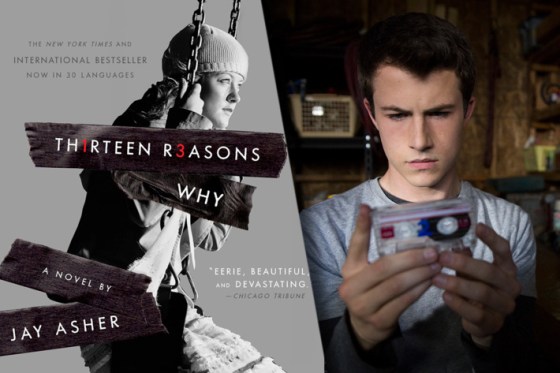
Two years ago I came across Thirteen Reasons Why whilst in a deep dive of the YAL shelves of my neighborhood library. In fact, it was the topic of my fourth blog post ever! Over the past few weeks there have been blog posts and think pieces a plenty about the new Netflix adaptation which coincides nicely with the book’s 10th anniversary. For years, this book has been a controversial work. It is a tale that sticks with you; a heavy realization that everything you do has an impact on those around you. In 2012 the book made the ALA’s list in their annual Top Ten Most Banned Books list for reasons stating: drugs/alcohol/smoking, sexually explicit, suicide, unsuited for age group. “These are not topics suitable for young readers” they say. Bullshit, lovelies. Those are topics our young ones are exposed to at earlier and earlier ages. The heart of this tale holds messages which are incredibly important for this generation to learn: compassion, empathy, responsibility, awareness. This is a super important work in both mediums, each of which portray Hannah Baker’s story in different ways.
For fans of the book, I think it is incredibly useful to go into watching the show with a conscious forethought, recognizing that these are separate creations in two different mediums. You have a 288 page book versus a 13 hour TV drama. Those aren’t really equal or comparable so thinking of them as such from the beginning is not going to do you any good. However, this is a good thing!
The book gives you Clay and Hannah and Tony. That’s pretty much it. There is some dialogue between others and you see people around as Clay visits all the spots on the map but that is it. Why no other characters? There’s no time. Clay binge listens to these tapes in one night. Primary difference right off the bat. There is a heightened tension as he speeds through these awful recollections and you learn along with him all of the truly unfortunate events that befell this girl. You realize slowly, along with Clay, what was passing through Hannah’s mind. He becomes consumed with them going from one tape to another just as you assume he would be when presented with this situation. Digesting it all while constantly being ready for the next tape to be yours. We are presented with Hannah’s tapes and Clay’s immediate reaction to them and during them. Alternatively, in the show, our experience is stretched out for at least two weeks. In this time, we are able to see a much much broader picture. What these tapes have sparked from his classmates, how Hannah’s parents are coping, and even providing time for a case to be built which (surprise!) Clay’s mom is lawyering for! There is a whole world that is created in this visual depiction. It creates a 3D image, a broader depiction showing the ripples of Hannah’s death. We are given more time for Clay to take in what he’s hearing and actually show a bit of resistance and perturbedness (that’s not a word) at what all of his fellow classmates have done. Which brings us to the next point: he takes it to his peers. Clay wants to hold them accountable for their actions but they say that some of these tellings are out of proportion or didn’t even happen or are versions of their own truths. In some cases they are denied out right or maybe not remembered at first. In the book we are feeling directly from Hannah how she experienced these events and how they impacted her whereas in the show we are informed by others as well. I think this is why it is okay for these two to differ so much because it perfectly illustrates how different perspectives are valuable.
However, and this is a big however, not all of this fleshed out world is great. What follows are thoughts purely on the TV show. So many great things about this show from the astounding amount of diversity (in race and relationships) to a realness brought with the very human reaction you see from Hannah’s parents to the more full narrative we see from all the other characters. But there isn’t really a base for them from the source material outside of what we hear on the tapes. So these characters were developed largely by show creator Brian Yorkey and it’s not that he does a bad job, its just that many of them felt too extreme. From Justin’s wanting to literally put together a plan to kill Clay to Courtney’s blind eye to rape there are things that some of these characters say that have you going, “umm what?!” Not all of the time but definitely a notable amount. To go into a side rant about these “umm what” moments, let’s take Tony for example. ROCK CLIMBING?!?! Ummmm Whaaat?! There were so many prolonged encounters that involved Tony just popping up places and being Jiminy Cricket (or as Clay puts it, Unhelpful Yoda). Clay could’ve easily listened to these tapes two per episode and we could’ve cut things wayyyy down.
In addition to the extension of the characters there is an extension (as already mentioned) to the story. In reading, our experience stops when the tapes do. In viewing, we see Hannah’s end. We were told 10 years ago that she “swallowed a bunch of pills” however today’s method is different and much more detailed. Today we see Hannah slit her wrists; we see her parents find her after she has bled out in the tub. It is a heart wrenching scene. It is a striking step beyond the tapes. Even further still we hear Hannah narrate these tapes with so much emotion in her voice. Katherine Langford does an amazing job at making all the feelings feel. She’s telling the story as she knows it, how she has felt it. This adds so much to the story.
With all of the differences of the show and even the non differences, Jay Asher is fully on board with how the show depicts his story. At the top of this piece I listed all of the reasons the ALA cited as to why the book was placed on the Banned List, one of which was that it was inappropriate for it’s intended demographic. This show and this book depict a reality that parents and others might not want to deal with. But bullying and suicide rates are a very real thing. As Asher said in an interview recently, “that raw and honest approach was my first big decision I had to make when writing the book, and the writers of the series felt the same way. These things happen, and to give respect to the people they do happen to, it felt wrong to hold back. It needs to be uncomfortable to read or watch. If it’s not, and we pull away, it felt like the story would only contribute to that problem of not truthfully tackling these things. We’re already good at avoiding uncomfortable subjects, and that needs to change.”
Read this book. Watch this show. Be conscious of how you treat others.


 that ending though