pseu·do·nym /ˈso͞odnim/

pseudonym


In the 2001 movie Monkeybone, cartoonist Stu Miley (Brendan Fraser) switches the hand with which he draws his pieces. The result is that his creations go from dark twisted nightmares to this goofy monkey and his human pal (think Garfield as a monkey). This concept got me thinking about pseudonyms and the persona that is developed by and within an author’s works. In today’s publishing world many authors, both well established and those just starting out, create pen names under which they publish. The reasons for this vary from author to author: just starting out and trying to establish a name with spunk, switching genres and therefore perspectives, or trying to get away from an already established name. There are many great authors to think about who do this and I have a couple favorites.

Lemony Snicket is a mysterious, enchanting and hypnotizing storyteller (and no, he is not standing here dictating this sentence to me). He has published the accounts of the Baudelaire children and their escape from the dastardly Count Olaf. They have suffered a very hapless timeline, quite tragic really; but man are they brave children. The siblings are put through the ringer whilst trying to get to the bottom of their parents murders (which were covered up by a fire). According to his website Snicket is “insatiably inquisitive” and can only be contacted via HarperCollins Children’s Books. Snicket very rarely appears at book events, although it has happened on select few occasions. More often than not, Snicket’s handler is in attendance to answer questions to the best of his abilities and remind people how aloof his charge is. This man is one Daniel Handler. Mr. Handler leads a “relatively uneventful life” and is also the author of three books that are not for children. This past fall Daniel Handler spoke at the gala fundraiser for the 20th annual Texas Book Festival and at the fest itself. He is very interesting to listen to…quite captivating. He loves his fans and, after one of his panels, went out the front with the crowd instead of out the back. Taking picture after picture, joking the whole time. These two individuals seem to be vastly different in both character and in social settings. Now, I’m going to divulge something to you: they are one in the same. <<pause to allow gasps>>  While switching seamlessly from Snicker to Handler and back, Daniel composes symphonies, writes a column in which he discusses Nobel Laureate’s books, and writes books for non children folk.

In 1977, Richard Bachman published Rage, his first book. Over the course of the next few years, he published four more books all of which did moderately well on sales. It was after his title Thinner was published that it was revealed that Richard Bachman did not exist. All that time horror master Stephen King had been writing under the pseudonym. He reportedly was interested in seeing how his work would do if nobody knew it was his. Was he at his level of success because of his name or because of his words? (See his essay “The Importance of Being Bachman” here.) At the time of his reveal King was working on Misery which he had planned on releasing under Bachman’s moniker (I think Misery is my favorite of his works. It’s so creepy and plausible and they’re out there in the snow. Eep!) In this case, the writing style and genre were the same; that’s how he was found out. In addition to wanting to see how his work would fare on it’s own, King was feeling restricted by his publishing house who were only releasing one title of his a year so as not to over saturate the market with his “brand.” Seeing the loophole in this, he convinced them to put out titles under the name Richard Bachman.

Not unlink his father, Joe King publishes under the name Joe Hill so that his work stands away from his father’s shadow. Hill has produced some really amazing works like Horns and The Fireman even after it came out who he was. In 2007 he issued a statement confirming his parentage but not before having obtained respect in the literary community, being awarded a Ray Bradbury fellowship and also receiving for his short story collection 20th Century Ghosts the Bram Stoker Award.

Lastly, I would like to bring up Joanne Rowling. We all the know the story of Harry Potter being rejected by 12 houses (publishing not Hogwarts) but many aren’t as aware of the fact J.K. is just as much a pen name as Robert Galbraith. While they were smart enough to pick up her manuscript the publishers silly thought that young boys would be not as interested in reading a book by a woman (which doesn’t make any sense, as young boys throughout history have been told fantastic tales by their mothers and grandmothers and you would think that would inspire something or just all together not even matter, but whatever) and as such asked her to shorten it to initials and her surname. Thus, J(oanne) K( Kathleen) Rowling was penned. Joanna as her full first name and Kathleen from her grandmother’s name as she had no middle name). The success of the Harry Potter series has brought such fame to Rowling and her name that when she put out her first non Potter title after the series ended, Casual Vacancy, everyone waited on baited breathe. However, Casual Vacancy was not by any means a success. I actually stopped reading about 80 pages in because I didn’t understand any of the small town British government lingo and honestly, it was boring (although the HBO adaption is actually good for a watch). So, several years later when new crime writer Robert Galbraith burst onto the scene and awed critics and readers alike, the world was none the wiser to the fact that Jo had but out a new book. The Cuckoo’s Calling is a really solid read. I highly recommend these books, peeps. The news that Rowling and Galbraith were one in the same came shortly before the release of the second book in the Cormoran Strike series. Discovered by a reporter and confirmed by Little Brown, the news was followed by a reprint of the books which had quickly  sold out. There are now three books out by Galbraith and here is to hoping that another is announce soon. The complete departure from fantasy and the hard right turn at gruesome mysteries is very well done and really exciting.

In addition to the authors mentioned here, there are many well known writers who publish under more than just their given name. From C.S. Lewis to Agatha Christie to Dr. Seuss, the list is probably much more expansive than you might initially think.
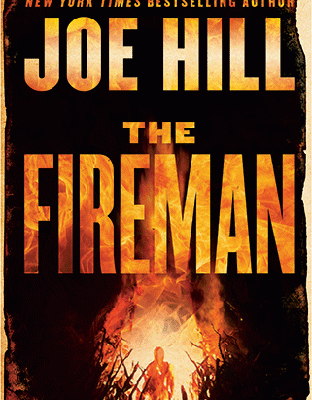
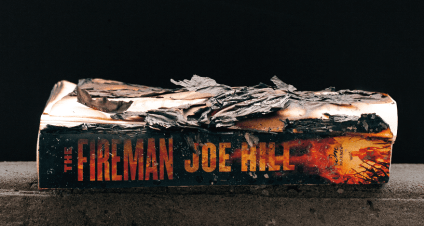
The Fireman by Joe Hill

Well y’all. I did it. I finished the behemoth tome that is Joe Hill’s latest, The Fireman.

What. A. Journey.

<<Spoilers ahead. You’ve been warned.>>

Tapping out at 747 pages, The Fireman follows Harper Grayson née Willowes as an airborne spore destabilizes the world. We sit with Harper and Jakob in their New Hampshire living room in the first chapter and watch as the Space Needle in Seattle burns on the news, watch people jumping out of windows to escape the all encompassing fire that makes up these pages. The sickness is Draco Incendia Trychophyton and it creeps into you without causing any harm at first. You breathe in the infected air and slowly, lines begin inking themselves in intricate patterns; one here, one there. At first. Then it covers your whole body and your insides reflect your outsides; the Dragonscale begins impacting your very make-up.

If you paid any attention in Latin, or have any Harry Potter knowledge you recognize the first word in the disease’s name. Draco, dragon. It’s pretty easy to infer Incendia after that. When the spore begins feeling (feeling?) that the host is threatened (anxiety, sickness, fear) it begins to save itself. The host, the human, the body combusts and burns from the inside. Our lovely Harper is a school nurse who, after schools shut down and institutions begin crumbling (which happens pretty quickly as this book spans a little over nine months…) begins volunteering at the hospital where the sick and infected are asked to stay/are corralled and kept. It is in this setting that we first meet three of the four people with whom Harper will primarily share this journey. First is the Fireman.

Our title character is charming and aggravating (as most are) and British (think Rufus Sewell). And as the world is breaking down and falling apart this fireman is bringing in an injured, deaf boy Nick to the hospital (the whole time I pictured Ben from Stepmom). Neither of them seem to show any visible signs of the ‘scale, are not complaining about the usual symptoms. After much debate, they are waved through to the small portion of the hospital still seeing non-‘scaled individuals. We don’t see them again for a bit but fret not fellow swooners, the Brit comes back. Next, we meet Ms. Renee Gilmonton who is the just the absolute sweetest lady. She reads to her fellow infected hospitalmates, primarily the children; keeping them calm and relaxed (Renee reminds me of Oprah, not glam Oprah, but the Oprah of that famous camping trip with Gale).

Anyways, now that you’ve got some visuals, let us move right along.

We quickly discover with Harper as our guide that she is not only pregnant but she is also infected and boy howdy let me tell you, Jakob is not happy about this combo. So not happy, in fact that he actually blames her for having a Florence Nightingale type syndrome in which she can’t leave people be. Yeah, because that’s a bad thing. Jakob is a grade-A-Scott-Disick-type-douche; something that is apparent from the first time we see how his name is spelled. After he leaves Harper alone for in their house for days (weeks?) he comes back and suggests they kill themselves. Yup. She has it, so he infers that he has it. There is no conversation of should we or shouldn’t we, no concern for the fact that there is also their unborn child to consider, nada. Let’s just do the damn thing is pretty much his attitude. The reader is able to very quickly realize that not only is Jakob an ass but he is also legit crazy. His decision on the matter has been made up and as Harper tries to get away from this nutcase, with whom she has very quickly fallen out of love, she runs UPSTAIRS to escape him. Because that always works so well in the movies, right? I won’t say anymore on the manner of her escape because it is super tense and I would like you to feel that anxiety along with Harper as you read for yourself the measures she takes to get away from him.

And obviously she escapes because there are still 700 pages left in the novel.

JoeHill-1600x856.png

After our heroine ditches the psycho we arrive at Camp Wyndham which is where the second act begins. Where better to hide a growing group of infected than an abandoned summer camp? It really is a great setting. Here we meet Ally, Nick’s older sister. Ally, Nick, and their family began bringing in infected to the safe haven of Wyndham pretty early into the epidemic and this is where Harper finds community, safety, and a chance to breathe…and sing. This is a community that is no great risk of burning up for they have found refuge in harmony.

Throughout history, fear has always inspired hatred and that is incredibly prevalent in the world of The Fireman. Society very quickly devolves into an “us and them” type divide and the small bits of news we hear on the mostly static filled radio demonstrate this. Cremation Crews are formed and murder goes from frowned upon to commonplace. Throughout the whole book, Hill keeps his characters very black and white making bad guys and good guys very easily discernible (with an exception towards the end of the second act). The divide between good and evil and right and wrong is prevalent throughout. This is something that goes beyond the characters and extends to morals and beliefs. What is right to a “bad guy” is not what is right to a “good guy” but who is to say which is which? If you were not infected and viewed those who were as a threat to your well being and that of your family’s, then you would protect yourself in whatever way possible, right? If you are infected but not dangerous you would want to live and not be put down/out of your misery because you wouldn’t be miserable. Perspective is very important in this tale despite the fact that ours as readers never shifts.

Sprinkled through the middle of the book are mentions of an island that has remained under the care of the CDC despite the collapse of all other official acronymed orgs. Martha Quinn’s island (yes, that Martha Quinn) promises safety and developments and doctors. Sounds too good to be true; a point made by several in the Wyndham community. However as time goes on and disastrous events occur, it is clear to our little band within the camp that they need to get to this island one way or another. Harper is particularly keen to get there as it is unknown what the ‘scale will have done to the baby. And so, as the second act closes with a bell tolling, the final act opens with our heroes on a somewhat forced and hasty journey to the mysterious island. Miles and miles are crossed and mishap after tragedy follow our travelers.

Up until now there have been some pretty good plot twists, real solidly developed characters, and fairly good pacing despite the book’s page count. There are amazing pop culture references throughout (his description of how J.K. Rowling meets her end is gut wrenching). However, towards the end, the last 100/150 pages or so, things begin to get pretty predictable. While this is an obvious bummer, you’ve got to give Hill props for keeping things exciting and juke filled for as many pages as he does. The Fireman offers readers adventure and romance, heartache and danger, terror and hope. There are factions of mankind that turn into despicable monsters and there are those who are able to keep their compasses pointed North in hopes that not all is ruined.

Hope burns fiercely in Joe Hill‘s The Fireman. 


Frequent Flyer Miles

In my latest day dreaming, I’ve contemplated how many times over the years I have visited Oz without L. Frank Baum, how many times I have been directed to the second star from the left without the guidance of J.M. Barrie, the many instances I’ve fallen down a rabbit hole without the assistance of Lewis Carroll. It’s so interesting how, as authors and readers, we become so fascinated with some of these worlds. My literary passport has a much greater number of stamps than my actual passport.

Of late, I have found Oz to be my most frequented destination. There is something sinister under all that cheer. The land of magic and talking Animals, of diverse peoples and races. I don’t think we would ever be able to find out all that Oz is capable of, even if we had until the next twister popped up.

In 1995, Gregory Maguire took us back to Oz with Wicked and showed readers that the land had existed and functioned well before Dorothy’s unannounced drop-in. There was political turmoil, there was class discrimination, there were bullys and outcasts. Readers followed Elphaba and her tumultuous life. We meet several of the characters with whom we are already familiar as well as many with whom we are not. The ever expanding world continues to unfold before us as we journey to school with Elfie and experience first hand how being green and smart are two giant and immediate strikes against her and she is discounted as a freak. From this point in the story, politics enter and so does reacquainted love and through the ever-changing-scape of Elphaba’s life, we are able to experience Oz in a very full manner, encountering the lands of Gilikin and Munchkinland and of course the Emerald City itself.

Throughout the four novel saga, we traverse Oz and become intimately familiar with the innards of the land. There is a civil war happening (that’s not a spoiler, tension has been growing since Wicked) and much as transpired across the board for our characters. Characters who become generational as we travel from view points of Elphaba to her son to her granddaughter. There are hardships placed on these characters and NOTHING is handed to them. They have morals and goals and yes, things don’t always work out for them (i.e. death) but they continue to grow and resolve.

While the Wicked series is geared towards a decidedly more adult audience, the Dorothy Must Die series by YA author Danielle Paige is a little lighter in tone but does not back down on the subject matter. In this series we examine the fundamental differences of what is Wicked and what is Evil. Set in the modern day, DMD follows Amy and the quest upon which she is set by the Order of the Wicked (who are the lesser of the two evils).

Dorothy has come back to Oz after [re]discovering how truly terrible Kansas is/was and the power (because some dumbass thought it wise to teach her magic) has gone to her head and she has become such a maniacal dictator that Hitler would be embarrassed by his own efforts. The mastermind of all of this Evil is of course Glinda (you knew all along she was bad at her core, admit it.) Amy must free Oz from this tyrannical rule and like most quests it is much harder than our heroine first anticipates.

This series has three books that are full length novels (the third set to be published this March) as well as seven novelas, detailing parts of the plot and history that Amy is not privy to in the main series. This approach to broadening the world is fascinating to me as it is creating a new cannon for which this history and these characters exist. Separate still from the history created by Maguire in his series. Yet somehow, they all can kind of coexist in my mind as one overarching history…past, parallel presents and future.

The amount of times Oz is revisited just in these two series I have mentioned tops out at  13 and that is not even including all of the books written by Baum himself which total 14! This world has entranced me for years in the complexity of its people and the wonder of its Oz-iness. Oz is one place I will never tire of visiting, no matter what color the road or my shoes or that horse is.

What are some worlds that you could visit or see yourself becoming a permanent citizen of? Reply in the comments section below!

Stranger Than Fiction

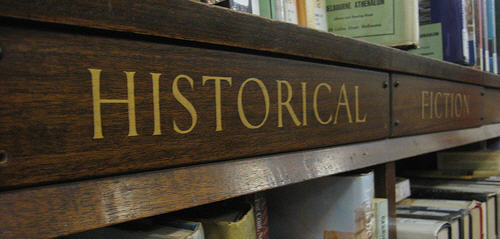
I don’t know if it is because I would much rather get lost in a world that is not our own or if I’ve not found the right story but non-fiction has never interested me. Now, change that genre description to historical fiction and you’ve found yourself a fan. The history of historical fiction stretches back centuries and the most famous example is that of the epic poem The Iliad which tells of the Trojan War. Perhaps you’ve heard of it…One aspect of the genre that I find to be really interesting is the scope of reality that exists within these stories.

On one hand, you have fantastical tales like Abraham Lincoln Vampire Hunter written by Seth Grahame-Smith in which our beloved president undertakes the role of savior of the human race. This novel incorporates real figures from history while putting a bit of a spin on the past. Or, maybe it is a true account and we were none the wiser for over a hundred years. Either way, Grahame-Smith told a tale that wound together the biography of Lincoln (his youth and his accomplishments in politics) and the fictional shadow world of vampires (creatures that have fascinated and terrified us for countless years). The book itself is quite silly and very fun and the reader gets the sense that it is not to be taken too seriously. It is a story that is very obviously not true but the fact that it is set in a land that we are so familiar with is part of what draws us in. These are people with whom we are familiar and the great thing about the tale is that it is sprinkled with just enough “what if” to truly capture the imagination.

On the other hand, you have scary and morbid tales like Devil in the White City by Erik Larson which is the chilling tale of America’s first documented serial killer. The events transpired over the course of the years leading up to and even during the World’s Fair in Chicago, IL in the late 1890’s. What makes this tale so eerie is the maniacal man at the heart of the story, Dr. H.H. Holmes. However, this is not the sole thread of the book’s plot. We also follow the crafting of the Fair from its inception to its grand opening through the eyes of the lead architect Mr. Daniel H. Burnham. This novel is interesting because it combines actual correspondence found through letters and telegrams with bits of exaggerated reality making it almost impossible to tell what is fact and what was Larson’s design. While these two men are as different as night and day, they are both real figures in recent history. Both live on in infamy for very different reasons, even more so now that they have been committed to the page.

The amount of text dedicated to historical fiction could fill your whole library. Where in history do you want to go? Victorian England? Ancient Egypt? Chances are, there’s a story waiting for you. What are some of your favorite pieces from the historical fiction genre? Leave your titles in the comments section below!


(Post script: a series that I highly recommend is the All Souls trilogy by Deborah Harkness. The first one doesn’t have tooo much history in it but the second one is chalk full of it! Harkness herself is an historian and to view history, and this story, through her eyes was really interesting…despite the fact that I have several issues with the confidence and independence displayed by the heroine. Oh, and this one has vampires too.)


Books that stay with us

We all have those certain books in the library Rolodex of our mind that, no matter how long it has been, stay with us. They are present when we pick up a new volume, present when we discuss even remotely related subjects. The power of written words is amazing, and so are these books.

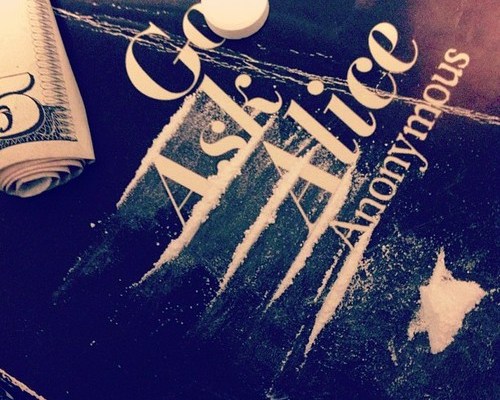
When I was in high school, all incoming freshmen were required to take a reading class (essentially, English with nothing but reading assignments). One of the books we read was Go Ask Alice by Anonymous. First published in 1971, this book has been challenged repeatedly and has been in the top ten of the ALA’s Banned Books list for years.Looking back on it now, I am grateful that our teacher included such a staunchly challenged book as part of our curriculum. Go Ask Alice is a diary entry type read in which our 15 year old unnamed narrator encounters drugs and sex and some truly terrifying situations. Reading this book as a young impressionable youth (and being the same age as Anonymous), I remember wondering, are parties really like this? Can people really be this mean and scary? What an eye opening read. It continues to astound me that…several…years later, Go Ask Alice is still so prevalent in my mind. Whether it swayed me from going to parties or scared me to be straight edge is not the ultimate point. What is the point? That a small 200 page book has taken up permanent residence on the shelf in my mind and that is a powerful thing.

Another tome that has stuck with me over time is House of Leaves by Mark Z. Danielewski. I use the word “tome” for this 2000 publication because it is indeed “a book that is especially large” (Merriam-Webster). For those who haven’t had the pleasure, House of Leaves is an incredibly layered, hard to read piece that took me, no joke, an entire year to read. This time frame is contributed to only minutely by the size of the text, but is primarily due to the fact that it is so difficult to read! House of Leaves is written in a very unconventional and layered way, dealing with multiple narrators and alternating between storylines. Then there is the content itself. A door appears inside the Navidson house and on the other side of this door is, well, nothing. Except nothing is vast and and deep and possibly housing a monster. This story of the Navidson family is being chronicled and pieced together by an elderly man who dies in the first pages of the book, Zampano, whose work is discovered and continued by the drugged up tattoo assistant Johnny. See why it’s a hard read? But it’s not just how the narrative is composed that made this book stick in my mind. When Navidson and his team go into this abyss it sucks at their souls and I could feel mine being weighed upon just as heavily. When Johnny is compiling the story and starts to wonder if he is going crazy, you yourself wonder if that shadow that just passed your window was that of a tree outside or something much more sinister. House of Leaves is written in multiple languages, is occasionally written backwards and upside down and has more footnotes than it has pages. I felt different upon finishing this book. Mentally and physically.

These two works are just a toe dip in the pond of literature that stays with us long after we close its covers. What are some pieces that have stayed with you over the years? Name the first book that pops into your mind in the comments!