Frequent Flyer Miles

In my latest day dreaming, I’ve contemplated how many times over the years I have visited Oz without L. Frank Baum, how many times I have been directed to the second star from the left without the guidance of J.M. Barrie, the many instances I’ve fallen down a rabbit hole without the assistance of Lewis Carroll. It’s so interesting how, as authors and readers, we become so fascinated with some of these worlds. My literary passport has a much greater number of stamps than my actual passport.

Of late, I have found Oz to be my most frequented destination. There is something sinister under all that cheer. The land of magic and talking Animals, of diverse peoples and races. I don’t think we would ever be able to find out all that Oz is capable of, even if we had until the next twister popped up.

In 1995, Gregory Maguire took us back to Oz with Wicked and showed readers that the land had existed and functioned well before Dorothy’s unannounced drop-in. There was political turmoil, there was class discrimination, there were bullys and outcasts. Readers followed Elphaba and her tumultuous life. We meet several of the characters with whom we are already familiar as well as many with whom we are not. The ever expanding world continues to unfold before us as we journey to school with Elfie and experience first hand how being green and smart are two giant and immediate strikes against her and she is discounted as a freak. From this point in the story, politics enter and so does reacquainted love and through the ever-changing-scape of Elphaba’s life, we are able to experience Oz in a very full manner, encountering the lands of Gilikin and Munchkinland and of course the Emerald City itself.

Throughout the four novel saga, we traverse Oz and become intimately familiar with the innards of the land. There is a civil war happening (that’s not a spoiler, tension has been growing since Wicked) and much as transpired across the board for our characters. Characters who become generational as we travel from view points of Elphaba to her son to her granddaughter. There are hardships placed on these characters and NOTHING is handed to them. They have morals and goals and yes, things don’t always work out for them (i.e. death) but they continue to grow and resolve.

While the Wicked series is geared towards a decidedly more adult audience, the Dorothy Must Die series by YA author Danielle Paige is a little lighter in tone but does not back down on the subject matter. In this series we examine the fundamental differences of what is Wicked and what is Evil. Set in the modern day, DMD follows Amy and the quest upon which she is set by the Order of the Wicked (who are the lesser of the two evils).

Dorothy has come back to Oz after [re]discovering how truly terrible Kansas is/was and the power (because some dumbass thought it wise to teach her magic) has gone to her head and she has become such a maniacal dictator that Hitler would be embarrassed by his own efforts. The mastermind of all of this Evil is of course Glinda (you knew all along she was bad at her core, admit it.) Amy must free Oz from this tyrannical rule and like most quests it is much harder than our heroine first anticipates.

This series has three books that are full length novels (the third set to be published this March) as well as seven novelas, detailing parts of the plot and history that Amy is not privy to in the main series. This approach to broadening the world is fascinating to me as it is creating a new cannon for which this history and these characters exist. Separate still from the history created by Maguire in his series. Yet somehow, they all can kind of coexist in my mind as one overarching history…past, parallel presents and future.

The amount of times Oz is revisited just in these two series I have mentioned tops out at  13 and that is not even including all of the books written by Baum himself which total 14! This world has entranced me for years in the complexity of its people and the wonder of its Oz-iness. Oz is one place I will never tire of visiting, no matter what color the road or my shoes or that horse is.

What are some worlds that you could visit or see yourself becoming a permanent citizen of? Reply in the comments section below!
Stranger Than Fiction

I don’t know if it is because I would much rather get lost in a world that is not our own or if I’ve not found the right story but non-fiction has never interested me. Now, change that genre description to historical fiction and you’ve found yourself a fan. The history of historical fiction stretches back centuries and the most famous example is that of the epic poem The Iliad which tells of the Trojan War. Perhaps you’ve heard of it…One aspect of the genre that I find to be really interesting is the scope of reality that exists within these stories.

On one hand, you have fantastical tales like Abraham Lincoln Vampire Hunter written by Seth Grahame-Smith in which our beloved president undertakes the role of savior of the human race. This novel incorporates real figures from history while putting a bit of a spin on the past. Or, maybe it is a true account and we were none the wiser for over a hundred years. Either way, Grahame-Smith told a tale that wound together the biography of Lincoln (his youth and his accomplishments in politics) and the fictional shadow world of vampires (creatures that have fascinated and terrified us for countless years). The book itself is quite silly and very fun and the reader gets the sense that it is not to be taken too seriously. It is a story that is very obviously not true but the fact that it is set in a land that we are so familiar with is part of what draws us in. These are people with whom we are familiar and the great thing about the tale is that it is sprinkled with just enough “what if” to truly capture the imagination.

On the other hand, you have scary and morbid tales like Devil in the White City by Erik Larson which is the chilling tale of America’s first documented serial killer. The events transpired over the course of the years leading up to and even during the World’s Fair in Chicago, IL in the late 1890’s. What makes this tale so eerie is the maniacal man at the heart of the story, Dr. H.H. Holmes. However, this is not the sole thread of the book’s plot. We also follow the crafting of the Fair from its inception to its grand opening through the eyes of the lead architect Mr. Daniel H. Burnham. This novel is interesting because it combines actual correspondence found through letters and telegrams with bits of exaggerated reality making it almost impossible to tell what is fact and what was Larson’s design. While these two men are as different as night and day, they are both real figures in recent history. Both live on in infamy for very different reasons, even more so now that they have been committed to the page.

The amount of text dedicated to historical fiction could fill your whole library. Where in history do you want to go? Victorian England? Ancient Egypt? Chances are, there’s a story waiting for you. What are some of your favorite pieces from the historical fiction genre? Leave your titles in the comments section below!


(Post script: a series that I highly recommend is the All Souls trilogy by Deborah Harkness. The first one doesn’t have tooo much history in it but the second one is chalk full of it! Harkness herself is an historian and to view history, and this story, through her eyes was really interesting…despite the fact that I have several issues with the confidence and independence displayed by the heroine. Oh, and this one has vampires too.)


Books that stay with us

We all have those certain books in the library Rolodex of our mind that, no matter how long it has been, stay with us. They are present when we pick up a new volume, present when we discuss even remotely related subjects. The power of written words is amazing, and so are these books.

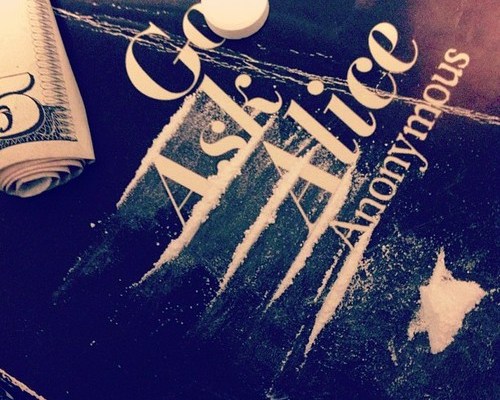
When I was in high school, all incoming freshmen were required to take a reading class (essentially, English with nothing but reading assignments). One of the books we read was Go Ask Alice by Anonymous. First published in 1971, this book has been challenged repeatedly and has been in the top ten of the ALA’s Banned Books list for years.Looking back on it now, I am grateful that our teacher included such a staunchly challenged book as part of our curriculum. Go Ask Alice is a diary entry type read in which our 15 year old unnamed narrator encounters drugs and sex and some truly terrifying situations. Reading this book as a young impressionable youth (and being the same age as Anonymous), I remember wondering, are parties really like this? Can people really be this mean and scary? What an eye opening read. It continues to astound me that…several…years later, Go Ask Alice is still so prevalent in my mind. Whether it swayed me from going to parties or scared me to be straight edge is not the ultimate point. What is the point? That a small 200 page book has taken up permanent residence on the shelf in my mind and that is a powerful thing.

Another tome that has stuck with me over time is House of Leaves by Mark Z. Danielewski. I use the word “tome” for this 2000 publication because it is indeed “a book that is especially large” (Merriam-Webster). For those who haven’t had the pleasure, House of Leaves is an incredibly layered, hard to read piece that took me, no joke, an entire year to read. This time frame is contributed to only minutely by the size of the text, but is primarily due to the fact that it is so difficult to read! House of Leaves is written in a very unconventional and layered way, dealing with multiple narrators and alternating between storylines. Then there is the content itself. A door appears inside the Navidson house and on the other side of this door is, well, nothing. Except nothing is vast and and deep and possibly housing a monster. This story of the Navidson family is being chronicled and pieced together by an elderly man who dies in the first pages of the book, Zampano, whose work is discovered and continued by the drugged up tattoo assistant Johnny. See why it’s a hard read? But it’s not just how the narrative is composed that made this book stick in my mind. When Navidson and his team go into this abyss it sucks at their souls and I could feel mine being weighed upon just as heavily. When Johnny is compiling the story and starts to wonder if he is going crazy, you yourself wonder if that shadow that just passed your window was that of a tree outside or something much more sinister. House of Leaves is written in multiple languages, is occasionally written backwards and upside down and has more footnotes than it has pages. I felt different upon finishing this book. Mentally and physically.

These two works are just a toe dip in the pond of literature that stays with us long after we close its covers. What are some pieces that have stayed with you over the years? Name the first book that pops into your mind in the comments!